Tub-shower rebuild in Granada Hills: what was behind the tile
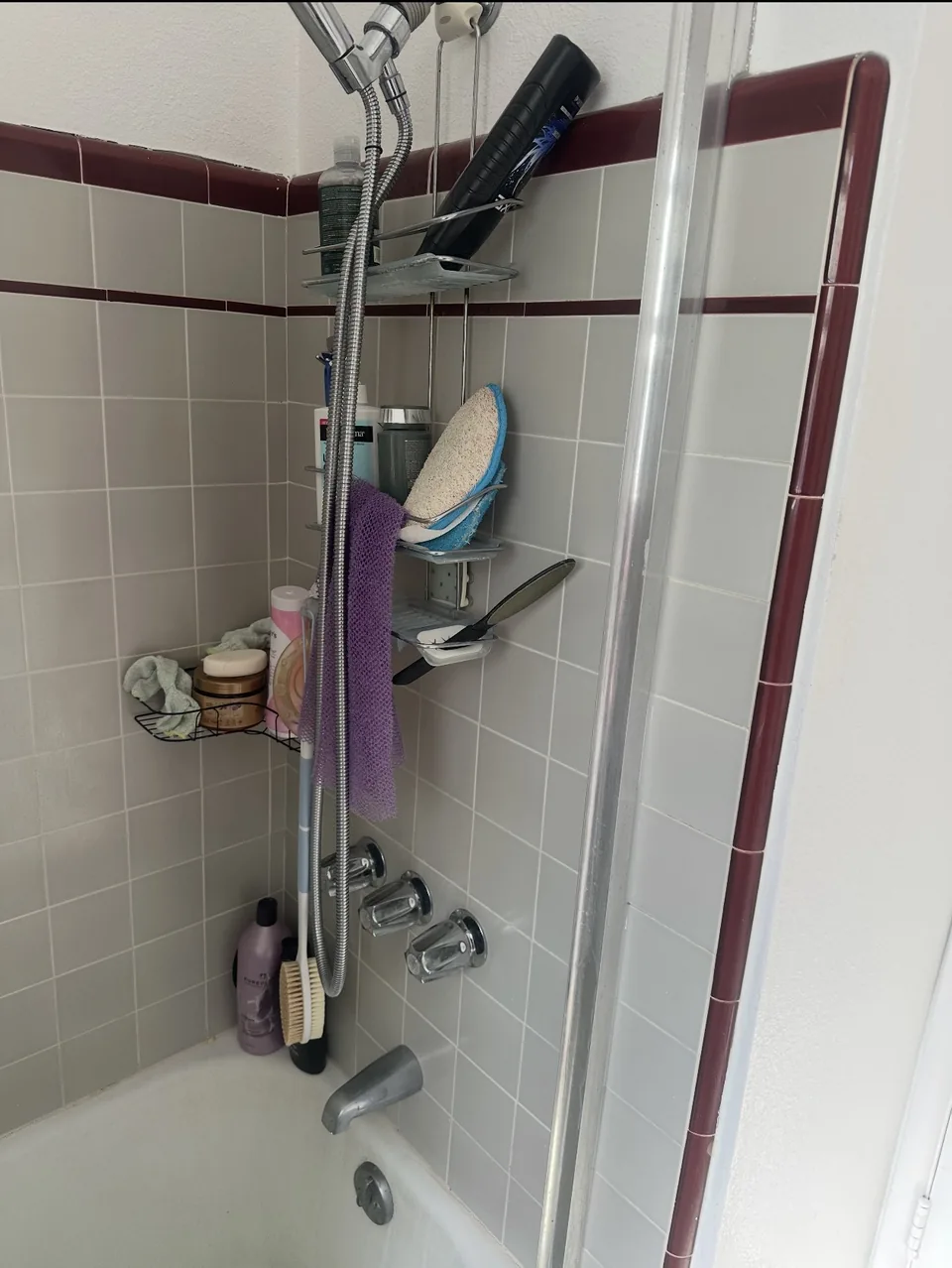
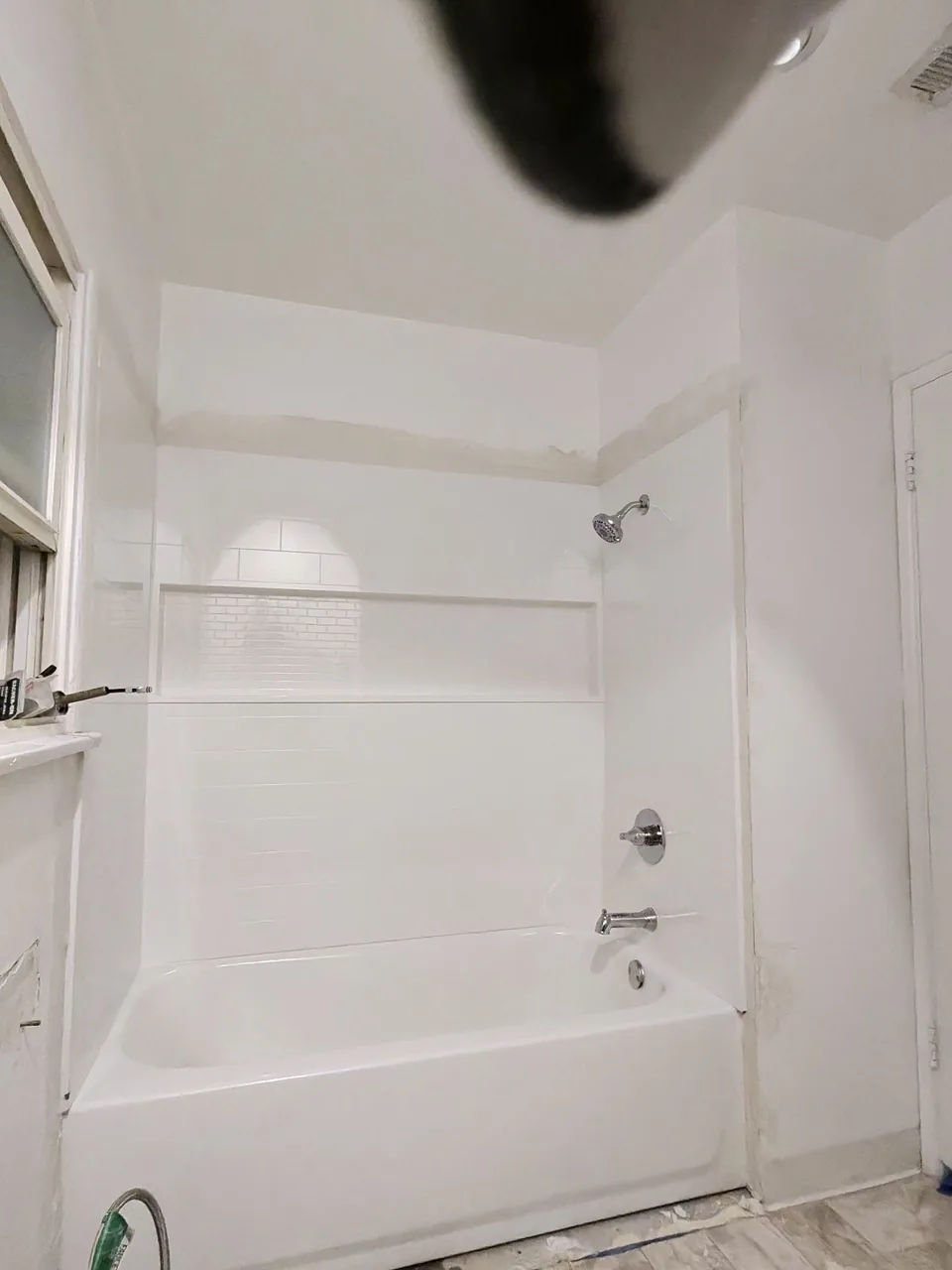
This was a real STATOX job in Granada Hills, in the San Fernando Valley, done by our own crew over three days in November 2026. The client asked us to replace the old tub and the sink faucet. The bathroom had its original 1960s tile tub-shower. It looked tired but usable. Behind the tile it was a different story — and that is exactly why we document jobs like this one.
Three warning signs we saw before opening the wall
- Dark grout near the tub. Grout that is darker at the bottom than at the top usually means water is living in the joints.
- Caulk turning black. Mildew grows where things stay wet. Black caulk along the tub is a moisture sign, not just a cleaning problem.
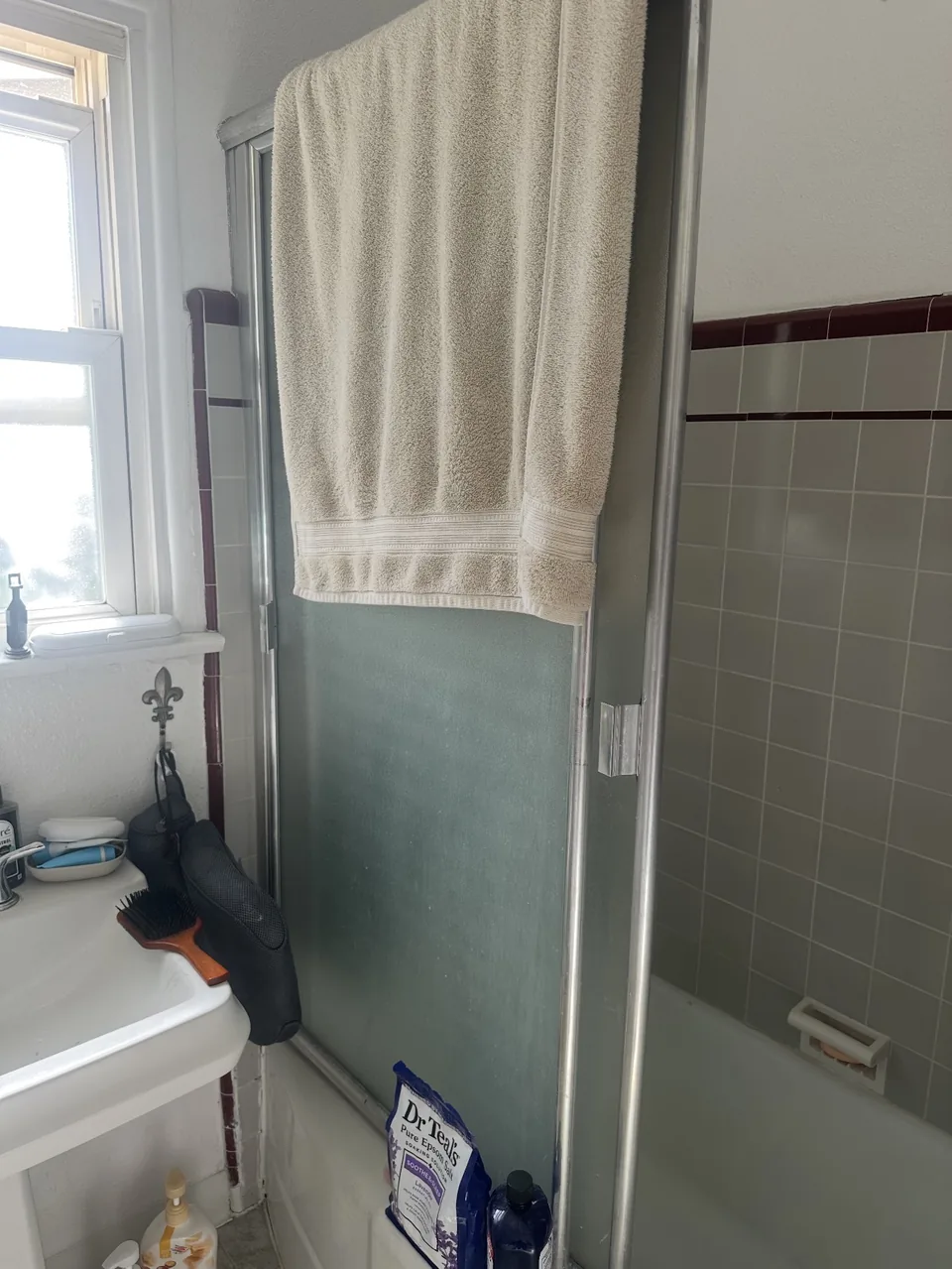
- A sliding door track that never dries. The track holds water against the tile after every shower.
What was behind the tile
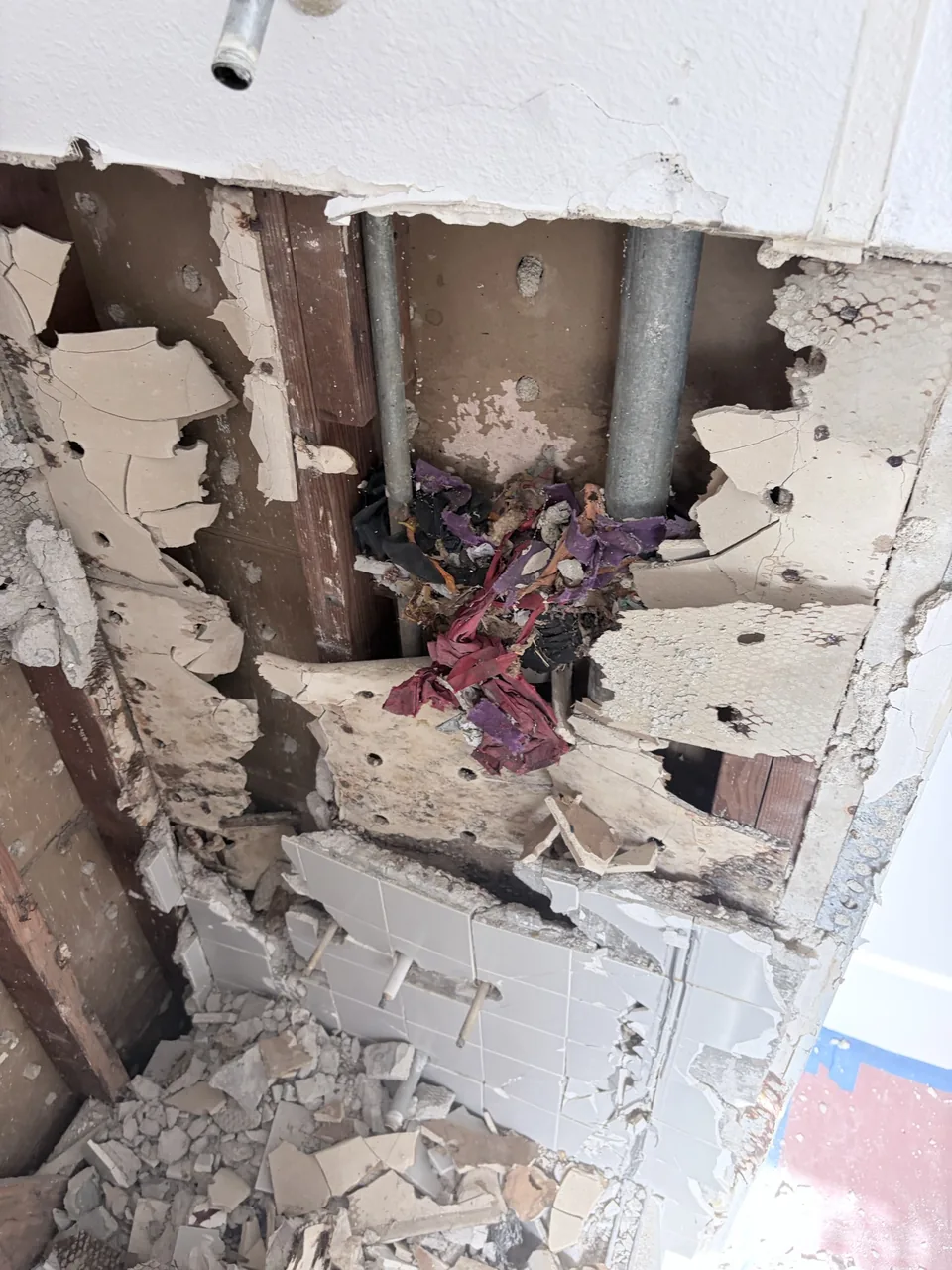
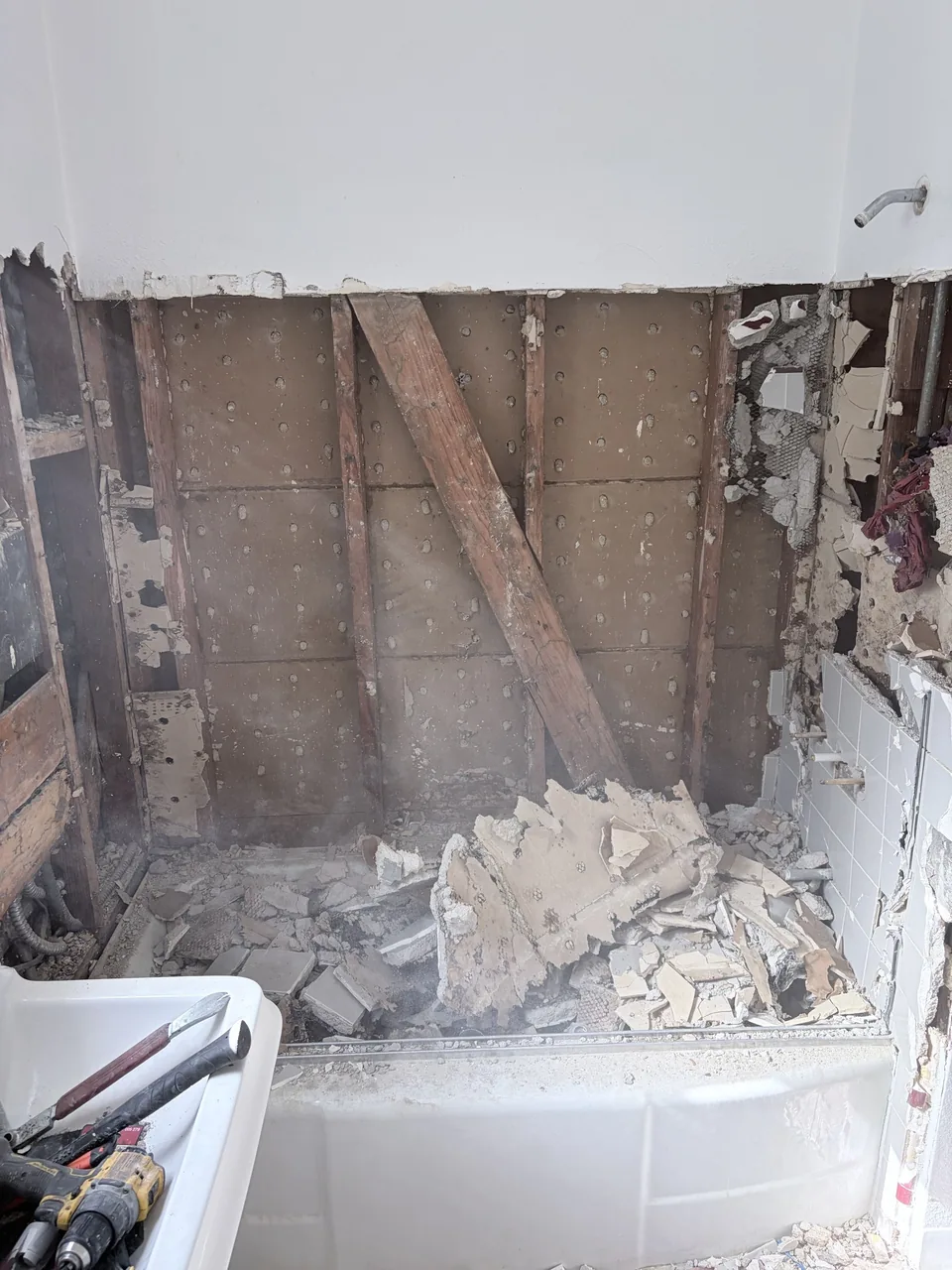
When the tile came off, there was no waterproofing layer at all — only old greenboard, the green water-resistant drywall. Water-resistant is not waterproof: after decades of showers the bottom of the wall was soft and stained. The old galvanized pipes in the wall were rusty on the outside but not leaking, so we kept the job on scope and left them — and that's why our written price always says hidden damage is priced separately, before any extra work.
How we rebuilt it, step by step
- Protect and shut off. Floors and the path out covered, water shut off. In older homes we test for lead and asbestos before demo.
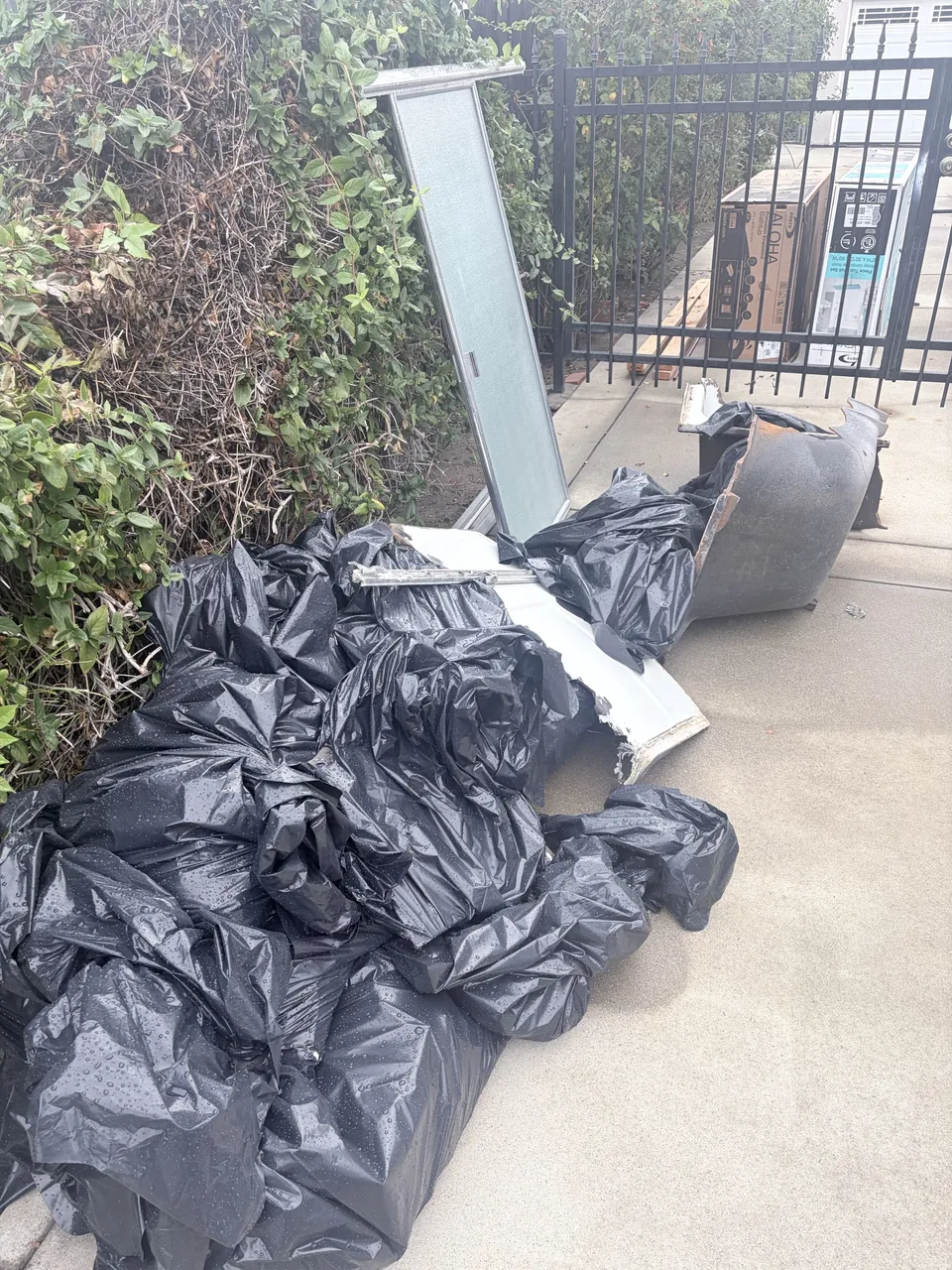
- Demo to the studs. Door off, tile off in sections, debris bagged for haul-away.
- Wall prep. Soft backer removed; new moisture-resistant cement board where needed.
- New tub. The old steel tub hauled out; the new tub set level and supported along the edge, with a new drain and overflow connected to the P-trap and tested with water.
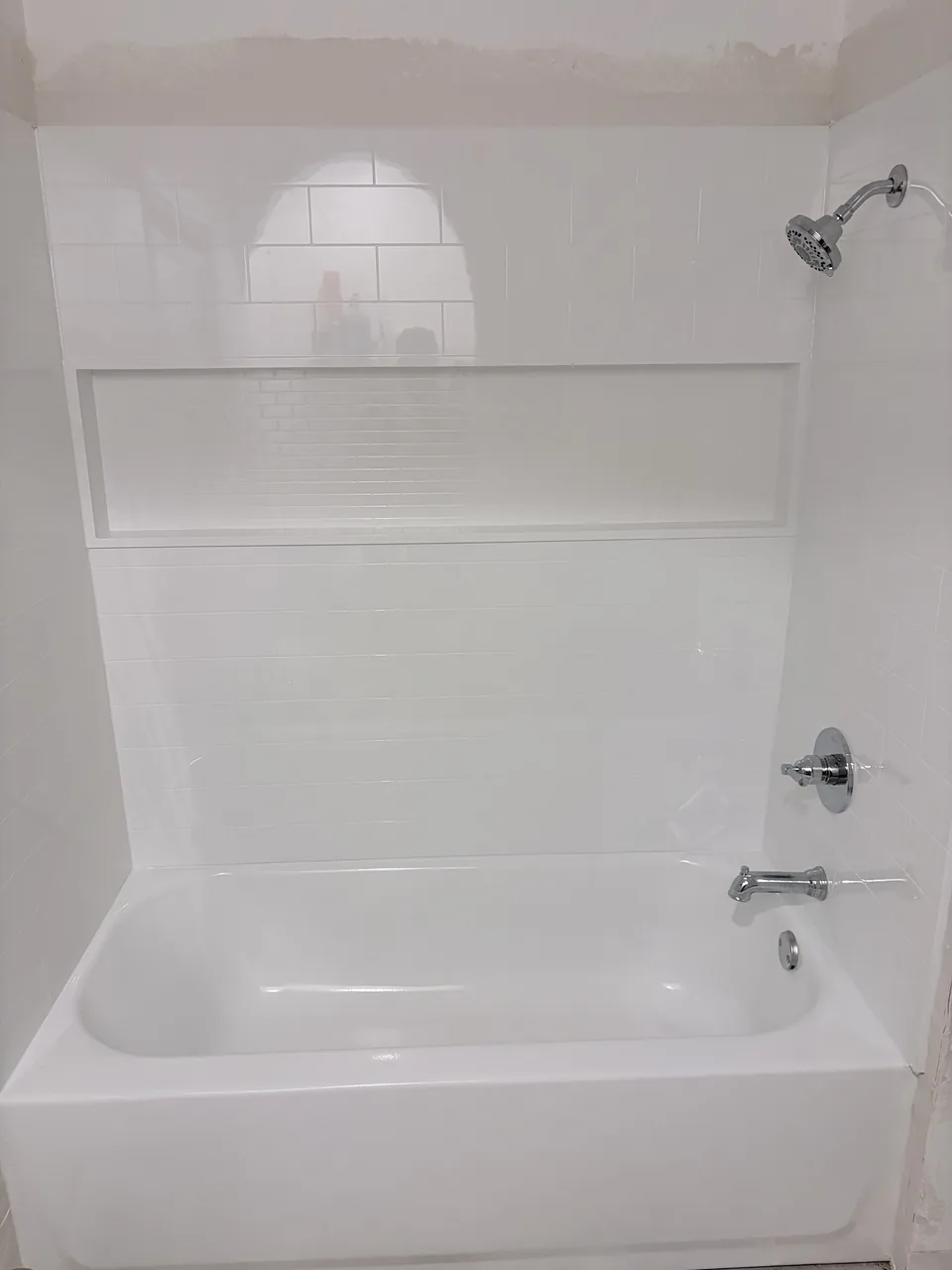
- Three-piece wall panels. A panel surround with a built-in niche instead of hundreds of grout lines — far fewer joints for water to find, and nothing to re-grout later.
- Sealed edges. Flexible silicone where the panels meet the tub and at the corners — tubs move a little, and silicone moves with them.
- Touch-up. Small wall repairs and touch-up paint around the work area, debris hauled away, final walkthrough.
- Sink faucet. Old faucet out, new faucet in, new hot and cold supply lines, every connection checked for leaks.
The result
Same room, rebuilt the right way: a new tub, new wall panels with a built-in niche, a new sink faucet, and all the heavy debris hauled away. Every photo on this page is from the actual job — no renders.
“Needed the old tub replaced and a new sink faucet. These guys gave a solid estimate, came in, demoed the old tub and tile, and threw in a new tub and wall panels. They even hauled all the heavy trash away so I didn't have to deal with it. Quick, no BS, didn't try to upsell me.”
Questions homeowners ask about a tub-shower rebuild
Tile or wall panels — which is better?
Both work when installed right. Panels go up faster, have far fewer seams and nothing to re-grout; tile gives more design choice. On this job the client chose a new tub with wall panels.
Can you keep the tub and only redo the walls?
Sometimes. If the tub is solid and level and the wall behind is dry, yes. If the wall is soft, the honest fix is to open it up first — new finish over a wet wall fails again.
How long does a job like this take?
This one took our crew three working days, plus cure times for setting materials. We give you the schedule in writing before we start.
How do I get a price?
Text a wide photo and a close-up to (820) 200-4919, or send photos here. You get a written price before anyone comes out, and materials are at cost with receipts.
Nearby: Bathroom remodel in Sherman Oaks · Encino · Studio City · Tarzana · Bathroom remodel cost in Los Angeles · More of our work