Outlet or Light Switch Not Working: Causes and Fixes
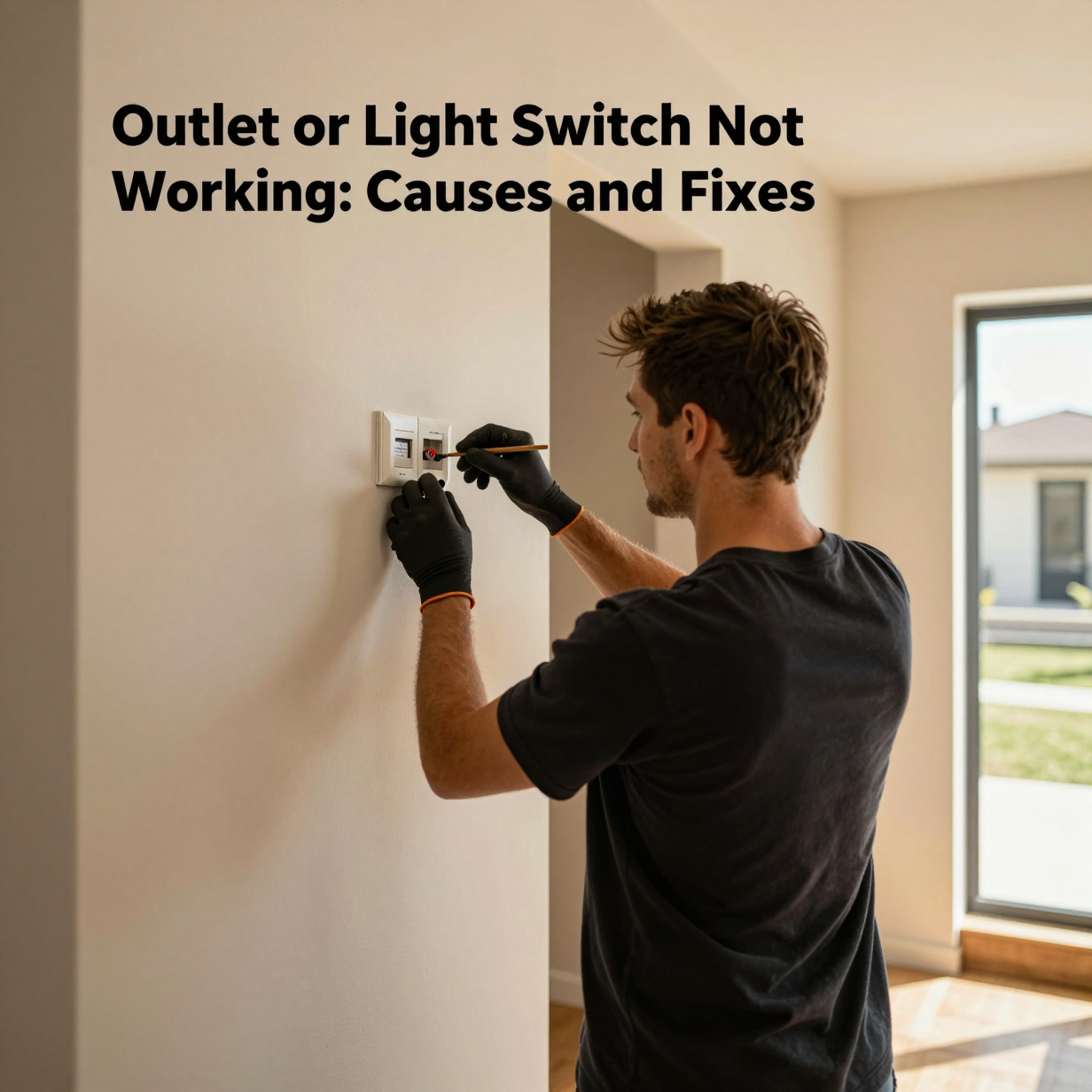
If an outlet or light switch suddenly stops working, the cause is usually a tripped breaker, a tripped GFCI outlet, a loose connection, or a worn device. Start with the safe checks below: reset the breaker, press the GFCI buttons, and test with a different device. If you smell burning, see scorch marks, or feel heat at the plate, stop and call a professional.
Start with the simple checks first
Most dead outlets and switches have a boring explanation. Before you open anything, work through this list.
- Test the device. Plug a lamp or phone charger you know works into the outlet. A failed appliance can look like a failed outlet.
- Check the bulb. For a switch that does nothing, swap in a bulb you know is good. Also check whether the fixture uses an LED bulb on a dimmer that isn't compatible.
- Look at the breaker panel. A tripped breaker often sits in a middle position, not fully "off." Push it firmly to off, then back to on.
- Press reset on nearby GFCI outlets. These are the outlets with "Test" and "Reset" buttons.
- Check for a wall switch controlling the outlet. In many older Los Angeles homes, one half of an outlet is wired to a switch, which is easy to forget.
- Notice what else is off. If several outlets or lights in one room are dead, the problem is likely upstream, not at one device.
If the breaker trips again right away, do not keep resetting it. That is the system telling you something is wrong.
Common causes of a dead outlet
Outlets fail for a handful of repeat reasons.
Tripped GFCI. Ground-fault circuit interrupter outlets protect bathrooms, kitchens, garages, laundry areas, and outdoor outlets. One GFCI can control several other outlets down the line, sometimes in a different room. If a garage or bathroom outlet is dead, hunt for the reset button elsewhere.
Tripped breaker. Overloaded circuits from space heaters, window AC units, or too many kitchen appliances are typical triggers.
Loose wire connections. Outlets wired with the "backstab" push-in holes on the back can loosen over time. Loose connections can cause intermittent power, buzzing, or heat, and they are a real fire concern.
Worn receptacle. Plugs that fall out or fit loosely mean the internal contacts have weakened. Replacement is the normal fix.
Failed upstream device. Outlets are often wired in a chain. If one fails or a wire comes loose, everything after it can go dead.
Damage from remodeling or pests. A nail, a pinched cable, or a chewed wire inside a wall can cut power to part of a circuit.
Common causes of a light switch not working
A switch problem looks different depending on the symptom.
| Symptom | Likely cause | Reasonable next step |
|---|---|---|
| Light doesn't turn on, switch feels normal | Burned-out bulb or fixture issue | Replace the bulb, check the fixture |
| Switch feels loose or mushy | Worn internal mechanism | Replace the switch |
| Light flickers when switch is touched | Loose wire or failing switch | Turn off the breaker and have it inspected |
| Dimmer hums or LEDs flicker | Bulb and dimmer mismatch | Use dimmer-rated bulbs or a compatible dimmer |
| Switch is warm or crackles | Overheating connection | Stop using it and call a pro |
| One switch of a multi-switch setup fails | Three-way switch fault | Have it diagnosed, wiring is tricky |
Three-way and four-way setups (common for hallways and stairs) are a frequent source of confusion. The wires are not interchangeable, and a swapped wire can make a light work from only one switch.

A plug-in outlet tester is a safe first step before any cover plate comes off.
Safe DIY steps you can take
Simple, low-risk work is reasonable for many homeowners. Here is a careful approach.
- Turn off the breaker for the circuit. Don't rely on the wall switch.
- Confirm power is off with a non-contact voltage tester. Test it on a known live outlet first so you know the tester works.
- Remove the cover plate and unscrew the device from the box. Pull it out gently without straining the wires.
- Look for obvious trouble: loose wires, dark or melted plastic, brittle insulation, or wires that have popped off a terminal.
- Photograph the wiring before disconnecting anything.
- Tighten loose terminal screws or replace a worn device with the same type and rating.
- Restore power and test.
Keep your hands dry, stand on a dry surface, and use a stable ladder for ceiling work. OSHA's ladder safety guidance is a good refresher if you're reaching a high fixture.
Stop if anything looks burned, if the box has aluminum wiring or cloth-covered wires, or if you can't tell which wires are which.
What older Los Angeles homes add to the problem
Many LA homes were built across several decades and remodeled in pieces. That means a single wall can hide more than one era of wiring.
- Two-prong outlets in older houses may have no ground. Swapping in a three-prong outlet without a proper ground or GFCI protection creates a false sense of safety.
- Mixed materials. Older cloth-insulated or aluminum branch wiring needs special handling and compatible devices.
- Undocumented additions. Garage conversions, ADUs, and patio outlets are sometimes tied into circuits in unexpected ways, so a dead outlet can trace back to a different room.
- Crowded panels. Older panels may have unlabeled or doubled-up breakers.
Some electrical work requires a permit. The Los Angeles Department of Building and Safety explains when permits and inspections apply, so check before taking on anything beyond like-for-like device replacement.
A like-for-like replacement device is often the fix once the cause is confirmed.
When to call a pro
DIY has limits. Call a professional if you notice any of these:
- A burning smell, scorch marks, or melted plastic
- Buzzing, sizzling, or crackling from a wall
- A breaker that keeps tripping after one reset
- A switch or plate that feels hot
- Several dead outlets with no tripped breaker or GFCI
- Lights that dim when appliances start
- Aluminum or cloth-insulated wiring
- Any work inside the panel
Panel work, new circuits, and tracing hidden faults are not good first-time projects. The cost of a mistake is fire or shock, and the problem may be bigger than the one outlet you can see.
Our lights electrical service covers outlet and switch repair and replacement, fixture swaps, and troubleshooting dead circuits. If you'd like to describe the problem first, you can send a photo for a written quote.
When hiring anyone for electrical work in California, check their standing with the Contractors State License Board, which has a consumer guide for hiring a contractor.
FAQ
Why is my outlet not working but the breaker isn't tripped?
A GFCI elsewhere on the circuit may have tripped, or a wire may have come loose in the outlet or an upstream box. Check bathrooms, garage, kitchen, and exterior outlets for a reset button first.
Why does my light switch not work but the bulb is good?
The switch itself may be worn, a wire may be loose, or the fixture may have a problem. If it is a three-way switch, the other switch could be the fault. Turn off power before inspecting.
Is a warm outlet or switch normal?
Slight warmth under heavy load can happen, but a hot plate, discoloration, or a burning smell is not normal. Unplug what you can, turn off the breaker, and call a pro.
Can I replace an outlet myself?
Many homeowners replace a like-for-like outlet safely with the breaker off and power verified dead. If the wiring looks old, damaged, or unfamiliar, or the box is crowded, hire help.
Why do outlets stop working after a remodel?
Wires can be disturbed, connections loosened, or circuits interrupted during construction. A hidden junction box covered by drywall is another possibility, and it should be found and made accessible.
Sources
- California Contractors State License Board: Hire a Contractor
- Los Angeles Department of Building and Safety: Permits and Inspections
- OSHA: Ladder Safety
Safety note: work on electrical panels, gas, structure or anything that needs a permit should be done by a licensed contractor with the required permits.
STATOX Handyman Service · Send a photo · +1 (820) 200-4919
Keep reading
 lights electricalHow to Choose a Handyman for Light Fixture InstallationLooking for a light fixture installation handyman Los Angeles homeowners can trust? Learn what to ask, what to check, and which red flags to skip.
 lights electricalStudio City Older Homes: Lighting and Outlet Upgrade TipsPlanning a Studio City handyman lighting outlet upgrade for an older home? Learn what to fix first, what needs a permit, and when to call a pro.
 lights electricalTarzana ADU and Garage Lighting: Outlets and Fixtures GuidePlanning Tarzana ADU garage lighting outlets? Learn where to place outlets, which fixtures suit each space, and what to settle before work starts.