Santa Ana Winds: Prep Your Los Angeles Home's Windows

For Santa Ana winds home preparation in Los Angeles, start with your windows: check that every sash latches tight, replace cracked or hardened weatherstripping, re-caulk gaps, and fix loose screens and failing glazing. Windows are where hot, dry, dust-and-ember-carrying wind finds its way in. An hour with a flashlight and a putty knife can tell you most of what you need to know.
Why Santa Ana winds are hard on windows
Santa Ana winds are dry, gusty offshore winds that blow from the inland deserts toward the coast, typically in fall and winter. They bring low humidity, dust, and flying debris, and they often arrive when brush fire risk is already high.
Windows take the brunt of it in a few ways:
- Pressure and rattle. Gusts push on glass and loose sashes, working at weak latches and worn seals.
- Debris. Twigs, palm fronds, gravel, and patio items can hit glass and tear screens.
- Dust and air leaks. Fine dust slips through any gap, even in a window that looks closed.
- Dry-out. Months of sun and low humidity leave caulk, rubber seals, and wood frames brittle and cracked.
None of this means your windows are failing. It means the small weak points matter more when the wind picks up.
A 20-minute window walk-through before wind season
Go room by room, in daylight, with a flashlight, a putty knife, and a roll of painter's tape for marking trouble spots.
- Close and lock each window. Does the latch pull the sash snug against the frame? If you can wiggle it, note it.
- Run your hand around the edges on a breezy day. You'll feel air leaks you can't see.
- Inspect the weatherstripping. Look for flattened, cracked, peeling, or missing sections.
- Check exterior caulk where the frame meets the siding or stucco. Hairline cracks and gaps wider than a credit card edge need attention.
- Look at the glass. Note chips, cracks, and fogging between double panes, which suggests a failed seal.
- Test the screens. Tears, bent frames, and loose corners let debris and insects in.
- Open and close each window fully. Sticking, grinding, or sagging points to track, roller, or hinge problems.
Mark each problem with a piece of tape so you can work through them in order.
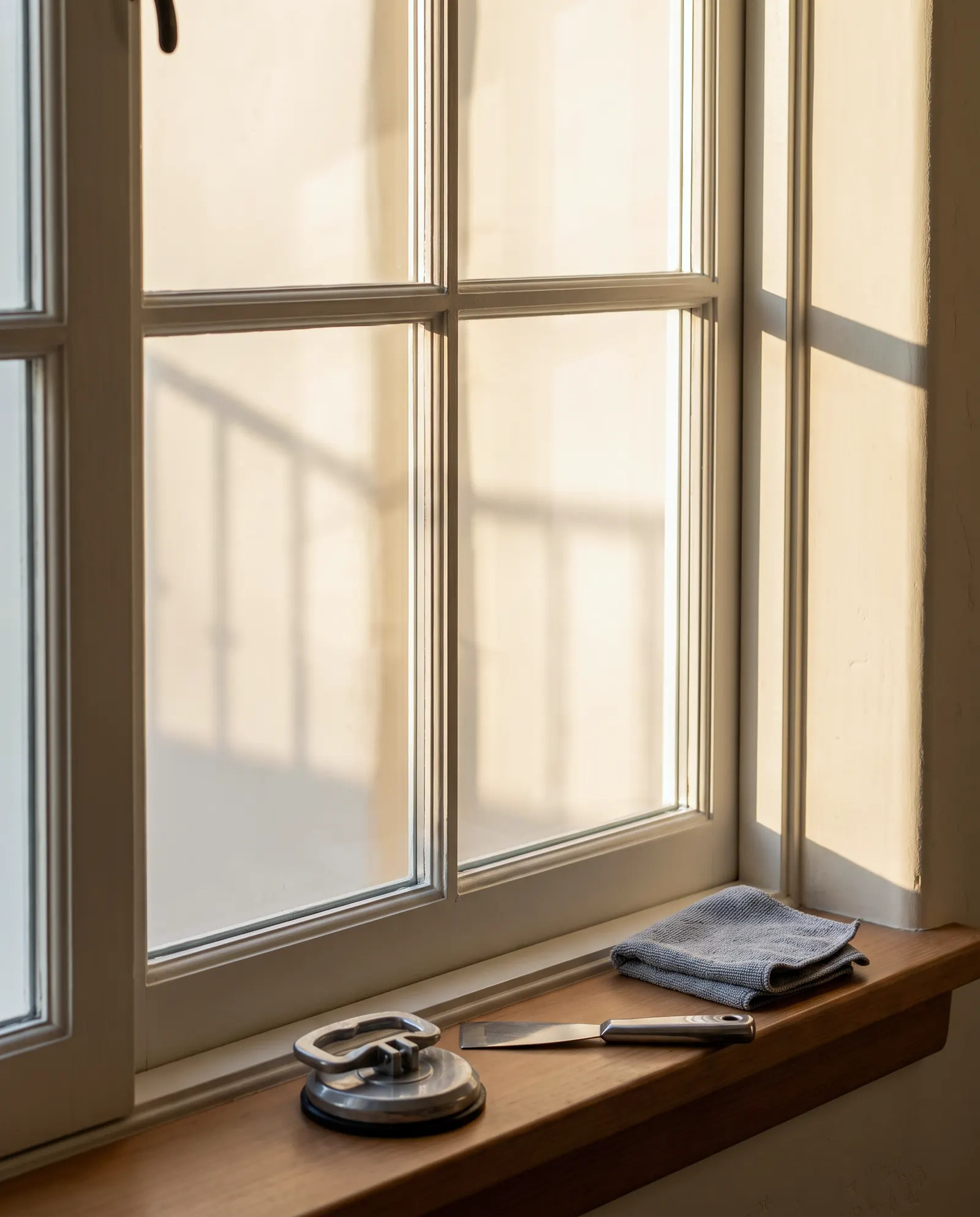
Fresh weatherstripping pressed into a clean channel is one of the simplest fixes for wind-driven drafts and dust.
Seals, caulk, and weatherstripping: the quick wins
Most air and dust leaks come from three places, and all three are manageable for a careful homeowner.
Weatherstripping. If it has lost its spring or crumbles when pressed, replace it. Match the profile (the shape and thickness) of what's there, because the wrong size can keep a window from closing or leave a gap. Clean the channel first so the new strip adheres.
Exterior caulk. Scrape out loose, cracked caulk with a putty knife, wipe the area clean and dry, and apply a fresh bead of exterior-grade sealant. Smooth it so water sheds away from the frame. Painting over cracks won't seal them.
Interior gaps. Small gaps between trim and wall can be filled with paintable caulk. Don't seal moving parts, weep holes, or the tracks the sash rides in.
A note on older homes: if your house was built before 1978, paint on old window frames may contain lead. Scraping, sanding, or disturbing it can create dust. The EPA's lead resources explain the risks and how professionals handle renovation work (see Sources). If you're unsure, pause before scraping old painted wood.
Latches, locks, and loose sashes
A window that rattles in the wind usually has a hardware problem, not a glass problem.
- Latches that don't pull tight may be misaligned or have loose screws. Tighten them first. If the keeper has shifted, it may need repositioning.
- Sliding windows often rattle because rollers are worn or the track is packed with grit. Vacuum the track, wipe it clean, and check whether the sash rides level.
- Double-hung windows that drift down or won't stay put may have worn balances. These are fussy to replace, and the details differ by window type.
- Casement windows rely on hinges and an operator crank. If the crank spins without moving the sash, or the window won't seal flat, get it looked at.
Never force a stuck window during high wind. A sash that jumps its track can fall or shatter.
Screens, glass, and what's outside the window
Santa Ana wind season is also a good time to look at what surrounds the glass.
Screens. Repair or replace torn screens. Check that the spline (the rubber cord holding the mesh) is snug and the frame sits fully in its channel. Loose screens can blow off and become debris themselves.
Glass. A small chip can spread into a crack with temperature swings and vibration. Cracked glass shouldn't wait for a windy week. Tape isn't a fix, but a covering on the interior can help keep shards contained if you must wait.
Surroundings. Take a walk outside:
- Secure or store patio furniture, umbrellas, planters, and trash bins.
- Trim branches that touch or hang over windows and roofs.
- Clear dry leaves and debris from window wells, sills, and gutters.
- Check that shutters, awnings, and window boxes are firmly attached.
Many LA neighborhoods, especially in the hills and canyons, also have brush clearance requirements. Your local fire department can tell you what applies to your property.
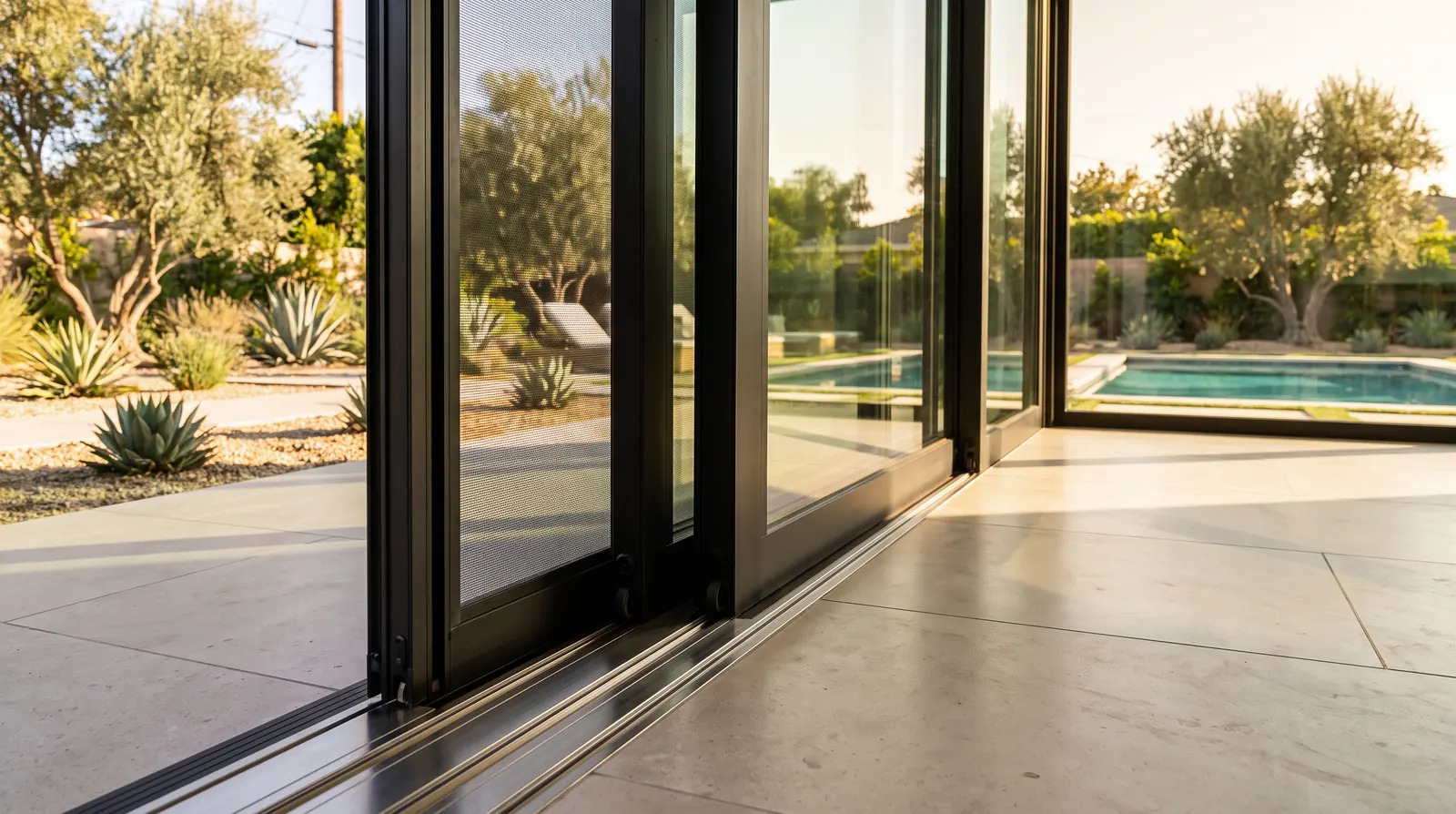
Clearing dry debris from window wells and sills takes minutes and removes easy fuel and flying material.
What to fix yourself vs. what to repair or replace
| Problem | Often DIY-friendly? | Notes |
|---|---|---|
| Worn weatherstripping | Yes | Match the profile; clean the channel first |
| Cracked exterior caulk | Yes | Use exterior-grade sealant; work from a stable position |
| Torn screen | Yes | Rescreen kits are straightforward |
| Gritty slider track | Yes | Vacuum, wipe, and check the rollers |
| Loose latch screws | Yes | Tighten; replace the hardware if it still won't close tight |
| Worn rollers or balances | Sometimes | Parts vary by window brand and age |
| Cracked or chipped glass | Usually no | Safety risk; sizing and handling matter |
| Fogged double panes | Usually no | The seal has failed and the unit may need repair |
| Warped, rotted, or out-of-square frames | No | Can affect the whole opening |
Temporary measures for a windy forecast
If a high-wind warning is coming and you can't make permanent repairs yet:
- Close and lock all windows, including those you rarely use.
- Close blinds or heavy curtains to cushion the room from broken glass.
- Move beds, desks, and seating away from vulnerable windows.
- Keep a flashlight, work gloves, and a broom handy for cleanup.
- Skip running a whole-house fan or opening windows for fresh air when the air is smoky or dusty.
When to call a pro
Plenty of wind prep is honest DIY: weatherstripping, caulk, screens, and tightening hardware. You'll know quickly if a fix holds.
Bring in a professional when:
- Glass is cracked, shifted, or loose in the frame.
- A window won't close or lock after you've cleaned and adjusted it.
- Frames are soft, rotted, or visibly out of square.
- Panes are fogged between layers.
- The window is on an upper floor or an awkward spot where you'd need a tall ladder. The OSHA ladder guidance is a useful reminder of safe setup.
- You suspect lead paint on older frames.
Work that changes the size of an opening or involves structural framing may require a permit, so check the LADBS permits page in Sources. When hiring anyone, use the CSLB's consumer pages to learn how to check a contractor before you agree to work.
STATOX handles window repair and related work around Los Angeles. If you'd like a clear starting point, you can send a photo for a written quote and we'll tell you what we see.
FAQ
When is Santa Ana wind season in Los Angeles?
The winds typically show up in fall and winter, though they can occur at other times. Prepping in late summer or early fall means your windows are ready before the first strong event.
Do closed windows keep dust out during Santa Ana winds?
They help a lot, but only if seals are in good shape. Worn weatherstripping and cracked caulk let fine dust in even when windows are latched.
Should I tape my windows before high winds?
Tape doesn't strengthen glass, and it can leave residue or hide damage. Better steps are fixing loose sashes, closing blinds, and moving furniture away from glass.
Can I replace weatherstripping myself?
In most cases, yes. Remove the old strip, clean the channel, and install a matching profile. If the window still leaks afterward, the issue may be the frame or hardware.
Will better seals help with energy use too?
Reducing drafts can help keep indoor temperatures steadier. For broader guidance, see the California Energy Commission's building efficiency resources and your local utility.
Sources
- California Contractors State License Board: Hire a Contractor
- Los Angeles Department of Building and Safety: Permits & Inspections
- EPA: Renovation, Repair and Painting Program
- OSHA: Ladders
Safety note: work on electrical panels, gas, structure or anything that needs a permit should be done by a licensed contractor with the required permits.
STATOX Handyman Service · Send a photo · +1 (820) 200-4919
Keep reading
 windowsCommon Window Problems and Fixes for Los Angeles HomesLearn the common window problems and fixes for Los Angeles homes, from sticking sashes to failed seals, and what to try first before calling for help.
 windowsWindow Repair or Replacement: How to Choose in Los AngelesWindow repair or replacement in Los Angeles: how to tell which one your home needs, what to check first, and when a pro visit saves you a second trip.
 windowsWindow Replacement in Sherman Oaks: Older and Hillside HomesPlanning window replacement in Sherman Oaks? Learn what older and hillside homes need, from frame types to access and permits, before you start.