Leaky Faucet, Running Toilet, Slow Drain: Common Fixes
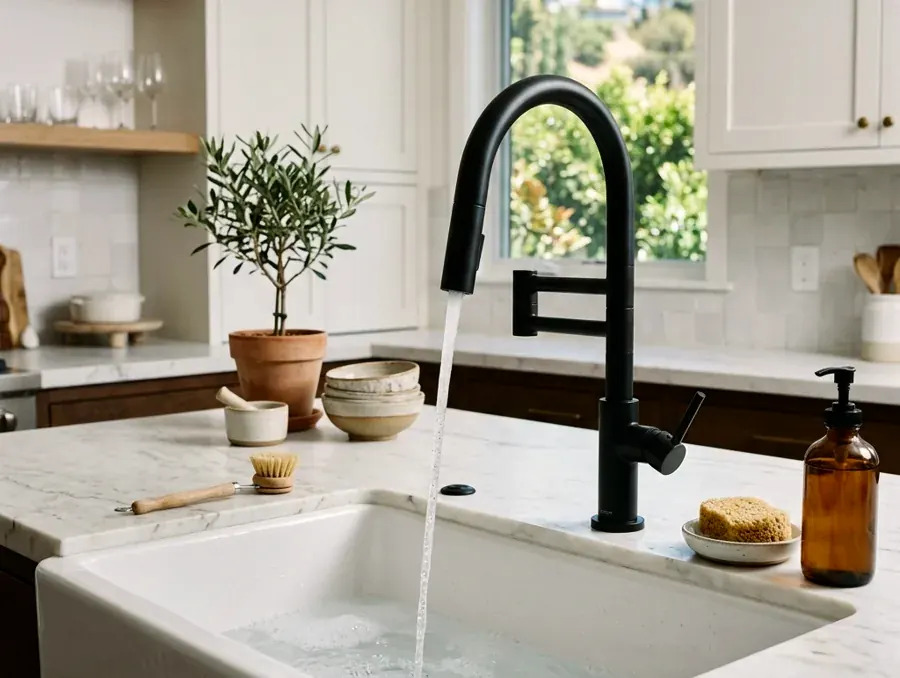
Most leaky faucets, running toilets, and slow drains come down to a small worn part or a buildup you can reach: a cartridge or washer, a flapper, or a clog of hair and soap near the drain opening. Start by shutting off the water to the fixture, identify exactly where the problem is, and try the simple fix first. If water is coming from inside a wall, from a supply line you can't tighten, or from several drains at once, stop and get help.
Why small plumbing problems deserve attention
A drip seems harmless. But water that moves where it shouldn't wears on things quietly: a running toilet keeps filling the bowl, a dripping faucet stains the sink, and a slow drain often becomes a full clog right when guests arrive.
The EPA's WaterSense program points out that household leaks add up to a lot of wasted water over time, and that a toilet that runs or a faucet that drips is often a simple fix. That's the good news. Many of these repairs use inexpensive parts and basic tools.
Moisture matters too. The EPA notes that controlling moisture is the key to preventing mold growth indoors, so a slow leak under a sink is worth chasing down rather than ignoring.
Fixing a leaky faucet
First, figure out where the water is coming from. The location tells you what's worn.
| Where it leaks | Likely cause | Usual fix |
|---|---|---|
| Drips from the spout | Worn cartridge, washer, or seat | Replace the cartridge or washer and seat |
| Leaks around the handle | Worn O-ring or loose packing nut | Replace the O-ring, snug the nut |
| Water at the base of the spout | Worn spout O-rings | Replace the O-rings |
| Wet cabinet under the sink | Loose or worn supply line or connection | Tighten or replace the line |
Basic steps for a drip from the spout
- Close the shutoff valves under the sink (turn clockwise). If there are none, shut off the main water supply.
- Plug the drain so small screws don't disappear.
- Open the faucet to release pressure, then remove the handle (look for a decorative cap over a screw).
- Pull out the cartridge or stem. Take a photo at each step so reassembly is easy.
- Bring the old part to the hardware store and match it exactly.
- Install the new part, reassemble, and turn the water back on slowly.
Faucet brands vary, and older fixtures can have corroded parts that don't want to come out. If a stem is seized, stop before you strip it.
Fixing a running toilet
A toilet that hisses, refills on its own, or runs after flushing is almost always one of three things inside the tank.
Quick dye test: Add a few drops of food coloring to the tank and wait without flushing. If color shows up in the bowl, the flapper isn't sealing. The EPA's Fix a Leak Week materials recommend this same simple check.
Common causes, in order of how often to check them
- Worn or warped flapper. The rubber seal at the bottom of the tank hardens over time. Replacement is usually a quick job.
- Chain too tight or too slack. A chain that's too short holds the flapper open. Too long, and it can tangle underneath. Aim for a little slack.
- Fill valve problem. If water keeps rising toward the overflow tube, the fill valve may need adjusting or replacing.
- Float set too high. Water spilling into the overflow tube means the level needs to be lowered.
Flapper replacement steps
- Turn off the toilet's supply valve and flush to empty the tank.
- Unhook the chain and lift the flapper off its ears.
- Take the old flapper to the store so you get the right size and style.
- Attach the new one, adjust the chain, and turn the water back on.
- Repeat the dye test to confirm the fix.

The flapper, chain, and fill valve are the first three parts to check in a running toilet.
Clearing a slow drain
Slow drains are usually a gradual buildup: hair and soap in bathroom sinks and tubs, grease and food residue in kitchens. Start with the least aggressive method.
Try these in order
- Clear the visible part. Remove the stopper and pull out hair and gunk by hand or with a plastic drain tool.
- Flush with hot water. For kitchen sinks with greasy buildup, hot tap water can help move residue along.
- Use a plunger. Block the overflow opening with a wet cloth, and use a cup plunger with enough water to cover the cup.
- Clean the P-trap. Place a bucket underneath, loosen the slip nuts by hand, and clear the trap. Reassemble carefully and check for drips.
- Use a small hand auger for clogs farther in, feeding it gently so it doesn't scratch or jam.
A word of caution about chemical drain cleaners: they can be harsh on pipes and are hazardous if they splash or sit in standing water. If you've used one and the drain is still blocked, tell any professional before they start so they can protect themselves.
Prevention habits that help:
- Use a hair catcher in tubs and showers.
- Wipe greasy pans before washing instead of rinsing grease down the sink.
- Keep wipes out of the toilet, even ones labeled flushable.
Tools worth having on hand
You don't need a full workshop. A small kit covers most of these repairs:
- Adjustable wrench and channel-lock pliers
- Screwdrivers (Phillips and flat)
- Cup plunger and a toilet flange plunger
- Small bucket and old towels
- Plumber's tape and spare O-rings
- Flashlight
- Hand drain auger
A bucket, a wrench, and towels make a P-trap cleanout far less messy.
When to call a pro
DIY is a good fit for flappers, fill valves, faucet cartridges, and simple clogs. It stops being a good fit when the repair is hidden, repeated, or tied to the building's larger plumbing.
Call for help if:
- Water is coming from inside a wall, ceiling, or floor.
- Several drains back up or gurgle at once, which can point to a main line issue.
- A shutoff valve won't close or leaks when you turn it.
- Corroded pipes or fittings crumble or twist when touched.
- The same repair has failed twice.
- You see signs of ongoing moisture: musty smell, stains, soft or warped materials.
- You're not comfortable with the repair. That's a perfectly good reason.
Larger plumbing work, like replacing pipes or moving fixtures, may need permits in Los Angeles. The city's building department explains how permits and inspections work, so check before starting anything beyond a simple repair. When hiring anyone, the California Contractors State License Board has a consumer guide on how to hire a contractor, and it's worth reading first.
Our plumbing fixes service covers faucet, toilet, and drain repairs like these. If you're not sure what you're dealing with, you can send a photo for a written quote and we'll tell you what we see.
FAQ
How do I know if my toilet is leaking into the bowl?
Add a few drops of food coloring to the tank and wait without flushing. If color appears in the bowl, water is slipping past the flapper or seal.
Is a dripping faucet really worth fixing?
Yes. It wastes water, can stain fixtures, and usually means a part is wearing out. The repair is typically small compared with letting it continue.
Can I use a plunger on a kitchen sink with a garbage disposal?
Yes, but make sure the disposal is off, and block the other side of a double sink with a stopper or wet cloth so pressure goes where you want it.
Why does my drain keep slowing down after I clear it?
Buildup may be deeper in the line than you can reach, or something is catching, like a rough pipe joint. A repeat clog is a good reason to have the line looked at.
Should I shut off the main water when a fixture leaks?
Use the fixture's own shutoff valve first. If it doesn't work, or the leak is serious, shut off the main and call for help. Locate your main valve before you need it.
Sources
- EPA WaterSense: Fix a Leak Week
- EPA: A Brief Guide to Mold, Moisture, and Your Home
- LADBS: Permits and Inspections
- CSLB: Hire a Contractor
Safety note: work on electrical panels, gas, structure or anything that needs a permit should be done by a licensed contractor with the required permits.
STATOX Handyman Service · Send a photo · +1 (820) 200-4919
Keep reading
 paintingAcrylic vs Oil-Based Paint: Which Fits Your ProjectAcrylic vs oil based paint explained for Los Angeles homes: where each works, how they differ in cleanup, smell, and finish, and how to choose with confidence.
 bathroomBathroom Repair Prep Checklist Before the Handyman VisitUse this bathroom repair prep checklist to clear the space, gather photos, and find your shutoffs so your handyman visit goes smoothly. Read before you book.
 bathroomBathroom Tile vs Vinyl vs Acrylic Surrounds: ComparedBathroom tile vs vinyl vs acrylic: how each surround handles water, cleaning, and repairs in Los Angeles homes. Read before you choose your material.