Painting a Brentwood Home: Coastal Air and Exterior Care
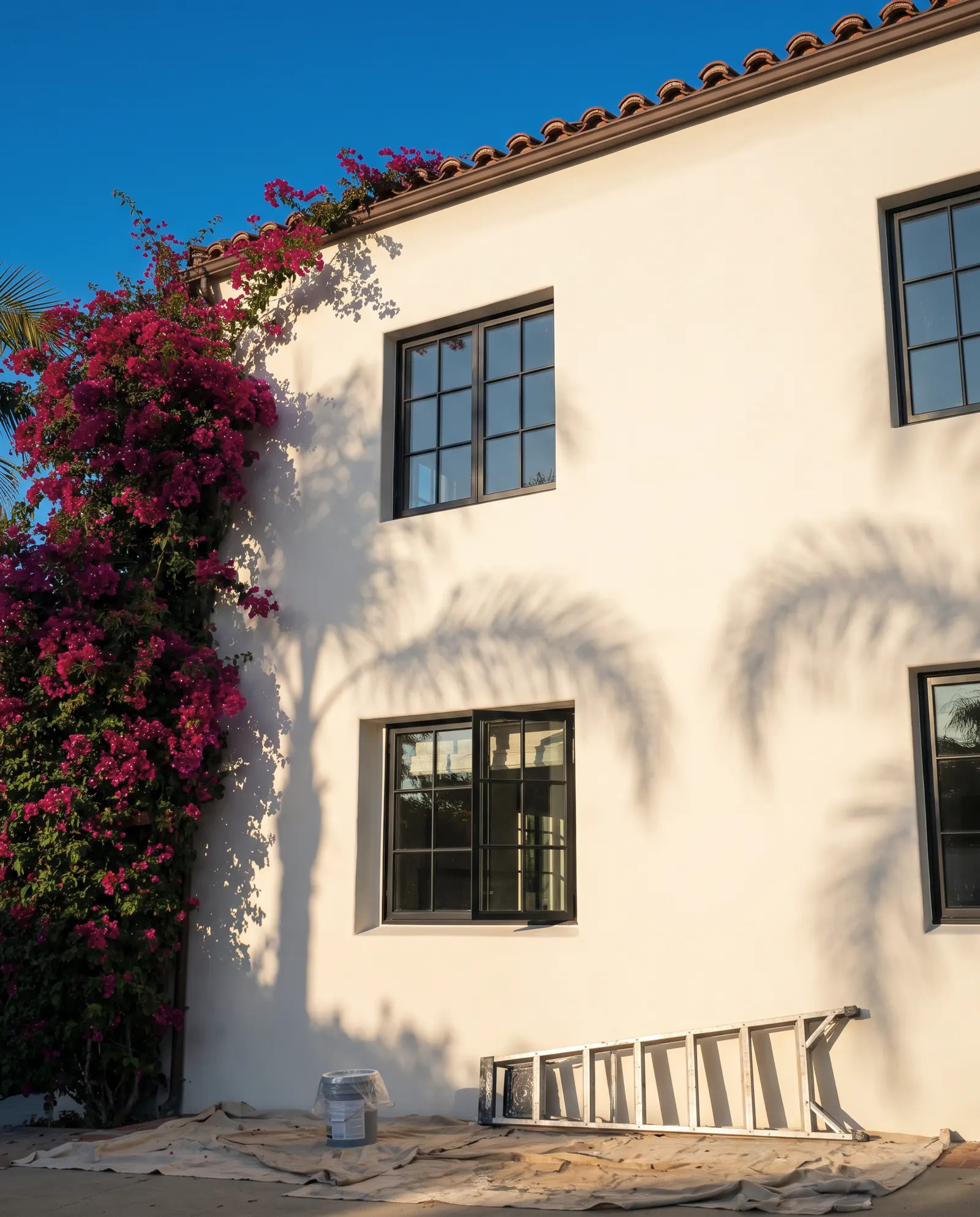
If you're planning painting in Brentwood, Los Angeles, the short answer is this: prep and product choice matter more than color. Coastal moisture, strong sun, and older surfaces wear paint in predictable ways, and a good exterior job works with those conditions. Below is how to read your house, plan the work, and avoid the common mistakes.
How Brentwood's Coastal Air Affects Exterior Paint
Brentwood sits close enough to the Pacific that marine air is part of daily life. Morning fog, cool nights, and damp mornings followed by bright afternoon sun create a cycle that is hard on paint films.
Here is what that cycle tends to do:
- Moisture sits on surfaces longer. Damp wood, stucco, and trim take longer to dry, which can trap water behind paint.
- Sun breaks down paint over time. South- and west-facing walls often fade, chalk, or crack first.
- Salt and fine grime settle on surfaces. Even a light film can keep new paint from bonding if it isn't washed off.
- Temperature swings make materials move. Wood expands and contracts, and that movement can open hairline gaps at joints.
None of this means paint can't last here. It means the weak spots show up at edges, horizontal surfaces, and anywhere water can linger.
Reading Your Home's Surfaces Before You Paint
Walk the exterior in good daylight, ideally in the morning when you can see dampness. Different materials fail in different ways.
| Surface | Common coastal-area problem | What to look for |
|---|---|---|
| Stucco | Hairline cracks, staining, chalking | Cracks wider than a business card, powdery residue on your hand |
| Wood siding | Peeling, softness, swelling | Paint lifting in sheets, soft spots when pressed with a screwdriver tip |
| Trim and fascia | Open joints, rot at the bottom edges | Dark lines at corners, spongy wood near the roofline |
| Window sills | Standing water, failed caulk | Bubbling paint, gaps between sill and frame |
| Metal railings and gates | Rust blooms | Orange stains, flaking around fasteners |
| Garage doors | Sun fade, panel movement | Dull color, cracks along panel edges |
Press on suspicious wood. If it dents or crumbles, it needs repair or replacement before any paint goes on. Paint over rot only hides it for a short time.
Prep Work That Decides How Long Paint Lasts
Most paint failures trace back to preparation, not the paint can. A proper exterior prep usually follows this order:
- Wash the surfaces. Remove dirt, salt film, mildew, and chalk. Let everything dry fully.
- Scrape and sand. Remove loose paint and feather the edges so they don't telegraph through the new coat.
- Repair. Fill cracks, patch stucco, replace damaged wood, and treat rust.
- Caulk joints. Use a paintable exterior-grade caulk at trim joints and around windows, but leave drainage gaps and weep areas alone.
- Spot-prime. Prime bare wood, patched areas, and rusted metal with a primer suited to that material.
- Paint in suitable weather. Avoid damp mornings, heavy fog, or surfaces that are still wet.
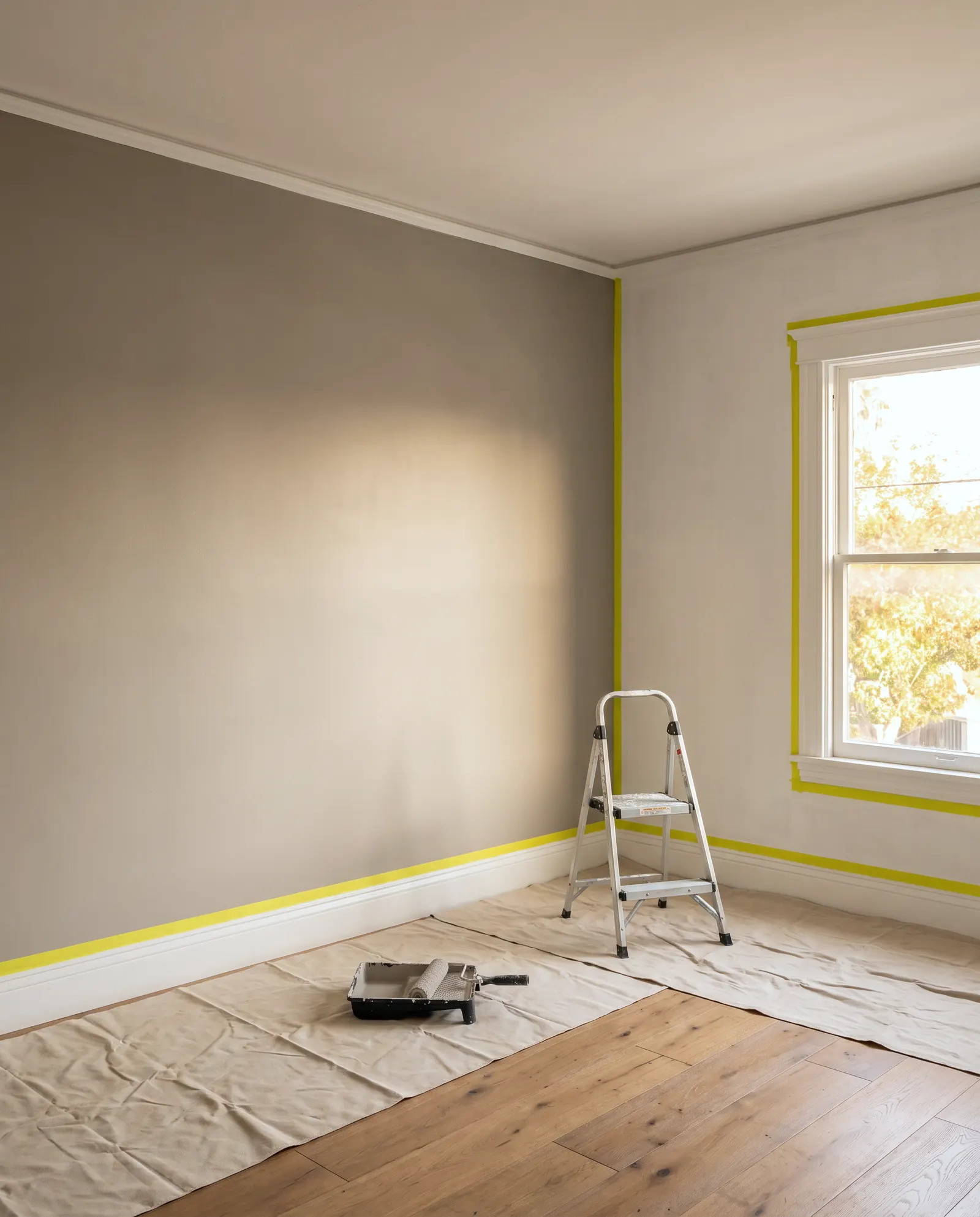
Scraping, sanding, and priming take more time than painting, and they do more for durability.
Older Homes and Lead Paint: What to Know
Many homes in established neighborhoods were built before lead paint was phased out in 1978. If your house is older, disturbing painted surfaces by sanding or scraping can create hazardous dust.
The EPA's Renovation, Repair and Painting program sets rules for contractors working on older homes, and the EPA offers guidance on protecting your family from lead exposure. Both are worth reading before work begins.
Practical steps for an older home:
- Ask whether the contractor follows EPA lead rules for pre-1978 homes.
- Keep children, pregnant family members, and pets away from the work area.
- Don't dry-sand or burn off old paint yourself.
- Ask how debris will be contained and cleaned up.
Choosing Paint, Sheen, and Color for Sun and Moisture
Pick products designed for exterior use and for your specific surface. A few general principles help:
- Quality acrylic exterior paints generally handle movement and weather better than bargain formulas.
- Sheen matters. Flat hides surface flaws on stucco, while satin or semi-gloss on trim sheds water and wipes clean more easily.
- Lighter colors tend to hold up better against sun fade and heat than very dark ones, especially on sun-facing walls.
- Low-VOC options reduce odor and are a good idea near open windows. The EPA explains how volatile organic compounds affect indoor air quality.
Test colors on the wall itself and look at them at several times of day. Brentwood's soft morning light can make a color look quite different at 4 p.m. Benjamin Moore's online color library is a handy place to browse and narrow choices before you buy samples.
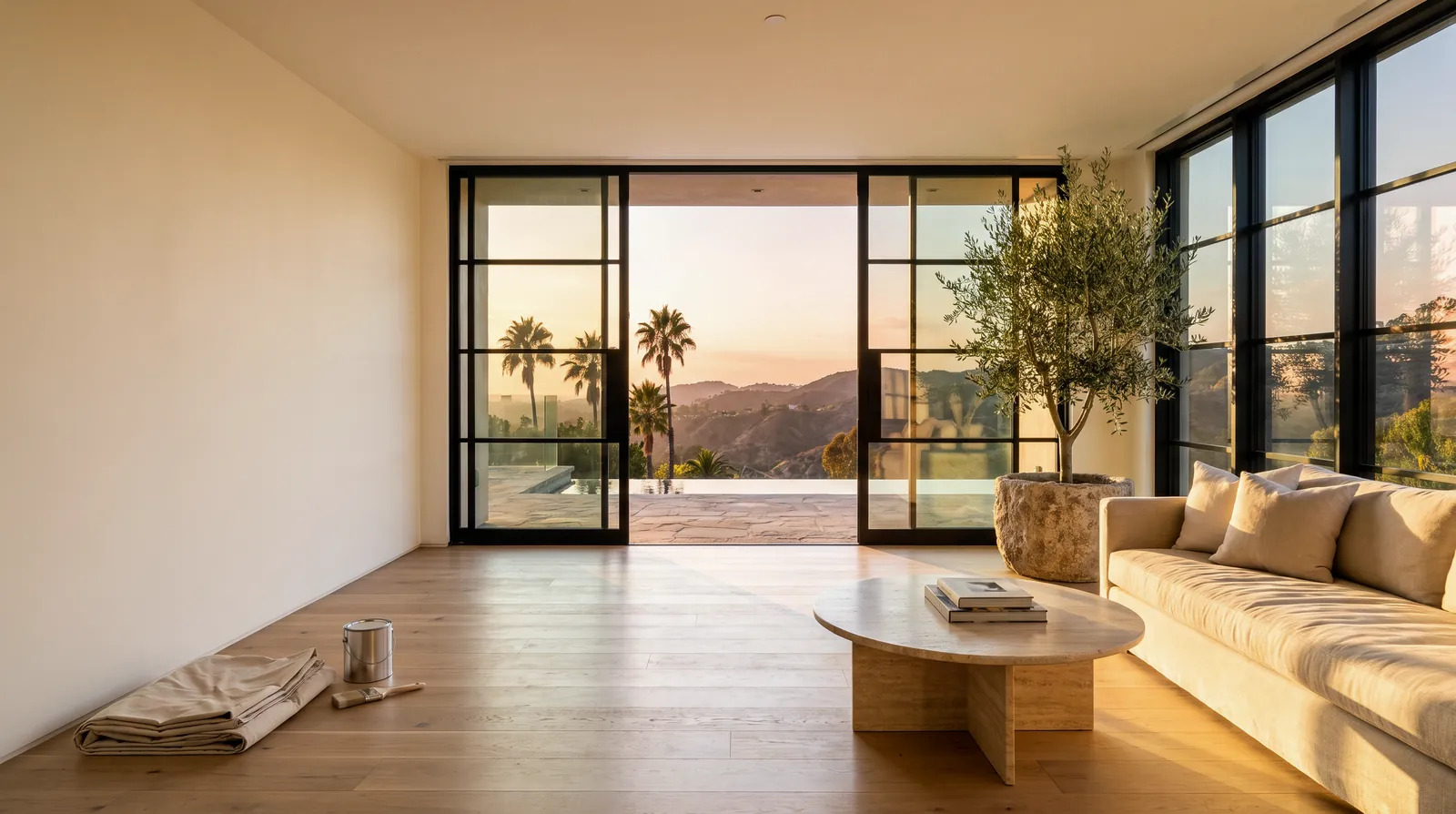
Test swatches on the actual wall and check them morning, noon, and late afternoon.
Pre-Project Checklist for Homeowners
Before anyone opens a paint can, run through this list:
- [ ] Walk the exterior and note cracks, peeling, soft wood, and rust.
- [ ] Check gutters and downspouts, since overflow stains and rots walls.
- [ ] Trim plants back from walls so air can circulate.
- [ ] Move patio furniture, grills, and planters away from the house.
- [ ] Identify sprinkler heads that spray the walls and adjust them.
- [ ] Confirm the age of the home for lead considerations.
- [ ] Decide on scope: walls only, or trim, doors, fascia, and garage too.
- [ ] Ask about HOA or neighborhood color rules if they apply.
- [ ] Check whether any repair work requires a permit through LADBS.
When to Call a Pro
Plenty of painting is reasonable DIY: a single fence, a small door, or a fresh coat on an interior room. Exterior work on a full house is different.
Consider hiring help when:
- The house is two stories or has steep access. Ladder falls are a real risk, and OSHA publishes ladder safety guidance worth reading.
- The home was built before 1978 and paint will be disturbed.
- You see wood rot, widespread stucco cracking, or moisture stains.
- The surface needs repairs before painting, not just a coat of color.
- You want a clean, even finish on large areas without lap marks.
If you hire, check the contractor's status with the California Contractors State License Board, which provides guidance for hiring a contractor. Get the scope, materials, prep steps, and payment schedule in writing.
STATOX's painting service covers exterior and interior work around Brentwood. If you want a starting point, you can send a photo for a written quote and describe what you're seeing.
FAQ
How often should a Brentwood exterior be repainted?
It depends on the surface, the paint, the sun exposure, and how well the last job was prepped. Check yearly for chalking, cracking, and peeling. Sun-facing walls usually show wear first.
Can I paint over peeling paint?
No. Loose paint must be scraped and sanded back to a sound edge, and bare areas need primer. Painting over peeling areas usually leads to the same peeling again.
Does coastal fog mean I should avoid painting certain months?
Not necessarily, but surfaces must be dry and temperatures within the paint manufacturer's range. Check the label, and don't paint when walls are damp.
Is low-VOC paint worth choosing?
For most households, yes, particularly for interior work and when windows will stay partly open. It reduces odor, and the EPA has background on VOCs and indoor air.
Do I need a permit to repaint my house?
Painting alone typically doesn't, but repairs such as structural, stucco replacement, or window changes may. Check with LADBS if you're unsure.
Sources
- California Contractors State License Board: Hire a Contractor
- EPA: Renovation, Repair and Painting Program
- EPA: Volatile Organic Compounds' Impact on Indoor Air Quality
- OSHA: Ladders
Safety note: work on electrical panels, gas, structure or anything that needs a permit should be done by a licensed contractor with the required permits.
STATOX Handyman Service · Send a photo · +1 (820) 200-4919
Keep reading
 paintingAcrylic vs Oil-Based Paint: Which Fits Your ProjectAcrylic vs oil based paint explained for Los Angeles homes: where each works, how they differ in cleanup, smell, and finish, and how to choose with confidence.
 paintingInterior Painting Prep Checklist for Your LA HomeUse this interior painting prep checklist for your Los Angeles home to protect floors, fix walls, and get a smooth finish. Read before you open a can.
 paintingPainting Older Plaster Walls in Cheviot Hills HomesPainting plaster walls in Cheviot Hills? Learn how to check, repair, prime, and paint older plaster so the finish lasts. Read before you pick up a brush.