Plumbing Fixes in Encino: Older Homes, ADUs and Add-Ons

Most plumbing fixes in Encino, CA fall into a few groups: dripping faucets, running toilets, slow drains, worn supply lines, and the odd connections that show up when a house has been added onto over the years. Older homes, backyard ADUs and remodeled additions each have their own habits. Knowing what to look for helps you fix small problems early and describe bigger ones clearly.
Why Encino homes have their own plumbing quirks
Encino has a wide mix of housing: mid-century ranch homes, larger custom houses in the hills, townhomes, and newer guest houses and ADUs tucked behind main residences. That mix means you may find several generations of plumbing under one roof.
In an older house, it is common to see a combination of materials: original pipe, newer copper or plastic repairs, and a few shutoff valves that have not been turned in decades. Each junction between materials is a place where leaks like to start.
Add-ons create a different kind of complexity. A room addition, converted garage or ADU often ties into existing lines. The work may have been done well, but access panels get painted over, shutoffs are unlabeled, and nobody remembers where the line runs.
Before you fix anything, learn your house. Find the main shutoff, find the fixture shutoffs, and write down what you find.
Common repairs in older Encino homes
Older fixtures tend to wear in predictable ways. These are the repairs we see most often:
- Dripping faucets: Usually a worn cartridge, washer or O-ring. Constant drips waste water, and the EPA's WaterSense program notes that fixing household leaks is one of the simplest ways to cut water waste.
- Running or phantom-flushing toilets: Often a worn flapper, a fill valve that no longer shuts off cleanly, or a chain that is too long or too short.
- Stuck or weeping shutoff valves: Old multi-turn valves under sinks can seep at the stem or refuse to close fully.
- Cracked or stiff supply lines: Braided or rubber lines under sinks and behind toilets age out. Replacing them is inexpensive preventive care.
- Slow drains: Hair, soap buildup and grease are the usual culprits, though a slow drain across several fixtures can point to a deeper line issue.
- Worn showerheads and diverters: Mineral buildup and failed diverters are common, and a newer WaterSense-labeled showerhead can be a simple upgrade.
None of these is exotic. The trick is catching them while they are still small, before water finds its way into cabinet floors, subfloors or drywall.
ADUs and guest houses: what is different
An ADU or guest house is a small home with a full set of plumbing needs. Because it is compact, small problems can feel bigger: one leaking fixture can affect the whole space, and shared lines mean a problem in one structure can show up in the other.
Things worth checking in an ADU:
- Where the shutoff is. Ideally the ADU has its own accessible shutoff. If it does not, make sure you know which valve isolates it.
- Water pressure and flow. Weak flow at the far end of a long run can come from a partly closed valve or clogged aerator.
- Water heater access. Tight closets make maintenance and leak spotting harder. Look for rust, moisture or staining at the base.
- Drain behavior. Slow drains in a new space may indicate a venting or slope issue rather than a simple clog.
- Exterior hose bibs and irrigation tie-ins. These are easy to overlook and can leak quietly into soil.
Anything that changes the layout of the plumbing, such as adding a new fixture or moving a line, is a different category from repair. Those jobs may need permits and inspections. The Los Angeles Department of Building and Safety explains how permits and inspections work on its permits and inspections page, and it is worth reading before you plan anything beyond a like-for-like swap.
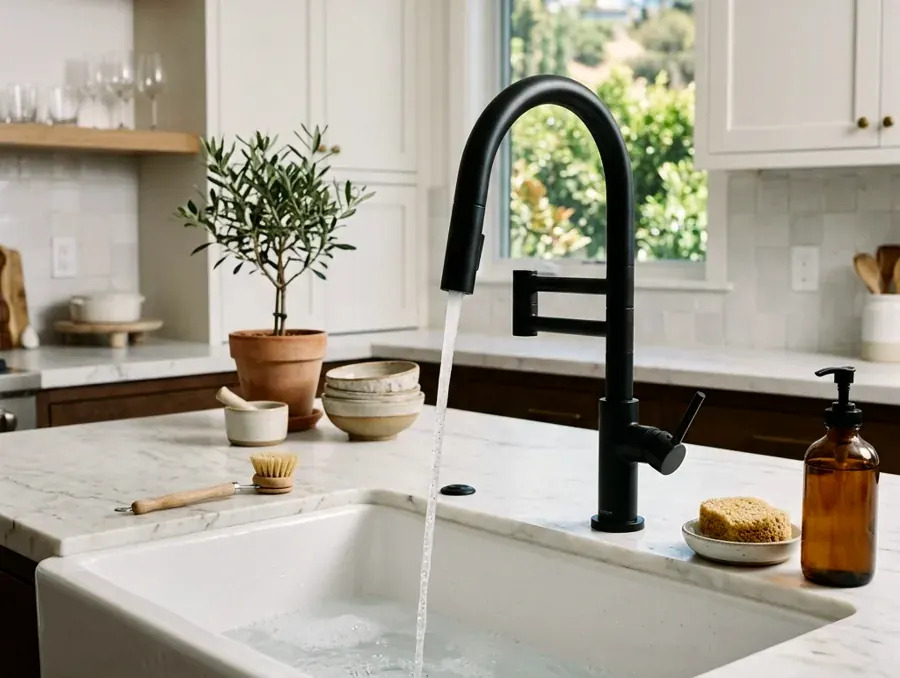
Small spaces like ADU bathrooms are easiest to maintain when shutoffs and access panels are clear and reachable.
Add-ons and remodels: the hidden connection points
When a bathroom is added, a laundry area is moved, or a kitchen is opened up, the new plumbing has to meet the old. Those meeting points deserve a second look, especially if the work was done before you owned the home.
Warning signs around add-ons include:
- A musty smell in a closet, cabinet or room that is otherwise clean
- Soft or discolored flooring near a tub, toilet or washer
- Paint bubbling on a wall shared with a bathroom or laundry
- Water stains on a ceiling below a bathroom
- A water meter that moves when everything is turned off
Moisture is more than a plumbing issue. The EPA's brief guide to mold, moisture and your home stresses that controlling moisture is the key to controlling mold, and that wet materials should be dried promptly. A small leak that you fix this week is much easier to deal with than one that has been feeding a wall cavity for months.
Quick comparison: repair, replace or upgrade?
Not every plumbing fix needs the same level of response. This table can help you decide how to think about it.
| Situation | Usually a repair | Consider replacing | Consider a pro assessment |
|---|---|---|---|
| Dripping faucet | Cartridge or washer swap | Faucet body is corroded or pitted | Leak is inside the wall |
| Running toilet | Flapper or fill valve | Cracked tank or bowl | Water at the base keeps returning |
| Under-sink supply line | Tighten a loose fitting | Line is stiff, kinked or old | Corrosion on the valve itself |
| Slow drain | Clean the trap and stopper | Damaged drain hardware | Several fixtures slow at once |
| Showerhead | Clean mineral buildup | Worn or low-flow head | Pressure drops across the house |
The pattern is simple: if the fix is a visible part you can isolate and replace, it is usually straightforward. If water is behind a wall, under a slab or affecting multiple fixtures, it is time for a closer look.

Replacing an aging supply line and shutoff is a small job that prevents a much larger mess.
A homeowner's leak-check routine
You do not need special tools to catch most problems. Try this once a season:
- Check the meter. Turn off all water use, then look at the meter. If it is moving, you may have a leak. Your local water provider, such as LADWP, can explain how to read your meter.
- Do the toilet dye test. Add a few drops of food coloring to the tank, wait without flushing, and see whether color appears in the bowl.
- Look under every sink. Check for dampness, rust on fittings, and swollen cabinet bases.
- Inspect the water heater. Look for moisture, corrosion or mineral residue near the base and connections.
- Test your shutoffs. Turn each one gently to make sure it moves. If one is stuck, do not force it. Note it for repair.
- Check outdoors. Look at hose bibs, irrigation connections and any areas where the ground stays wet.
The EPA's Fix a Leak Week page is a helpful reference for common household leak sources and simple checks.
When to call a pro
Plenty of plumbing fixes are reasonable DIY projects: swapping a showerhead, replacing a flapper, cleaning an aerator, or replacing a supply line when the shutoff works properly.
Call a professional when:
- A shutoff will not close or leaks when you touch it
- Water is coming from a wall, ceiling or floor and you cannot see the source
- Several fixtures drain slowly at once
- You see corrosion on pipes or fittings you do not recognize
- The work involves moving, adding or relocating plumbing, or gas lines
- You are unsure what material you are working with
Be honest about your comfort level. A rushed repair on an old valve can turn a drip into a flood. It is smart to hire help for anything that could damage the home if it goes wrong.
When hiring, use the California Contractors State License Board's guidance on how to hire a contractor. For handyman-scale jobs and fixture repairs, our plumbing fixes service covers many common needs across Encino. If you are not sure what you are looking at, you can send a photo for a written quote and we will tell you what we see.
FAQ
Can a handyman fix plumbing in an older Encino home?
For many common repairs, yes: faucets, toilets, supply lines, shutoffs, drains and fixture swaps. Work that involves rerouting pipes, new fixtures or major changes may need permits and a different type of contractor. Ask up front what is in scope.
Do ADUs need different plumbing repairs than the main house?
The repairs are often the same, but access, shutoffs and shared connections to the main house matter more. Knowing where the ADU's water can be isolated saves time in an emergency.
How do I know if a leak is serious?
Water inside walls, ceilings or floors, a moving meter with everything off, or recurring dampness deserve prompt attention. A drip at a visible fitting is usually simpler, but should still be fixed soon.
Will a new low-flow fixture hurt my water pressure?
Not necessarily. WaterSense-labeled products are designed to save water while keeping performance in mind. You can learn more on the EPA's pages for showerheads and toilets.
Do I need a permit for plumbing repairs?
Simple like-for-like repairs are often different from new or altered plumbing. Check with the city's building department before starting any project that changes the system.
Sources
- CSLB: Hire a Contractor
- LADBS: Permits and Inspections
- EPA: A Brief Guide to Mold, Moisture and Your Home
- EPA WaterSense: Fix a Leak Week
Safety note: work on electrical panels, gas, structure or anything that needs a permit should be done by a licensed contractor with the required permits.
STATOX Handyman Service · Send a photo · +1 (820) 200-4919
Keep reading
 plumbing fixesDIY vs. Pro Plumbing Repairs: What to Handle YourselfDIY vs professional plumbing repair: learn which fixes are safe for a weekend and which need a pro, so you avoid a small drip becoming a big mess.
 plumbing fixesLeaky Faucet, Running Toilet, Slow Drain: Common FixesA practical leaky faucet running toilet slow drain fix guide for LA homeowners: what to check, what to try, and when to stop and call for help.
 plumbing fixesPlumbing Maintenance in LA: Hard Water and Dry SeasonsPlumbing maintenance Los Angeles hard water guide: what scale does to fixtures, what dry seasons change, and a simple routine worth reading before leaks start.