Rainy Season Leaks in Los Angeles: What to Check First

If you see a rainy season roof leak or new water stains in Los Angeles, start with three things: stop the water from doing more damage, find where it is actually entering, and document everything with photos. Stains on a ceiling or wall are usually the symptom, not the source. The leak itself is often several feet away, so a little detective work now saves a lot of guessing later.
Why Los Angeles homes leak when the rain finally arrives
Our rain comes in bursts. After months of sun, roofs, flashing, and sealants have dried, shrunk, and cracked. Then a heavy storm hits and every small gap gets tested at once.
Many LA homes add to the challenge. Flat or low-slope roofs hold water longer. Stucco walls can crack at corners and window edges. Older homes may have aging roof penetrations, such as vents, chimneys, and skylights, where sealant has worn out.
None of this means your home is in bad shape. It means the first rain of the season is a good moment to look closely.
What to check first: a quick storm-time checklist
When it is safe to do so, work from the stain outward.
- Protect the room. Move furniture, place a bucket under drips, and lay towels or plastic on the floor.
- Relieve a bulging ceiling. If a ceiling bubbles with trapped water, a small hole at the lowest point of the bulge lets it drain into a bucket. Only do this if you are comfortable and no electrical fixture is nearby.
- Turn off power if needed. If water is near a light fixture, outlet, or ceiling fan, switch off that circuit at the panel and stay clear.
- Take photos. Capture the stain, the whole room, and the date. Photos help you track whether it grows.
- Mark the edge. Trace the stain outline with a pencil and write the time beside it. Check again after an hour and the next morning.
- Look in the attic. If you have safe access, use a flashlight to look for damp insulation, dark streaks on wood, or daylight coming through the roof.
Never climb onto a wet roof. Slippery surfaces and rain are a dangerous combination, and you can learn plenty from the ground and the attic.
Reading the stain: what its look can tell you
Not all water stains mean the same thing. The color, shape, and behavior offer clues.
| What you see | What it often suggests | What to do |
|---|---|---|
| Light tan or yellow patch that appears during rain | Active roof or flashing leak | Track it, check the attic, schedule a roof inspection |
| Brown ring with a darker edge | Repeated wetting over time | Find the source before repainting |
| Stain that grows on dry days | Plumbing leak, not rain | Check supply lines and drains |
| Bubbling or sagging paint or drywall | Water trapped behind the surface | Drain safely and let it dry |
| Stain near a window corner | Failed caulk, flashing, or stucco crack | Inspect the exterior seal |
| Musty smell without a visible stain | Hidden moisture in the wall or ceiling cavity | Investigate promptly |
A stain that returns after painting almost always means the source was never fixed. Primer can hide a stain, but it cannot stop water.
Checking the attic with a flashlight often reveals the true entry point of a leak.
Common leak sources around Los Angeles homes
Water travels along rafters, pipes, and drywall before it shows itself. Start your search at these usual suspects:
- Roof flashing around chimneys, vents, and skylights, where metal or sealant has pulled away.
- Cracked or slipped shingles and tiles, especially after wind or foot traffic.
- Clogged gutters and downspouts, which push water back under the roof edge or against walls.
- Flat roof ponding, where water sits and finds seams.
- Windows and doors, where dried caulk lets water in at corners.
- Stucco cracks, which can channel water into the wall cavity.
- Exhaust fan vents, which can leak or cause condensation in the attic.
Condensation can mimic a leak. If stains show up in bathrooms or near vents on cool, damp mornings without heavy rain, poor ventilation may be to blame.
Dry it out and watch for mold
Once the source is controlled, moisture is the next concern. The EPA's guidance on mold notes that controlling moisture is the key to controlling mold, and that wet materials should be dried promptly. Porous items like ceiling tiles and insulation that stay wet may need to be removed.
Helpful steps:
- Run fans and, if you have one, a dehumidifier in the affected room.
- Open windows during dry breaks to move air.
- Pull wet insulation if it is easy and safe to reach.
- Keep furniture and boxes away from damp walls.
- Check the area again after a few days for new discoloration or odor.
If drywall is soft, crumbling, or stays damp, it generally needs to be cut out and replaced rather than painted over.

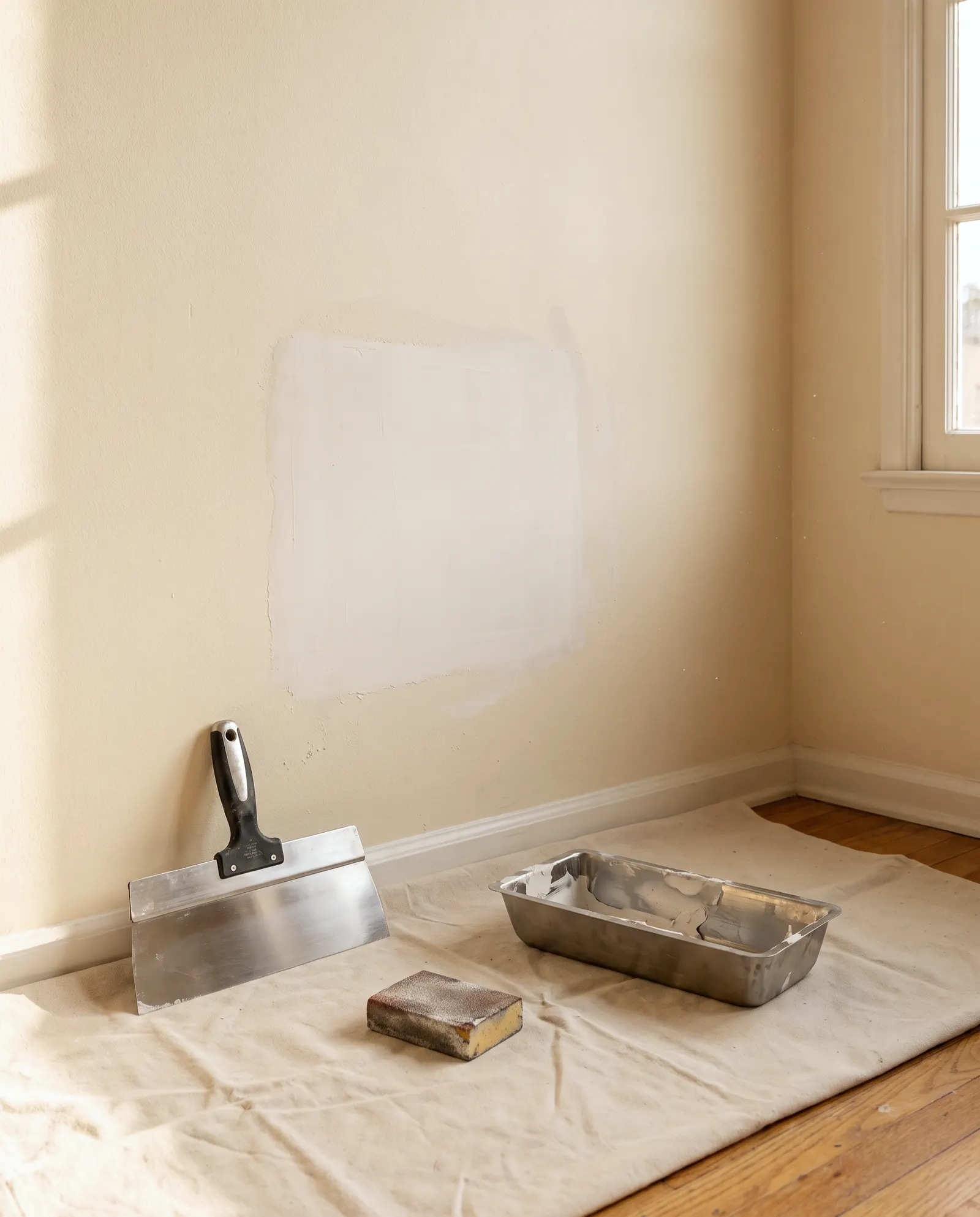
Damaged drywall is removed back to solid material before a patch is installed.
Repairing the damage once the leak is fixed
Order matters: fix the source, dry everything, then repair the surface. Skipping ahead is how stains come back.
A typical drywall fix after a leak follows this path:
- Confirm the area is fully dry.
- Cut out sagging or soft drywall to clean edges.
- Install a new patch and secure it to framing or backing.
- Tape, mud, and sand the seams smooth.
- Apply stain-blocking primer.
- Texture to match the surrounding ceiling or wall, then paint.
Matching texture is the part that trips up many DIY repairs. Popcorn, knockdown, and orange peel each take different technique. If you would like help, our drywall repair service covers patching, texture matching, and paint-ready finishes after the leak is resolved.
Note that older homes may have paint or materials that call for extra care. The EPA's renovation and painting program page explains the rules around disturbing old paint, which is worth reading if your home was built long ago.
When to call a pro
Plenty of rainy-day tasks are fine for a handy homeowner: clearing gutters from a ladder on dry ground, setting up buckets, small caulk touch-ups, and patching a small, fully dry hole.
Call a professional when:
- You cannot find where the water is entering.
- The ceiling is sagging or has a large wet area.
- Water is near electrical fixtures or wiring.
- The leak involves the roof surface, flashing, or a flat roof membrane.
- Stains keep returning after repairs.
- You see widespread mold growth or smell persistent mustiness.
Roof work typically belongs with a roofer, while a handyman can handle the interior repair, minor sealing, and finishing. If you hire anyone, the California Contractors State License Board offers guidance on hiring a contractor, and it is worth reviewing before you sign anything. For larger repairs, check with LADBS on whether a permit applies.
Not sure what you are looking at? You can send a photo for a written quote and we will tell you what the repair involves.
FAQ
Why did my ceiling stain appear days after the rain stopped?
Water can soak into insulation and drywall and keep moving slowly. A stain may show up after the storm has passed, so keep checking and photograph any changes.
Can I just paint over a water stain?
Only if the area is completely dry and the source is fixed. Even then, use a stain-blocking primer first. Paint alone usually lets the stain bleed through.
How do I know if it's a roof leak or a plumbing leak?
Roof leaks usually appear during or after rain. Plumbing leaks tend to continue in dry weather and may grow steadily. Stains near bathrooms or kitchens deserve a plumbing check.
Is a small ceiling stain urgent?
A small, old, dry stain can wait for a routine look. A new or growing stain should be checked soon, because hidden moisture can damage framing and encourage mold.
Should I remove wet drywall?
If it is soft, sagging, crumbling, or will not dry, replacement is generally the safer route. Firm, dry drywall with a surface stain can often be primed and repainted.
Sources
- EPA: A Brief Guide to Mold, Moisture, and Your Home
- EPA: Renovation, Repair and Painting Program
- CSLB: Hire a Contractor
- LADBS: Permits and Inspections
Safety note: work on electrical panels, gas, structure or anything that needs a permit should be done by a licensed contractor with the required permits.
STATOX Handyman Service · Send a photo · +1 (820) 200-4919
Keep reading
 drywall repairCommon Drywall Problems: Cracks, Holes, Dents and FixesLearn how to fix drywall cracks and holes, from nail pops to doorknob dents, and when a repair needs more than patch and paint. Read before you patch.
 drywall repairDIY vs. Pro Drywall Repair: When to Call a HandymanWeighing diy vs professional drywall repair? Learn which wall damage you can fix yourself and which to hand off, so you avoid redoing the job.
 drywall repairDrywall Cracks in Hollywood Hills Hillside HomesLearn what causes drywall cracks in hillside homes and how drywall repair Hollywood Hills owners can tell cosmetic from serious. Read before you patch.