Drywall Cracks in Hollywood Hills Hillside Homes
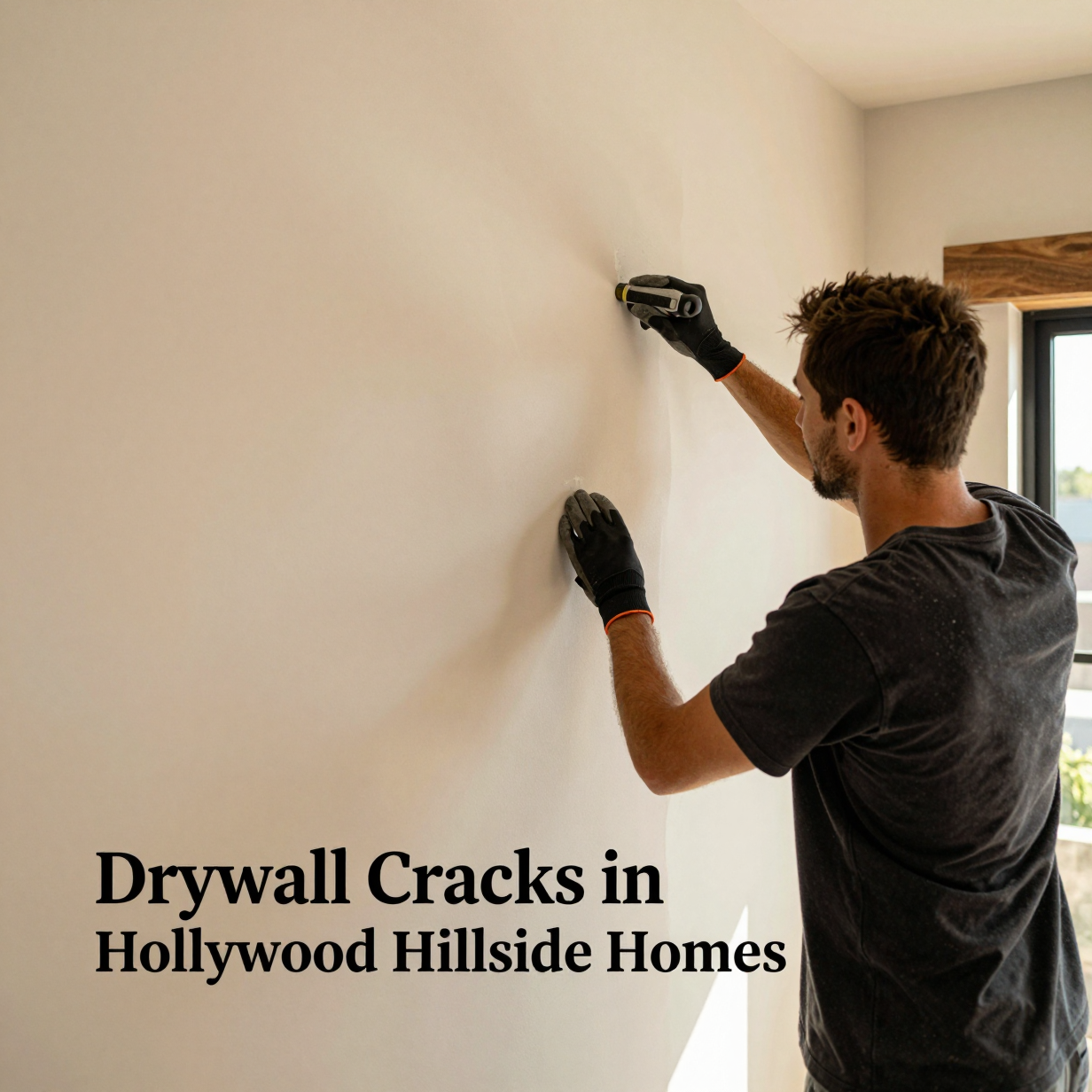
Most drywall cracks in Hollywood Hills homes are cosmetic, caused by seasonal movement, temperature swings, and the natural flex of a house built on a slope. They can be repaired with the right tape, compound, and patience. But a crack that keeps growing, shows up with sticking doors, or lines up with a gap outside deserves a closer look before you patch anything.
Why Hillside Homes Crack More Often
Houses on slopes live a different life than houses on flat lots. Many Hollywood Hills homes sit on stepped foundations, pier-and-grade-beam systems, or tall retaining walls. Lots of them are also decades old, with additions built at different times.
That mix means different parts of the house can move a little differently. Drywall is rigid and brittle at the seams, so it shows that movement first.
Common everyday causes include:
- Seasonal soil moisture changes. Hillside soil swells when wet and shrinks when dry, and Southern California swings between both.
- Temperature and humidity changes. Framing expands and contracts, which stresses taped joints.
- Vibration and settling. Traffic on narrow canyon roads, construction nearby, and minor tremors can all leave their mark.
- Old additions. Where new framing meets old, a seam often reappears in the drywall.
- Poor original taping. Joints finished without enough tape or compound can crack years later.
- Moisture from leaks. Plumbing, roof, or retaining-wall seepage can soften drywall and open seams.
Reading the Crack: Cosmetic or Concerning?
The shape and location of a crack tell you a lot. Take a few photos with a coin or ruler beside the crack, and date them. That record is useful whether you fix it yourself or ask someone to look.
| What you see | Usually means | Next step |
|---|---|---|
| Thin line along a taped seam | Joint tape or compound movement | Cosmetic repair is usually fine |
| Hairline crack at a ceiling-wall corner | Normal framing movement | Re-tape and flexible caulk at the corner |
| Diagonal crack from a door or window corner | Stress at the opening; often minor | Repair, then monitor for return |
| Stair-step cracks in a wall below a retaining wall | Possible foundation or soil movement | Have it evaluated before patching |
| Crack that widens over weeks | Active movement | Monitor and get an expert opinion |
| Brown stains, soft spots, or bubbling | Moisture behind the wall | Find and stop the leak first |
A simple rule: if the crack is stable, thin, and on a seam, it is probably cosmetic. If it is growing, wide enough to slide a coin into, or paired with other symptoms, treat it as information about the house rather than just a flaw in the paint.
Warning Signs That Go Beyond Drywall
Look around the house for clues that cracks are part of a bigger pattern:
- Doors or windows that suddenly stick or no longer latch.
- Floors that slope or feel different than they did before.
- Gaps between walls and trim, cabinets, or countertops.
- Cracks in exterior stucco, concrete steps, or the foundation that line up with interior cracks.
- Cracks that reopen in the same spot after a good repair.
- Musty smell, dampness, or visible mold near an exterior or downhill wall.
If you notice several of these, a drywall patch is not the first job. A structural or geotechnical professional can say what is happening, and the City of Los Angeles may require permits for certain structural or retaining work. The LADBS permits and inspections page is the place to start asking.
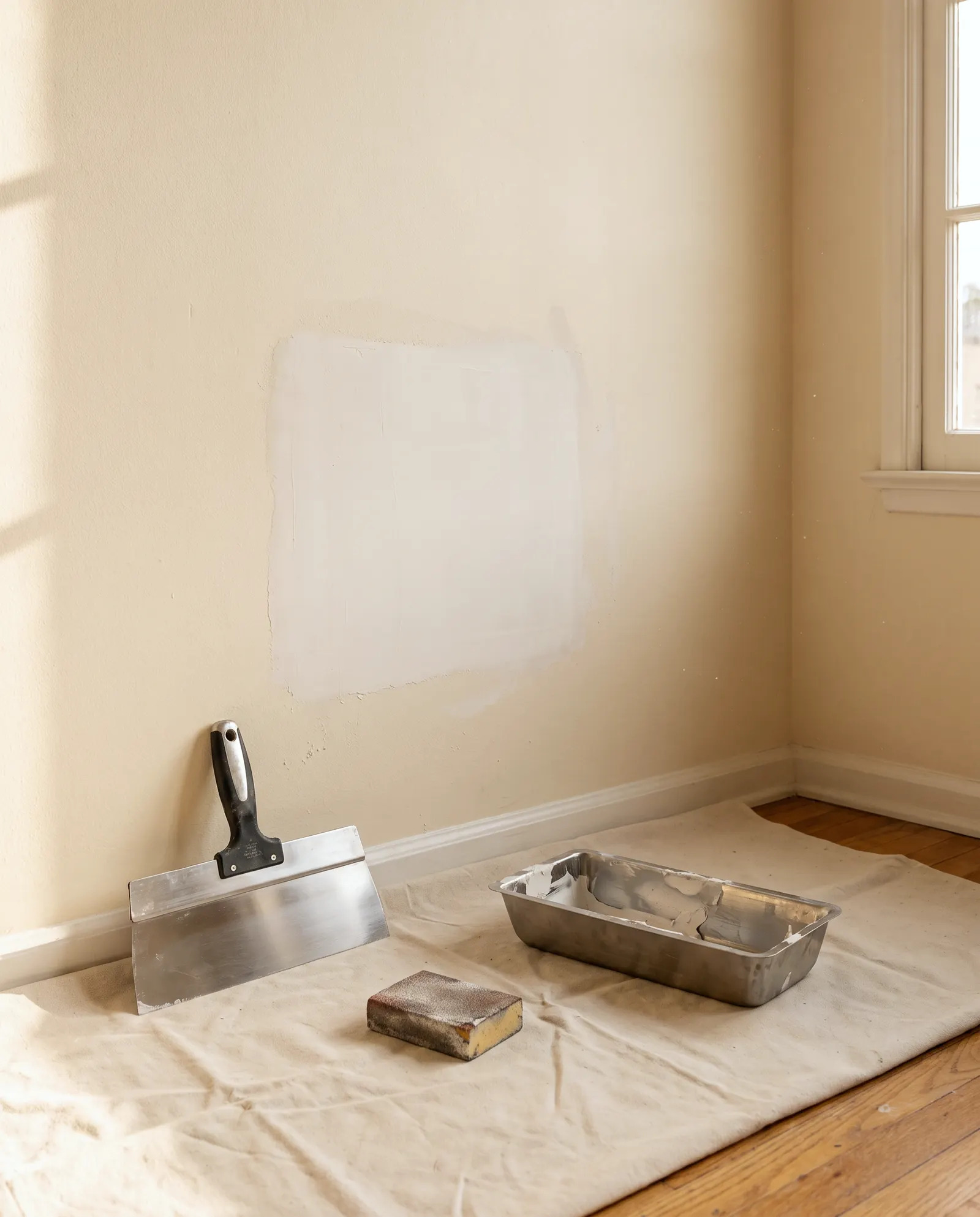
Measuring and photographing a crack first helps you see whether it changes over time.
How a Lasting Drywall Crack Repair Works
A crack painted over with a dab of spackle usually returns. A repair that lasts deals with the seam, not just the surface.
- Check for moisture and movement. Press the area. If it is soft or damp, stop and find the source.
- Open the crack. Run a utility knife along it in a shallow V so compound can bond inside, and remove loose paper and dust.
- Embed tape. Paper tape over setting-type compound is a strong choice for cracks along joints. Mesh tape works for some patches but can be weaker on moving seams.
- Apply thin coats. Feather each coat wider than the last, letting each dry fully. Thin layers resist re-cracking better than one thick one.
- Sand lightly and prime. Raw compound soaks up paint unevenly, so prime before painting.
- Match the texture. Many LA homes have knockdown, orange peel, or older textures. Matching them is often the hardest part to get right.
- Use flexible caulk at corners. Where walls meet ceilings, a paintable flexible caulk can handle small movements better than rigid compound.
Wait for a stretch of stable weather and indoor humidity before the final finish if you can. If the home was built before 1978, paint may contain lead, so read the EPA guidance on the renovation, repair and painting program before sanding or cutting into old paint.
Special Challenges on Hillside Properties
Working on a Hollywood Hills home brings practical details that flat-lot homes rarely face.
- Access. Narrow, winding streets and steep driveways make material delivery and parking harder, so plan for it.
- Stairs and split levels. Tall stairwell walls and vaulted ceilings need scaffolding or proper ladders, which raises the risk of DIY work.
- Mixed construction. Plaster, lath, and drywall can all exist in one house. Each patches differently.
- Moisture from the slope. Walls against hillside soil can hold dampness. The EPA's guide to mold, moisture, and your home explains why fixing the water source comes before any cosmetic work.
- Views and big windows. Large glass openings concentrate stress at corners, so cracks there are common.

Thin, feathered coats of compound blend a repaired seam into the surrounding wall.
When to Call a Pro
Plenty of small cracks are a reasonable weekend project. A thin seam crack in a bedroom wall, with a steady hand and some patience, is a fair DIY task.
Call a professional when:
- The crack is wide, growing, or keeps coming back.
- You see signs of water, mold, or soft drywall.
- The damage is on a high ceiling or stairwell.
- You need to match a texture that has to blend invisibly.
- The wall may be plaster or contain older materials you are unsure about.
- Cracks appear with sticking doors or sloping floors, in which case get a structural opinion first.
For drywall work, a team that handles drywall repair regularly in the Hollywood Hills will understand the access and texture challenges. If you want to see what is involved, you can send a photo for a written quote. For larger structural or specialty work, check a contractor's status on the CSLB's hiring guide.
FAQ
Are drywall cracks in hillside homes always a foundation problem?
No. Most are cosmetic and come from normal movement, humidity changes, or weak taping. They become a concern when they grow, are wide, or show up with sticking doors, sloping floors, or exterior cracks.
Can I just fill the crack with spackle and paint?
You can, but it often reappears. Lightweight spackle is not made for moving seams. Opening the crack, taping it, and building up thin coats of joint compound lasts longer.
Why does the same crack keep coming back?
Usually the seam is still moving, the tape was skipped, or moisture is involved. Repeated cracking in the same spot is a good reason to look for the cause before repairing again.
Should I repair a crack before or after checking for moisture?
Check first. Patching over damp drywall traps the problem and can allow mold to grow. Fix the leak, let the wall dry fully, and then repair.
How do I know if a crack is getting worse?
Mark each end with a pencil and date it, then photograph it with a ruler beside it. Check every few weeks. If the marks are passed or the width changes, get it evaluated.
Sources
- CSLB: Hire a Contractor
- LADBS: Permits and Inspections
- EPA: Renovation, Repair and Painting Program
- EPA: A Brief Guide to Mold, Moisture and Your Home
Safety note: work on electrical panels, gas, structure or anything that needs a permit should be done by a licensed contractor with the required permits.
STATOX Handyman Service · Send a photo · +1 (820) 200-4919
Keep reading
 drywall repairCommon Drywall Problems: Cracks, Holes, Dents and FixesLearn how to fix drywall cracks and holes, from nail pops to doorknob dents, and when a repair needs more than patch and paint. Read before you patch.
 drywall repairDrywall and Plaster Repair in Hancock Park Older HomesPlanning drywall repair in Hancock Park? Learn how plaster, lath, and old patches differ, what to check first, and when a pro is worth calling.
 drywall repairDrywall Repair in Hidden Hills: Large Homes and HOA RulesPlanning drywall repair in Hidden Hills? Learn how large homes, tall ceilings, and HOA expectations shape the job, so your patch disappears for good.