Common Drywall Problems: Cracks, Holes, Dents and Fixes
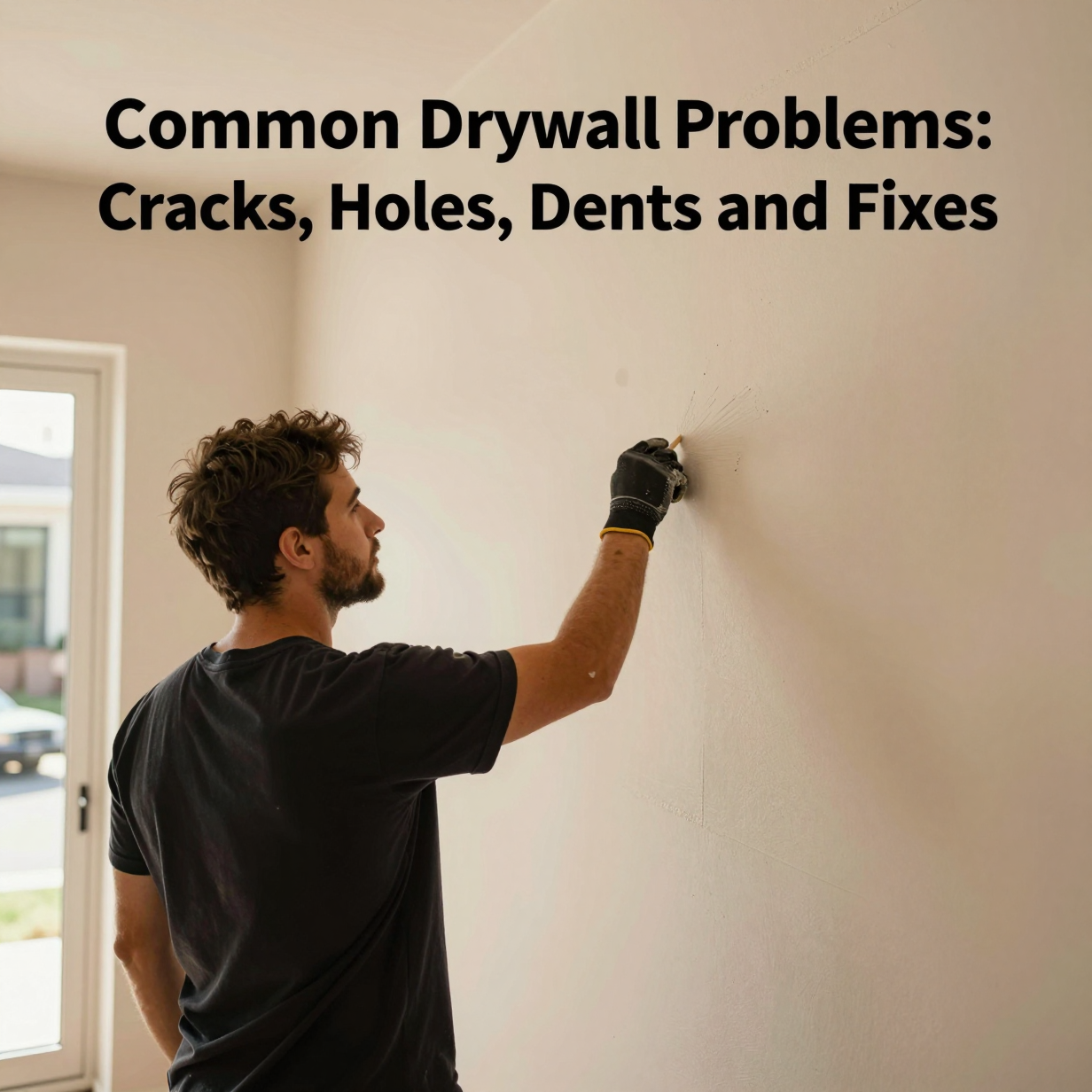
To fix drywall cracks and holes, first figure out why the damage happened, then match the repair to its size. Hairline cracks and small dents need only filler and sanding. Larger holes need a patch or a new piece of board, and cracks that keep returning point to movement or moisture that has to be dealt with first.
Drywall is forgiving, but only if the repair follows the right steps. Here is how to read what you are seeing in your Los Angeles home and what usually fixes it.
Why drywall cracks, dents and holes happen
Most drywall damage comes from a few everyday causes:
- Settling and seasonal movement. Wood framing shifts slightly as a house ages and as humidity changes. Cracks often show up at door corners, window corners and ceiling lines.
- Small earth movement. Living in Southern California means minor shaking now and then. It can open cracks along seams even when the structure is fine.
- Impact. Doorknobs, furniture, ladders and kids' toys create dents and holes.
- Fasteners backing out. Screws or nails that were not set firmly show up as small bumps or circles in the paint.
- Moisture. Leaks from a roof, pipe or window leave stains, soft spots, bubbling or peeling paint.
- Poor original taping. Seams that were never embedded well can crack or show a ridge years later.
Knowing the cause matters because patching over an active problem only hides it for a while.
How to tell which problem you have
Look closely and press gently before you pick up a putty knife.
| What you see | Likely cause | Usual fix |
|---|---|---|
| Thin line, hairline crack | Paint or joint compound stress, minor movement | Flexible filler, light sanding, prime and paint |
| Crack along a taped seam | Tape not fully stuck down, movement | Remove loose tape, retape, skim coat |
| Diagonal crack from a door or window corner | Framing movement at the weak point | Retape, fill, and monitor for return |
| Small round bump or cracked circle | Nail or screw pop | Reset or add a screw, fill, sand |
| Shallow dent | Impact | Fill with joint compound, sand, repaint |
| Hole from a doorknob or anchor | Impact or removed hardware | Patch kit or backing and compound |
| Larger hole, fist-sized or more | Impact or removed fixture | Cut-in drywall patch |
| Soft, stained or bubbling area | Moisture | Find and stop the source, replace damaged board |
If the wall feels soft or damp, or you see dark growth, skip ahead to the moisture notes below before patching anything.
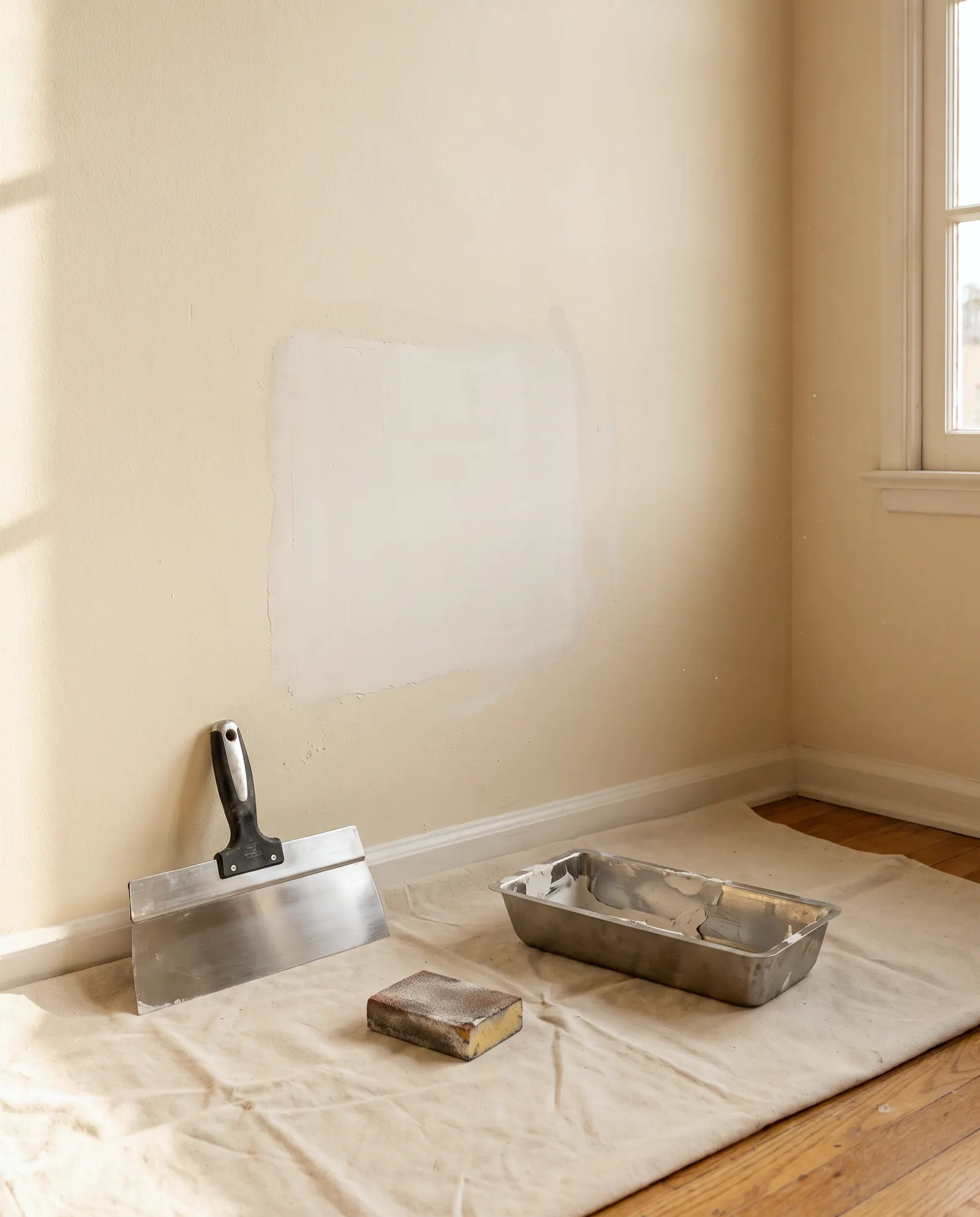
A cracked seam on the left, a retaped and filled seam on the right, ready for sanding.
How to fix small cracks, nail pops and dents
These are the most common jobs and the most realistic to tackle yourself.
Hairline cracks 1. Scrape away loose paint or flakes with a putty knife. 2. Apply a thin coat of flexible filler or joint compound, pressing it into the crack. 3. Let it dry fully, then sand lightly with fine sandpaper. 4. Add a second thin coat if you can still see the line. 5. Prime the patch, then paint.
Nail or screw pops 1. Drive a new drywall screw about an inch above or below the pop, into the stud. 2. Set the old fastener just below the surface, or remove it. 3. Cover the heads with compound, let it dry, sand and repeat once. 4. Spot prime and paint.
Dents and dings 1. Sand the raised edge around the dent so it sits flat. 2. Fill with joint compound in thin layers, feathering the edges wide. 3. Sand smooth, prime and paint.
Thin coats beat one thick coat every time. Thick compound shrinks, cracks and takes much longer to dry.
Patching holes: small, medium and large
The right method depends on the hole size.
Small holes (screw and nail holes, anchors). Fill with lightweight compound, let it dry, sand and paint.
Medium holes (doorknob size, up to a few inches). A self-adhesive mesh patch or metal-backed patch works well. Press it over the hole, cover it with compound in two or three wide coats, and feather the edges beyond the patch so it blends.
Large holes. Cut a clean rectangle around the damage, add wood or drywall backing inside the opening, screw a matching piece of drywall in place, tape the seams and finish with compound. This is the same approach used for plumbing access cuts and removed fixtures.

Cutting back to clean edges and solid backing gives a patch something real to hold onto.
Before cutting, check for wires and pipes behind the wall. Turn off power to nearby circuits if you are unsure, and cut shallow.
Getting the finish to disappear
Most visible repairs fail at the finish, not the patch. A few habits help:
- Feather each coat wider than the last so there is no hard edge.
- Sand with light pressure and a light on the wall at an angle to reveal low and high spots.
- Match the wall texture. Many Los Angeles homes have orange peel, knockdown or older popcorn-style ceilings, and a smooth patch on a textured wall stands out.
- Always prime. Bare compound absorbs paint differently and shows up as dull spots, a problem called flashing.
- Paint the whole wall section corner to corner if the color has aged, since fresh paint rarely matches old paint exactly.
Moisture, mold and older-home cautions
Stains, bubbling, soft board or a musty smell mean water is involved. Stop the source first, whether that is a leaking pipe, a roof issue or a failed window seal. Then let the area dry and replace damaged board rather than painting over it. The EPA's guide to mold, moisture and your home explains why fixing the moisture source is the key step.
If your home was built before 1978, older paint may contain lead. Sanding or cutting into painted surfaces can create dust, so read the EPA's information on lead exposure and its renovation, repair and painting program before disturbing old paint. Wet methods and careful cleanup reduce dust, and some situations call for a professional.
When to call a pro
Many drywall repairs are very doable for a patient homeowner. Hairline cracks, nail pops, dents and small holes are good DIY projects.
Consider hiring help when:
- The hole is large, or there are several in one wall.
- Cracks keep coming back after a proper repair.
- A ceiling is sagging, stained or damaged by water.
- You need texture matched across a large area.
- The repair is overhead and you would rather not work on a ladder for hours.
- You suspect old paint with lead, or you see growth that looks like mold.
- Cracks are wide, stair-stepped on the outside of the home, or tied to doors and windows that stick. That may be a structural question, not a drywall one.
If you hire someone, check a contractor's license status on the California Contractors State License Board site, and ask what the written scope covers. Our drywall repair service handles patching, retaping, texture matching and paint-ready finishes. If you are not sure what you are dealing with, you can send a photo for a written quote.
FAQ
Why does the crack in my drywall keep coming back?
Usually the cause is still active. Movement at a corner, tape that is not fully stuck down, or a thick, shrinking coat of compound can all reopen a crack. Retaping the seam with thin layers and using a flexible filler tends to last longer.
Can I just paint over a drywall crack?
Paint alone will not hold a crack closed. Fill it, sand it, prime it, then paint, or the line will usually show through again.
Do I need to cut out drywall for a small hole?
Not for nail holes or small anchor holes. Compound handles those. Holes a few inches wide are better with a mesh or metal patch, and bigger damage calls for a cut-in piece.
How do I match wall texture after a patch?
Identify the texture first, such as orange peel or knockdown. Spray or hand-applied texture products can imitate it, and practicing on cardboard helps. Large areas are easier to blend when a pro does the whole wall.
Is a water stain on drywall just cosmetic?
Not always. A stain can mean an active leak or damp board. Find and fix the source, let the area dry, and replace soft or damaged drywall before repainting.
Sources
- EPA: A Brief Guide to Mold, Moisture and Your Home
- EPA: Renovation, Repair and Painting Program
- EPA: Protect Your Family from Exposures to Lead
- California Contractors State License Board: Hire a Contractor
Safety note: work on electrical panels, gas, structure or anything that needs a permit should be done by a licensed contractor with the required permits.
STATOX Handyman Service · Send a photo · +1 (820) 200-4919
Keep reading
 drywall repairDrywall Cracks in Hollywood Hills Hillside HomesLearn what causes drywall cracks in hillside homes and how drywall repair Hollywood Hills owners can tell cosmetic from serious. Read before you patch.
 drywall repairDrywall and Plaster Repair in Hancock Park Older HomesPlanning drywall repair in Hancock Park? Learn how plaster, lath, and old patches differ, what to check first, and when a pro is worth calling.
 drywall repairDrywall Repair in Hidden Hills: Large Homes and HOA RulesPlanning drywall repair in Hidden Hills? Learn how large homes, tall ceilings, and HOA expectations shape the job, so your patch disappears for good.