Window Weatherproofing Tips for Woodland Hills Homes

Installing woodland hills window tint reduces solar heat gain through your glass, but it works most effectively when paired with frame weatherstripping. Film stops radiant heat, while proper perimeter seals block high-temperature air and fine Santa Ana dust from entering around the sash.
In Woodland Hills, summer temperatures regularly exceed 100 degrees Fahrenheit. West- and south-facing windows absorb hours of intense sunlight, transferring heat directly into interior living spaces. When glass gets hot, nearby HVAC units run longer to manage the load.
Addressing both radiation through the glass and airflow around the frame stops unwanted air movement, protects furniture from ultraviolet damage, and reduces dust accumulation inside your home.
Solar Radiation and Air Infiltration in the Valley
Window heat issues stem from two separate physical processes: radiant solar energy passing through glass panes and convective air passing around unsealed sashes. Solar window film controls the Solar Heat Gain Coefficient (SHGC) by reflecting infrared wavelengths. However, film cannot stop outside air from blowing past worn frame gaskets.
Homes along the valley floor experience substantial daily temperature swings. Exterior materials expand under peak afternoon heat and contract rapidly after sunset. Over several seasons, this expansion and contraction causes caulking to separate from surrounding stucco surfaces.
During fall wind events, dry air accelerates through mountain passes, carrying fine particulates through perimeter gaps as narrow as 1/16 of an inch. If window curtains move while sashes are latched shut, air infiltration is occurring around the casing rather than through the glass itself.
Matching Solar Films and Sealants for Stucco Openings
Standard retail window tint often relies on dyed film layers. Under sustained heat exposure, dyed films break down, bubble, and develop a purple haze. Nano-ceramic and spectrally selective films use non-metallic ceramic particles to block heat while allowing natural daylight to enter without darkening rooms.
When combining film installation with exterior sealing against stucco walls, choosing compatible caulking materials is critical. Standard painter's acrylic caulk dries brittle and breaks down under ultraviolet exposure.
- Stucco-to-frame exterior joints: Use class 25 or class 35 polyurethane or silane-modified polymer (SMP) sealants. These formulations remain flexible during structural movement and bond strongly to rough masonry surfaces.
- Interior trim interfaces: Use an elastomeric acrylic sealant with silicone content. This accepts interior wall paint cleanly while expanding without tearing.
- Film performance targets: Select films with an SHGC rating below 0.40 and Visible Light Transmission (VLT) suitable for your room's natural lighting needs.

Step-by-Step Perimeter Air Sealing on Concrete Slabs
Mid-century ranch homes built across the San Fernando Valley sit primarily on concrete slab foundations. Minor soil moisture variations cause natural frame movement over time, opening gaps between window units and exterior stucco reveals.
- Strip deteriorated sealant: Cut away old, hardened caulk using a utility knife or an oscillating multi-tool fitted with a flat scraper blade. Avoid scoring aluminum flanges or chipping stucco finishes.
- Clear accumulated dust: Santa Ana wind events deposit fine dirt deep inside track channels and frame gaps. Scrape residual material clear and vacuum all openings with a narrow crevice nozzle.
- Check frame weep holes: Inspect bottom weep slots along the exterior frame edge. Keep these openings completely clear so internal frame moisture drains outward. Never apply caulk over weep slots.
- Insert backer rod for deep gaps: When perimeter gaps exceed 1/4 inch in width or 3/8 inch in depth, push a closed-cell polyethylene backer rod into the joint. Choose a rod diameter roughly 25 percent wider than the gap to allow proper two-sided sealant adhesion.
- Tool the sealant bead: Run a smooth, continuous bead of elastomeric sealant along top and side jambs. Tool the joint using a wet foam spatula or gloved finger to form a clean water-shedding surface.
Weatherstripping Specifications by Window Frame Material
Different frame designs require specific weatherstripping profiles to prevent drafts while keeping operating hardware running smoothly.
| Frame Material | Primary Leakage Point | Recommended Seal Profile | Lifespan Expectancy |
|---|---|---|---|
| Aluminum Sliders | Bottom rail tracks and interlock channels | Polypropylene brush pile with internal plastic fin | 3 to 5 years |
| Vinyl Hung Windows | Sash rail corners and side jamb tracks | Tubular silicone bulb or cellular EPDM rubber | 7 to 10 years |
| Wood Casements | Warped sash edges and frame stops | Spring bronze V-strip or heavy bulb gaskets | 15+ years (bronze) |
| Steel Sash Units | Frame-to-sash contact faces | Closed-cell neoprene adhesive tape | 2 to 4 years |
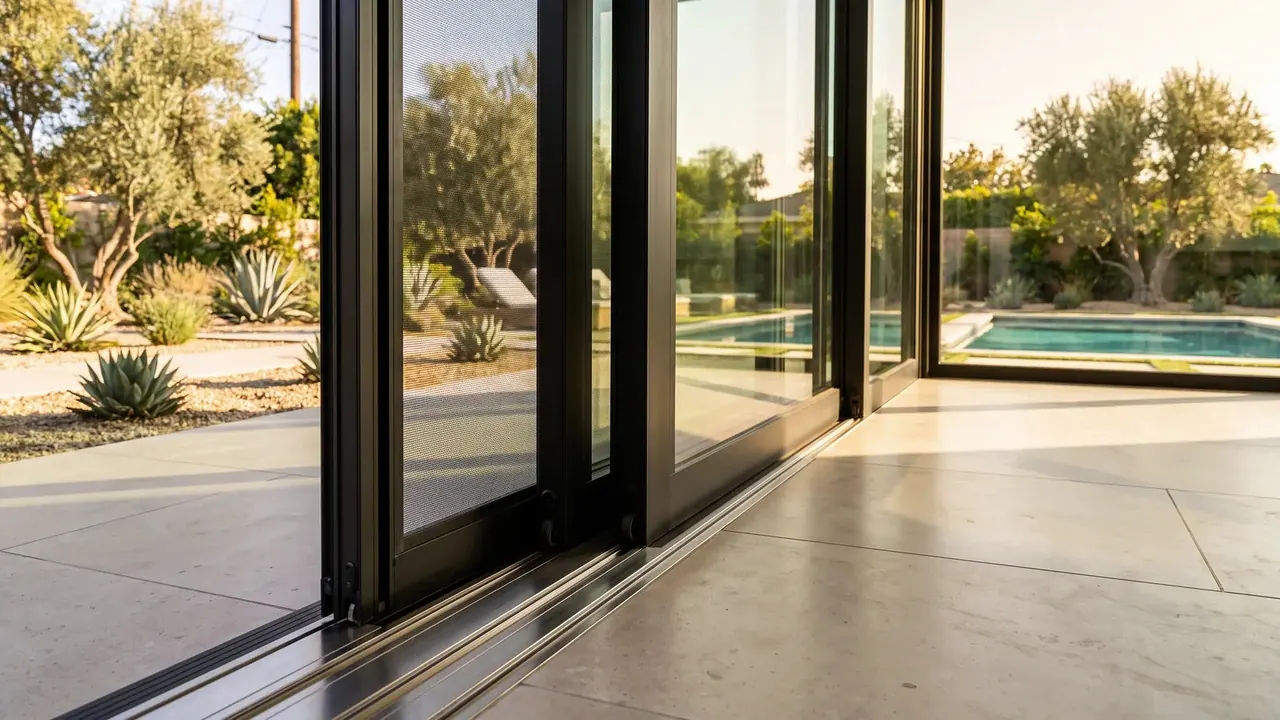
For aluminum sliding windows, high-density brush pile featuring an embedded plastic barrier fin blocks wind-driven dust far more effectively than standard felt strips.
Preserving Pre-1950 Plaster and Double-Hung Wood Windows
Older properties often retain original wood double-hung windows mounted into interior lath-and-plaster walls. Wood sashes adjust to atmospheric conditions, shrinking during dry summer months and swelling during winter rainy periods.
Avoid applying thick foam adhesive tapes inside vertical side jamb channels. Thick tapes jam sash weight pulleys, push tracks out of alignment, and place unnecessary stress on original sash cords.
- Install spring bronze weatherstripping along interior side jambs.
- Secure strips using 3/4-inch brass escutcheon pins driven every two inches.
- Score old paint lines with a razor blade before removing interior stop moldings to prevent cracking adjacent plaster finishes.
Spring bronze provides continuous tension as wood sashes expand and contract, keeping windows functional across all seasons. For comprehensive repair of original sash cords, counterweights, and frame seals, review our dedicated windows service.
How STATOX Handles Window Weatherproofing
When you contact us regarding drafty sashes or excessive room heat, our process begins before an on-site visit. You send a photo for a written quote showing the window layout, frame material, and surrounding stucco condition. We evaluate the image and return a clear, single written price for the job.
Upon arrival, our technician performs a systematic physical assessment: Inspects sash latch engagement to confirm meeting rails pull tightly together. Examines exterior stucco returns for hairline cracks or sealant separation. Evaluates track roller condition and clears weep hole channels. Wipes down perimeter contact faces with isopropyl alcohol to remove oil and dust before applying new materials.
We complete the specified repairs cleanly and leave the workspace organized.
When to Call a Pro
Replacing accessible track pile on ground-floor sliding windows or applying interior perimeter caulk can be handled as a standard home maintenance task. However, specific situations require specialized tools and structural knowledge.
If double-pane glass units show internal fogging, condensation, or trapped moisture between panes, the factory insulated glass unit (IGU) edge seal has failed. Solar films or external sealants cannot fix internal glass failure; the glass unit must be de-glazed and replaced within the frame.
Second-story exterior window work presents real safety hazards. Placing ladders on sloped hillside terrain or uneven ground requires stable setup techniques and proper pitch angles. If accessing an exterior frame joint requires working at height without stable footings, hiring an experienced technician prevents personal injury and frame damage.
FAQ
Does solar window film eliminate the need for dual-pane glass?
No. Solar window film reflects radiant infrared heat, but it does not create an insulating dead-air space. Single-pane glass with film still conducts ambient outdoor heat into the home faster than a sealed dual-pane window unit.
Can solar film be installed on the exterior side of the glass?
Most residential film is designed for interior application where it remains protected from rain and wind-driven dirt. Exterior-grade films exist, but they wear faster under direct weather exposure and require precise surface preparation during application.
Why does dust collect inside window tracks even when sashes stay closed?
High winds force fine dirt particles through worn brush weatherstripping and open sill drain paths. Replacing aged pile seals with finned brush stripping prevents wind currents from pushing airborne dust into bottom tracks.
Will applying exterior caulk stop an operable window sash from rattling?
Exterior caulking only seals the stationary gap between the window frame and the outer wall wall reveal. Stopping a rattling sash requires replacing internal channel weatherstripping or adjusting lock keepers to pull sashes tight against the frame stops.
Sources
- California Energy Commission - Building Energy Efficiency Standards (Title 24)
- Los Angeles Department of Building and Safety - Permits & Inspections
- OSHA - Portable Ladder Safety Standards
- U.S. Environmental Protection Agency - Renovation, Repair, and Painting Program
Permit work: Permit jobs get a written project estimate; permits handled as required.
STATOX Handyman Service · Send a photo · +1 (820) 200-4919
Keep reading
 windowsCommon Window Problems and Fixes for Los Angeles HomesLearn the common window problems and fixes for Los Angeles homes, from sticking sashes to failed seals, and what to try first before calling for help.
 windowsWindow Repair or Replacement: How to Choose in Los AngelesWindow repair or replacement in Los Angeles: how to tell which one your home needs, what to check first, and when a pro visit saves you a second trip.
 windowsHow to Reduce Street Noise Through Windows in Los AngelesLearn how to reduce street noise through windows in Los Angeles using caulking, weatherstripping, sash locks, and secondary glazing for quiet rooms.