Beverly Hills Bathroom Updates in Older Plaster Homes
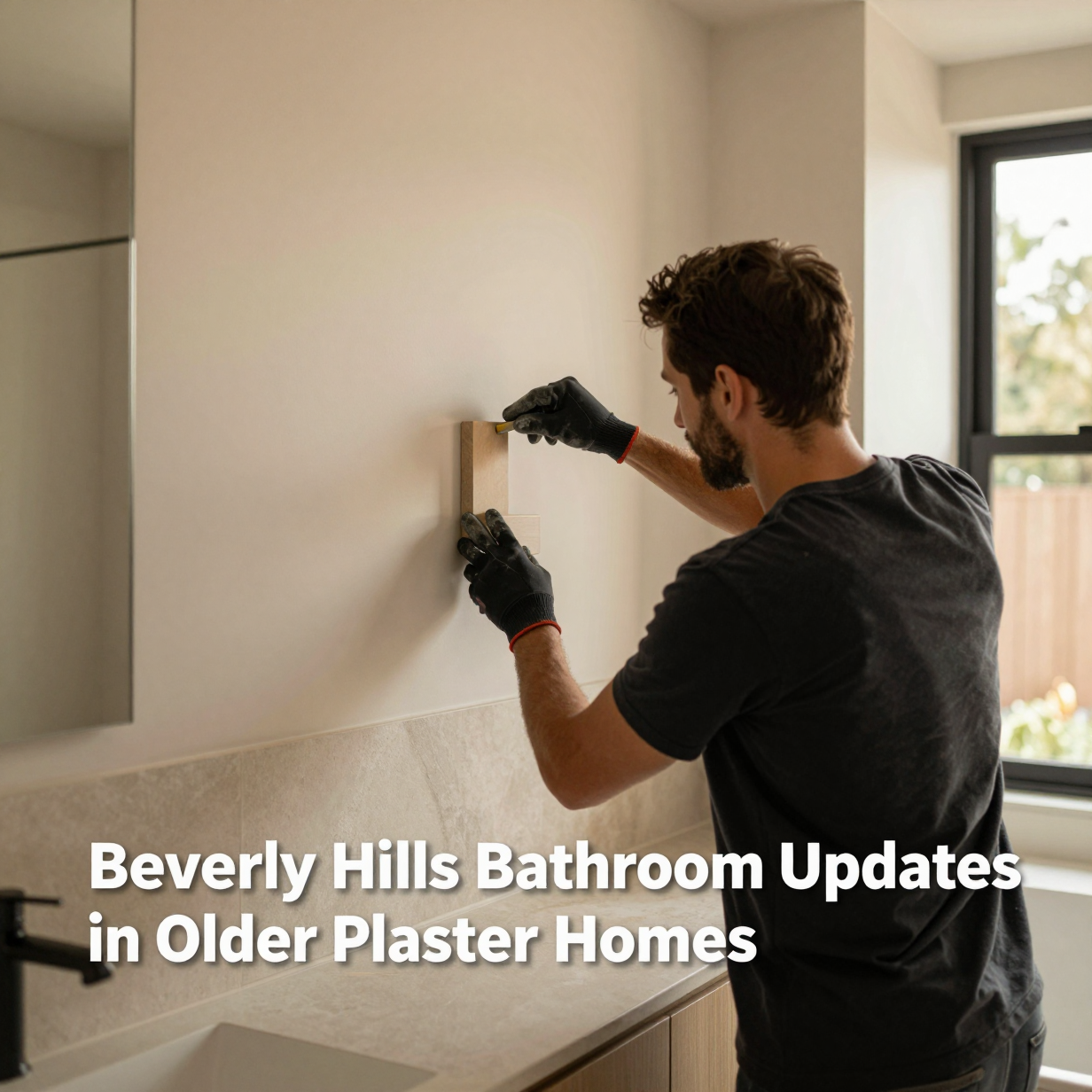
If your Beverly Hills home has plaster walls, you can still update the bathroom with new fixtures, caulk, grout, a vanity, lighting, and fresh paint. The key is to work with the plaster, not against it: go gently, control moisture, and test before you cut or drill. A bathroom handyman in Beverly Hills who knows older homes will start by checking what is behind the surface before changing what is on it.
Why plaster bathrooms need a different approach
Many older Beverly Hills homes were built with plaster over wood lath or over metal mesh, not the drywall common in newer construction. Plaster is hard, dense, and durable, but it behaves differently when you drill, hang, or cut it.
A few things to know:
- It cracks in a different way. Vibration from a drill or hammer can send hairline cracks across a wall, or loosen plaster from the lath behind it.
- It does not like long-term moisture. Steam and slow leaks can soften plaster, lift paint, and leave stains or bubbling.
- Walls are rarely flat or plumb. Old houses settle. A new vanity or tile run may need shimming and careful layout.
- Old wiring and plumbing may be hiding inside. Updates that look cosmetic can reveal older materials once a fixture comes off.
None of this means you should skip the update. It means the order of work and the tools matter.
Updates that suit older plaster bathrooms
Some projects are a natural fit for plaster homes because they leave the walls mostly intact.
Low-disruption updates
- Replacing a faucet, showerhead, or toilet with a water-efficient model (the EPA's WaterSense program covers each of these)
- Swapping a vanity and mirror
- Re-caulking the tub, shower, and sink edges
- Regrouting tile and replacing a few cracked tiles
- Replacing a light fixture, exhaust fan cover, or towel bars
- Repainting with a moisture-resistant bathroom paint after proper prep
Updates that need more planning
- Moving a toilet, sink, or shower
- Opening a wall for new plumbing or wiring
- Replacing a full shower surround
- Adding a new exhaust fan duct
If you are unsure which category your idea falls into, our bathroom service page outlines the kinds of repairs and updates we handle.
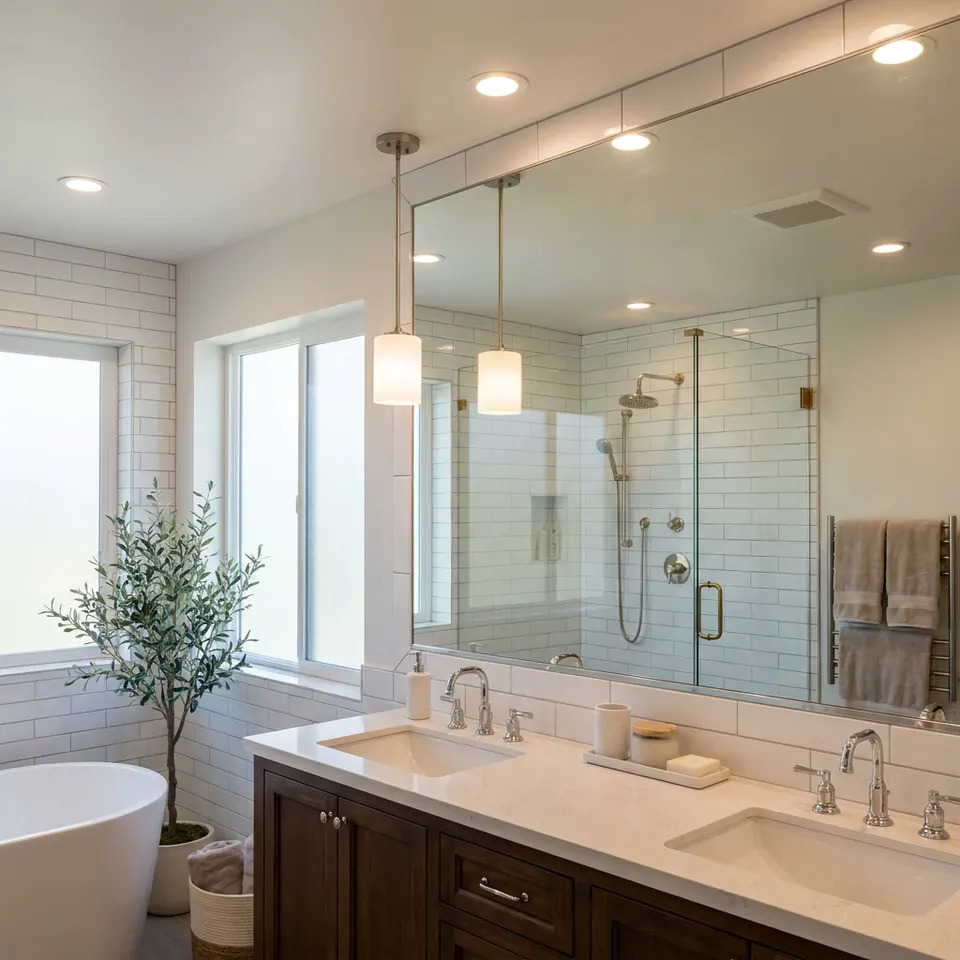
Careful crack repair and surface prep come before any paint or tile goes on a plaster wall.
Check for moisture before you update anything
A fresh coat of paint over a damp wall only hides the problem. Before starting, take a slow walk through the bathroom with a flashlight.
Moisture checklist
- Look for brown or yellow stains on the ceiling below or around the tub.
- Press gently on plaster near the tub and floor. Soft or crumbly spots are a warning sign.
- Check for bubbling or peeling paint, especially above the shower.
- Inspect the grout and caulk lines for gaps or dark discoloration.
- Look under the sink for drips, rust, or swollen cabinet bottoms.
- Run the exhaust fan (if there is one) and see whether it actually moves air.
- Note any musty smell, which can point to hidden dampness.
The EPA's guidance on mold and moisture makes a simple point: controlling moisture is the way to control mold. If you find a leak, fix the source first. Cleaning or painting over it will not solve it. Small surface mold on a hard surface may be something you can clean yourself, but widespread growth or repeated return is a reason to bring in help.
Repairing plaster the right way
Cosmetic plaster repair is something a careful handyman does regularly. The goal is a stable, smooth surface that will hold paint or tile.
Typical repair steps
- Find the cause of the crack or damage (moisture, settling, or old patching).
- Remove loose or flaking material back to solid plaster.
- Secure any loose sections to the lath or substrate where needed.
- Fill with a patching compound suited to the depth of the damage.
- Tape or reinforce larger cracks so they are less likely to reopen.
- Sand smooth, wipe off dust, and prime.
- Paint with a moisture-resistant finish.
Hairline cracks near door frames or corners often come from normal movement. Wide, growing, or stair-step cracks deserve a closer look before you cosmetically cover them.
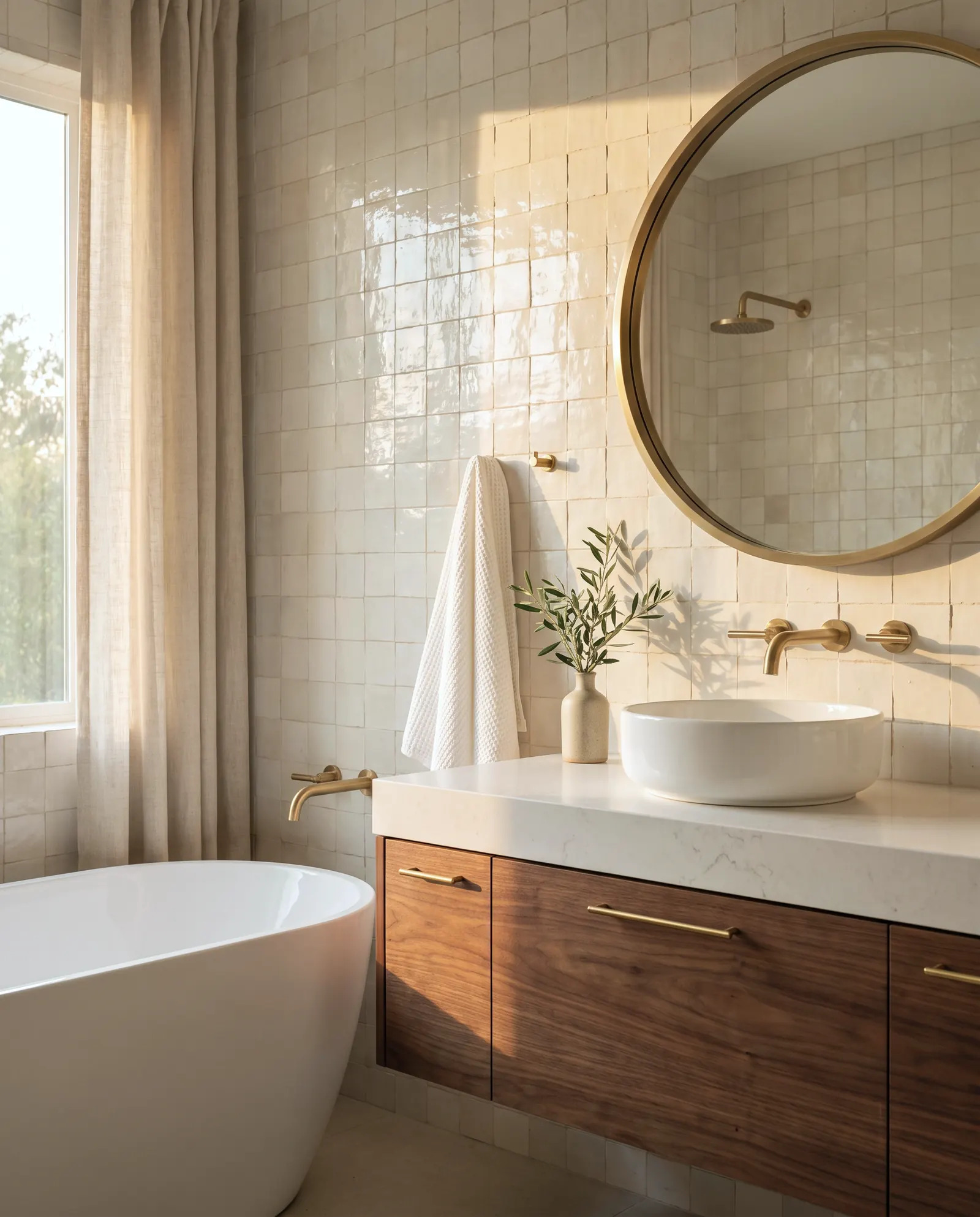
A new vanity and lighting look their sharpest when the wall behind them has been properly prepared.
Plaster vs. drywall: what changes for the work
| Task | Plaster walls | Drywall walls |
|---|---|---|
| Drilling for anchors | Slow, with the right bits; risk of cracking or blowout | Fast and forgiving |
| Hanging heavy items (mirrors, shelves) | Often fastened into studs or lath-backed supports | Anchors or studs work well |
| Patching | Requires careful feathering to match texture | Usually simpler to patch and sand |
| Moisture damage | Can soften and delaminate over time | Can swell and crumble quickly |
| Running new wires or pipes | Often needs careful cutting and repair | Easier to open and close |
| Tile over the wall | Needs sound, clean, primed surface | Needs a suitable moisture-resistant backer |
The takeaway: plaster is solid, but changes take more effort. Plan for patching and finishing as part of the job, not an afterthought.
Tile, grout, and fixtures: practical tips
Tile is a common reason homeowners start a bathroom update. A few habits keep results lasting:
- Follow industry standards. The Tile Council of North America (TCNA) publishes the handbook many tile professionals reference for proper installation methods.
- Prep matters more than the tile. Tile over weak, dusty, or damp plaster will not last.
- Use the right waterproofing in shower areas rather than relying on grout alone.
- Choose water-efficient fixtures. WaterSense-labeled toilets, faucets, and showerheads are designed to use less water without giving up performance.
- Fix small drips early. The EPA's Fix a Leak Week resources point out that even minor leaks add up over time.
Also consider ventilation. A working exhaust fan vented outdoors does more for a plaster bathroom than almost any cosmetic upgrade.
When to call a pro
Plenty of bathroom jobs are reasonable DIY projects: caulking, painting, replacing a showerhead, swapping a towel bar into a stud. But some situations are better handled by an experienced person.
Consider hiring help if:
- Plaster is soft, bulging, or falling away
- You see recurring stains, mold, or a musty smell
- You plan to move plumbing or open walls
- You need to anchor heavy fixtures into old plaster
- Tile or waterproofing work is involved in a shower
- You are unsure whether a job needs a permit
Larger work may need a permit through the city. The Los Angeles Department of Building and Safety explains permits and inspections, and it is worth checking before you start. For general guidance on hiring, the California Contractors State License Board offers consumer resources on choosing a contractor and understanding what work requires a contractor.
If you are not sure where your project falls, you can send a photo for a written quote and describe what you want changed. We also serve homes throughout Beverly Hills.
FAQ
Can I hang a mirror or shelf on a plaster bathroom wall?
Yes, but plan it. Locate studs when you can, pre-drill carefully, and use anchors rated for the weight. Heavy items in damp areas deserve extra care.
Is it safe to tile directly over old plaster?
Only if the plaster is sound, clean, dry, and properly prepared. Soft or damaged areas should be repaired first, and shower areas need proper waterproofing.
Why does paint keep peeling in my plaster bathroom?
Moisture is the usual cause. Poor ventilation, a slow leak, or steam from the shower can lift paint. Fix the moisture source, repair the surface, prime, and use a bathroom-rated paint.
Do I need a permit for a bathroom update?
It depends on the scope. Cosmetic changes often do not, while plumbing, electrical, or structural work may. Check with the Los Angeles Department of Building and Safety before starting.
Can new fixtures really save water?
WaterSense-labeled toilets, faucets, and showerheads are designed to use less water than standard models while still performing well, according to the EPA.
Sources
- EPA: A Brief Guide to Mold, Moisture, and Your Home
- EPA WaterSense
- Los Angeles Department of Building and Safety: Permits and Inspections
- CSLB: Hire a Contractor
Safety note: work on electrical panels, gas, structure or anything that needs a permit should be done by a licensed contractor with the required permits.
STATOX Handyman Service · Send a photo · +1 (820) 200-4919
Keep reading
 bathroomBathroom Repair Prep Checklist Before the Handyman VisitUse this bathroom repair prep checklist to clear the space, gather photos, and find your shutoffs so your handyman visit goes smoothly. Read before you book.
 bathroomBathroom Tile vs Vinyl vs Acrylic Surrounds: ComparedBathroom tile vs vinyl vs acrylic: how each surround handles water, cleaning, and repairs in Los Angeles homes. Read before you choose your material.
 bathroomBel Air Bathroom Repairs in Hillside and Older HomesPlanning bathroom repair Bel Air homes need? Learn what hillside and older houses hide behind tile and drywall, and what to check first before it gets costly.