Beverly Hills Older Homes: Door Hardware Repair Tips

Door hardware repair in Beverly Hills older homes usually starts with a simple diagnosis: is the problem the hardware itself, the door's fit in the frame, or decades of paint and settling? Most loose knobs, sticky latches, and squeaky hinges can be fixed without replacing anything, which matters when the original hardware is part of the home's character. This guide walks you through what to check, what to try, and when to hand it off.
Why older Beverly Hills homes have their own door problems
Many homes in Beverly Hills date from the early and mid-20th century, and their doors show it. Solid wood doors swell and shrink with the seasons. Houses settle, and frames drift slightly out of square. Layers of paint build up on hinges, strike plates, and latch edges.
Original hardware is often heavier than what you find in modern kits. Mortise locks, glass or crystal knobs, brass or bronze escutcheons, and decorative backplates were built to be serviced, not thrown away. That's good news: a worn part can often be cleaned, tightened, or rebuilt.
Common symptoms and their usual causes:
- Door won't latch: the strike plate is out of alignment, or the hinges have loosened.
- Knob spins or wobbles: a set screw has backed out, or the spindle has worn.
- Key sticks or turns hard: dirt, old lubricant, or a worn cylinder.
- Door rubs at the top corner: a loose top hinge, or the frame has shifted.
- Squeaks and groaning: dry or paint-clogged hinge pins.
Start with a quick diagnosis
Before you pick up a screwdriver, spend five minutes watching the door. Open and close it slowly. Look at the gaps around the edges, called reveals, and note where the door touches.
A simple check sequence:
- Close the door and look at the gap along the latch side. It should be fairly even from top to bottom.
- Press on the door near the top hinge. If it moves, the hinge screws are loose.
- Check the latch bolt: does it line up with the hole in the strike plate?
- Turn the knob or lever with the door open. Does the latch retract fully and spring back?
- Try the key with the door open. If it works smoothly open but sticks closed, the issue is alignment, not the lock.
That last test saves a lot of money and frustration for homeowners who assume the lock has failed. Often it hasn't.
Fixing loose, sagging, and squeaky hinges
Hinges are the most common culprit in older doors. Years of use wear the screw holes in the soft wood of the jamb until the screws no longer bite.
Try this first:
- Tighten every hinge screw with a hand screwdriver, not a drill, so you don't strip the hole.
- If a screw spins freely, remove it and fill the hole with a few wooden toothpicks or a thin dowel coated in wood glue. Let the glue set, trim flush, and drive the screw back in.
- For the top hinge, replace one screw with a longer one, about three inches, that reaches the wall framing. This pulls the door back up and often fixes rubbing.
- For squeaks, remove the hinge pin, wipe off old residue, and apply a small amount of light machine oil or silicone lubricant.
If hinges have been painted over, scrape the paint from the screw heads so the driver seats fully. Gently clean the hinge knuckles with a soft brush. Avoid aggressive solvents on old finishes you want to preserve.

A hinge with stripped screw holes is usually a quick repair once the jamb wood is reinforced.
Knobs, latches, and strike plates
A wobbly knob is rarely a reason to replace it. Look for a small set screw on the neck of the knob or lever, often hidden on the side. Tighten it with the right size hex or slotted driver. On many older sets, a threaded rose or collar can be turned snug by hand or with a gentle wrap of tape and pliers to protect the finish.
If the latch doesn't catch:
- Close the door and mark where the latch bolt touches the strike plate with a pencil or a bit of lipstick or tape on the bolt.
- If it hits slightly high or low, enlarge the strike opening with a small file.
- If it's off by more than a fraction of an inch, move the strike plate and fill the old screw holes.
- Make sure the door isn't being held open by a sagging hinge before changing the strike. Fix hinges first.
For sticky latch bolts, remove the latch and clean it. Dry graphite or a lock-specific lubricant works better than heavy oil, which attracts dust and gums up over time.
Repair or replace: a quick comparison
Not every piece of old hardware is worth saving, but many are. Use this table as a starting point.
| Situation | Usually repair | Usually replace |
|---|---|---|
| Loose knob or lever | Tighten set screw or rose | Spindle or internal parts are broken |
| Squeaky hinge | Clean and lubricate pin | Hinge is cracked or bent |
| Stripped screw holes | Fill and re-drive screws | Jamb wood is split or rotted |
| Sticky key | Clean and lubricate cylinder | Cylinder is badly worn |
| Decorative original set | Clean, rebuild, refinish | Missing parts that can't be sourced |
| Door won't latch | Adjust strike plate | Latch mechanism is damaged |
If the hardware has historic or decorative value, lean toward repair. Matching an original mortise set or ornate backplate later can be difficult.
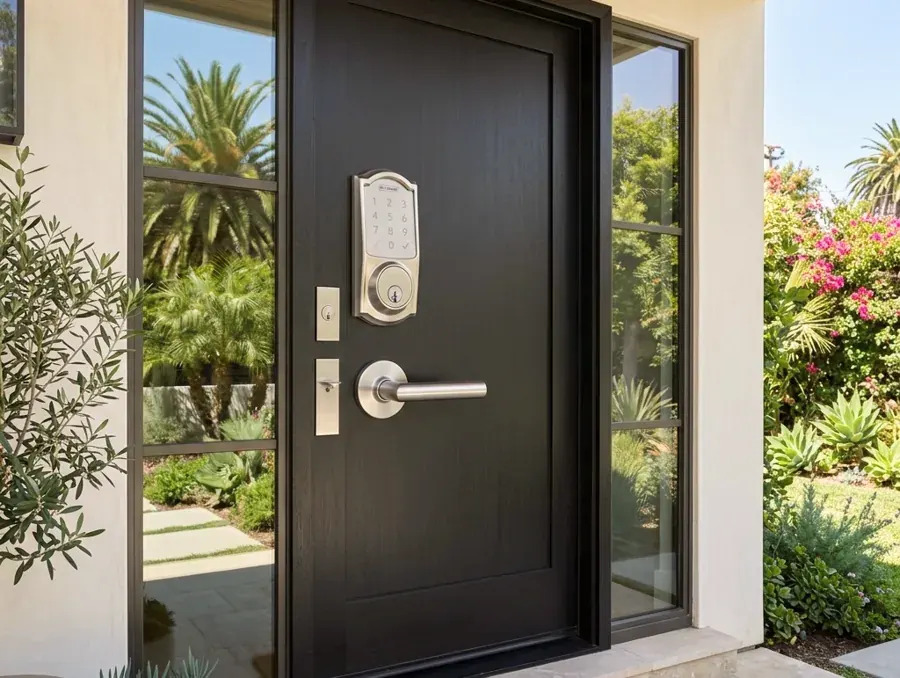
Original brass hardware often cleans up well and can be kept in service.
Security and safety checks for older doors
While you're working on hardware, take a moment to look at security. Older doors may have short strike plate screws, thin latch bolts, or worn deadbolts.
A quick security checklist:
- Replace short strike plate screws with longer ones that reach into the framing.
- Confirm the deadbolt fully extends into the jamb when thrown.
- Check that the jamb around the strike isn't cracked or soft.
- Make sure every exterior door can be opened from the inside without a key if that's how it was designed, and that you know how it works.
- Test interior privacy locks on bedrooms and bathrooms so no one gets stuck behind a door.
If you're changing a door's size or swapping out a whole frame, check with the City of Los Angeles Department of Building and Safety on whether a permit applies. Beverly Hills is its own city with its own building department, so confirm the local rules before major work. Simple hardware repair typically doesn't involve permits, but structural changes can.
When to call a pro
Plenty of door hardware repair is a good weekend DIY project. Call a professional when:
- The door frame is out of square, cracked, or soft from moisture or termite damage.
- A mortise lock body is seized or the internal parts are broken.
- You'd need to plane, trim, or rehang a heavy solid door, which is awkward and easy to get wrong.
- The hardware is valuable or historic and you don't want to risk damaging a finish.
- A lock keeps failing after you've cleaned and adjusted it.
- You've got several doors with different problems and want one consistent fix.
A locks doors service can handle adjustments, rehangs, and hardware swaps in a single visit scope, and a local handyman familiar with Beverly Hills homes will know the quirks of older construction. If you're unsure what you're dealing with, you can send a photo for a written quote and get a clearer idea of the work before deciding.
When hiring anyone for home repair work, the California Contractors State License Board offers consumer guidance on choosing a contractor and understanding what work requires a contractor.
FAQ
Can I keep my original door hardware?
Often, yes. Cleaning, tightening, lubricating, and replacing small internal parts can bring old knobs, hinges, and mortise sets back into good working order. Replacement is usually only needed when parts are cracked, missing, or beyond repair.
Why does my door stick more in some months?
Wood absorbs moisture and expands, then dries and shrinks. Older solid doors are especially responsive to humidity changes. If it only sticks seasonally, check hinge tightness first, then look at where it rubs before planing anything.
What lubricant should I use on door hardware?
Use a light machine oil or silicone lubricant on hinge pins, and a dry graphite or lock-specific lubricant inside latches and cylinders. Avoid heavy grease, which collects dust.
Is it okay to paint over hinges?
It's better not to. Paint builds up in the hinge knuckles and around latch edges, which causes sticking and squeaks. Remove hardware or mask it before painting.
Do I need a permit to repair or replace door hardware?
Routine hardware repair generally doesn't. Replacing a door frame or changing openings can be different. Check with your local building department before starting larger work.
Sources
- California Contractors State License Board: Hire a Contractor
- California Contractors State License Board: Consumers
- Los Angeles Department of Building and Safety: Permits and Inspections
Safety note: work on electrical panels, gas, structure or anything that needs a permit should be done by a licensed contractor with the required permits.
STATOX Handyman Service · Send a photo · +1 (820) 200-4919
Keep reading
 locks doorsBel Air Hillside Homes: Door and Lock Upgrade GuidePlanning door lock installation in Bel Air? Learn how hillside homes, gates, and entry doors affect lock choices, fit, and security. Read before you buy.
 locks doorsDeadbolt vs Smart Lock: Which Fits Your Home Better?Deadbolt vs smart lock: compare security, convenience, batteries, and fit for Los Angeles homes so you can pick the right lock for your front door.
 locks doorsDIY or Handyman for Door Lock and Hinge Repair?Wondering if handyman door lock repair is worth it or if you can fix it yourself? Learn which jobs are DIY-friendly and which to hand off. Read before you drill.