Deadbolt vs Smart Lock: Which Fits Your Home Better?
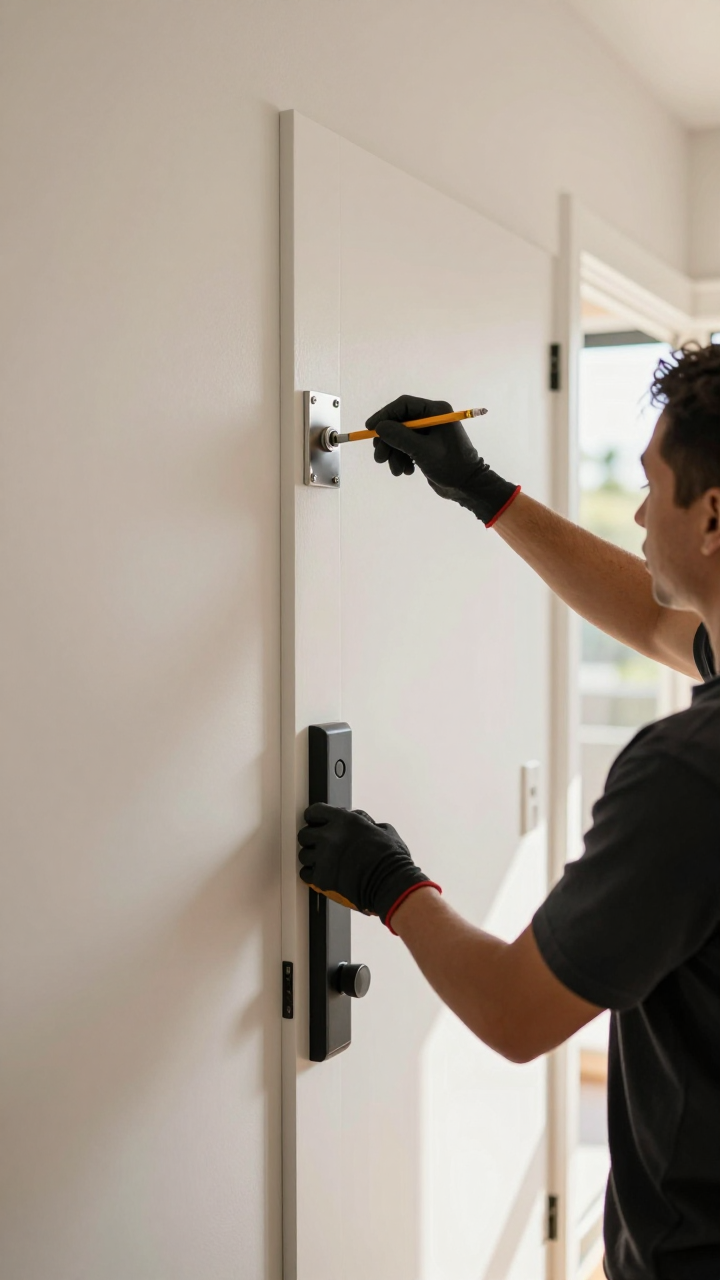
If you want the simplest, most dependable lock with nothing to charge or connect, a good deadbolt is hard to beat. If you share your home with guests, renters, dog walkers, or family who lose keys, a smart lock adds real convenience. Many Los Angeles homeowners end up happiest with a solid deadbolt body, with or without a smart "brain" on top of it.
Here is how to weigh the two, what to check on your own door, and where the mistakes usually happen.
What is the real difference between a deadbolt and a smart lock?
A deadbolt is a mechanical lock. A thick metal bolt slides into the door frame when you turn a key or a thumb-turn. There is no software, no battery, and very little to go wrong.
A smart lock is a different way of operating a lock, not a different kind of bolt. Most smart locks still throw a deadbolt. What changes is how you control it: a keypad, a phone app, a fingerprint reader, a key fob, or a voice assistant.
That distinction matters. Security depends on three things working together:
- The strength of the bolt and its hardware
- The door and the frame it sits in
- How the lock is controlled (key, code, or app)
A smart lock on a weak door is still a weak door. A plain deadbolt in a solid frame can be very secure.
Deadbolt vs smart lock: side-by-side comparison
| Factor | Traditional deadbolt | Smart lock |
|---|---|---|
| How it works | Key and thumb-turn | Keypad, app, fingerprint, fob, or key |
| Power | None | Batteries (some also wire in) |
| Sharing access | Copy keys | Create or delete codes |
| If you lose a key | Rekey or replace the cylinder | Delete the code, or rekey if a key is used |
| Failure points | Worn cylinder, misaligned strike | Dead batteries, connectivity, software updates |
| Installation | Straightforward on a prepared door | Straightforward, but door alignment matters more |
| Ideal for | Simplicity, low maintenance | Shared homes, rentals, frequent visitors |
Neither column wins everywhere. The right choice is the one that matches how your household actually lives.
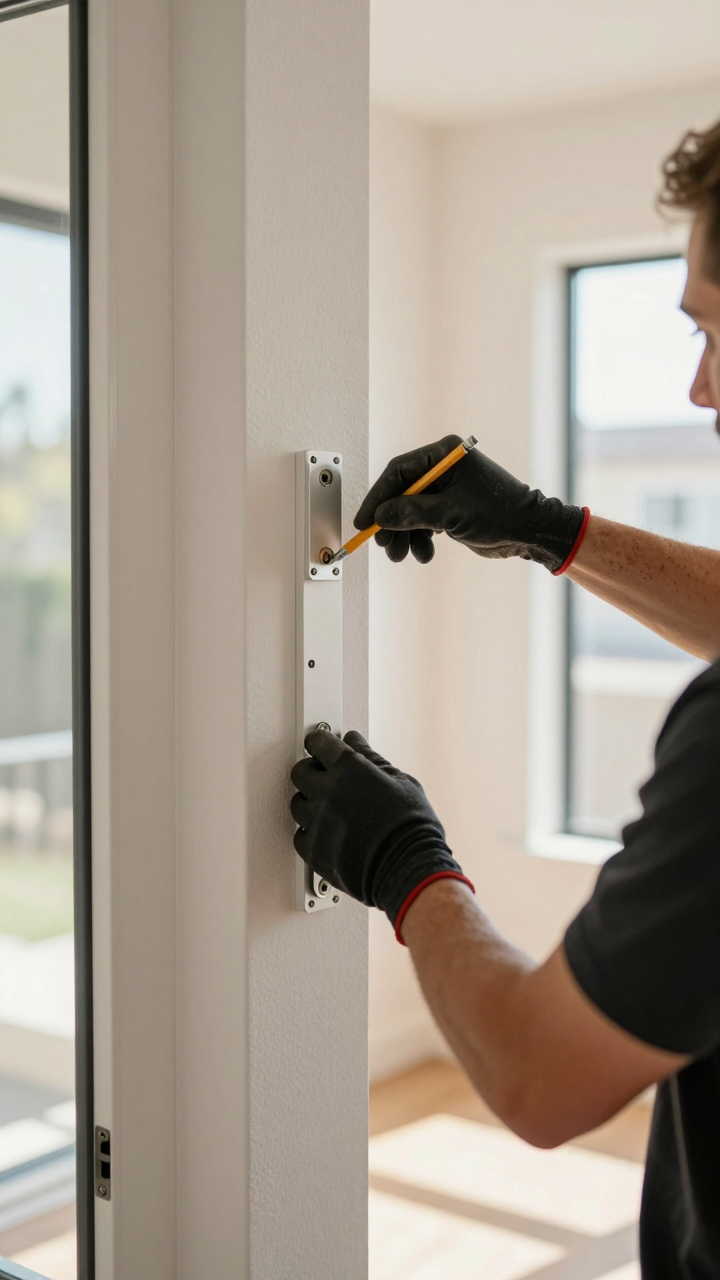
A deadbolt only protects as well as the strike plate and frame behind it.
When a deadbolt is the better fit
A classic deadbolt makes sense when:
- You want zero maintenance. No batteries to swap, no app to update.
- Your household is small and stable. Everyone already has a key and uses it.
- You prefer a lock that works during a power or internet outage. A mechanical lock does not care.
- You have a secondary door, like a side gate entry or garage service door, that does not need fancy features.
If your current deadbolt feels sticky or the key is hard to turn, the lock may not be the problem. Doors shift with temperature, humidity, and settling, and a misaligned strike plate can make any lock feel bad. That is often a quick adjustment rather than a full replacement.
When a smart lock is the better fit
A smart lock earns its place when keys are the headache:
- You host guests or short-term visitors and want to give temporary codes without handing out keys.
- You have a rental or a house with several occupants and want to remove access cleanly when someone moves out.
- Kids come home before you do and keep losing keys.
- You have service people coming and going, such as cleaners or pet sitters.
- You carry groceries often and like a keypad or auto-unlock option.
Things to think about before buying:
- Battery habits. Will you notice the low-battery warning and act on it? Keep a spare set on hand.
- Backup entry. Choose a model with a physical key override or an external way to power it, so a dead battery never locks you out.
- Connectivity. Decide whether you need Wi-Fi or Bluetooth, or whether a simple keypad is enough. Fewer connected features means fewer things to troubleshoot.
- Your phone. If the lock relies on an app, think about what happens if your phone dies or you upgrade devices.
- Account security. Use a strong, unique password and turn on two-step verification if the app offers it.
Check your door before you choose
Most lock problems start with the door, not the hardware. Before you buy anything, walk through this list.
Door and frame checklist
- Does the door close and latch without lifting or pushing?
- Is there an even gap around the edges?
- Is the strike plate secured with screws that reach into the wall framing, not just the thin door jamb?
- Is the door solid, or hollow and dented near the lock?
- Does the existing hole fit a standard bore, and is the backset (distance from the door edge to the hole center) a common size?
- Is the frame cracked or splintered near the bolt?
Smart locks are less forgiving of rubbing doors. A motor has to push the bolt through, and if the bolt drags on the strike, it drains batteries faster and may fail to fully lock. Fix the alignment first, then choose the lock.
In older Los Angeles homes, you may find doors that have been painted many times, shifted with age, or drilled for earlier hardware. Those quirks are worth sorting out before new hardware goes on.
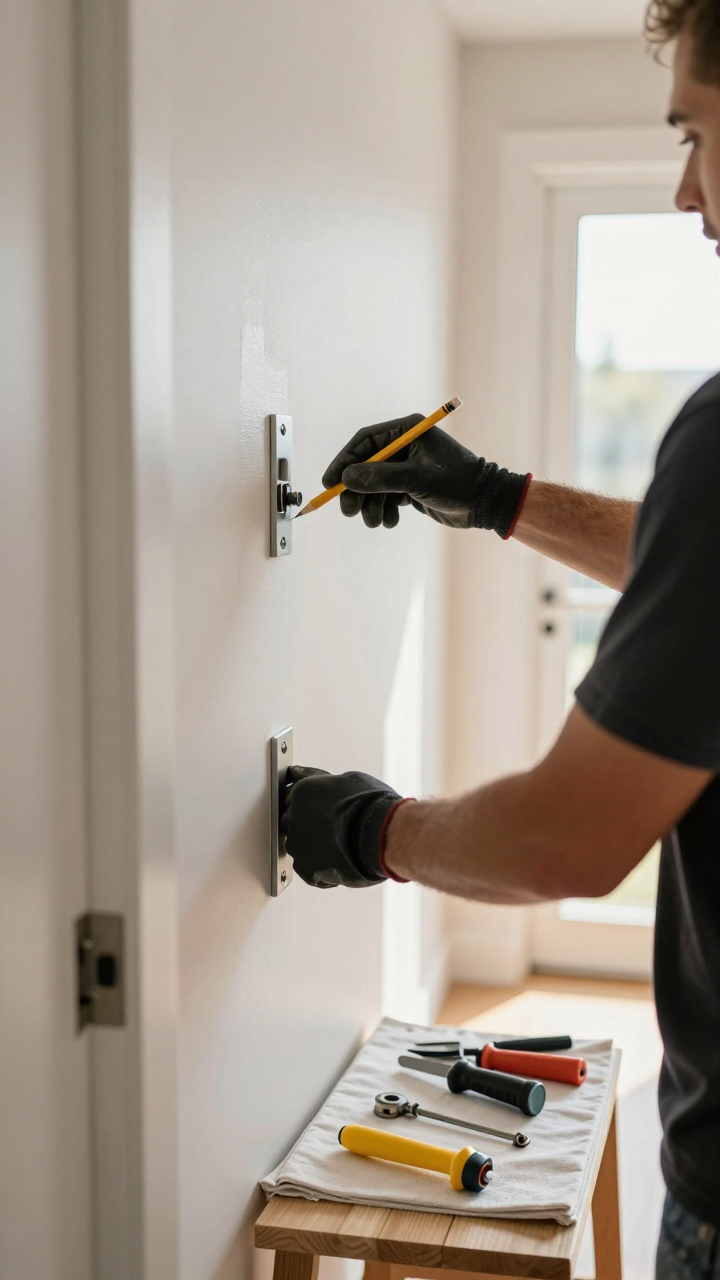
Checking alignment first helps any lock, smart or not, work smoothly.
A middle path: smart convenience on a solid deadbolt
You do not have to pick one world. Some options blend them:
- Keypad deadbolts that run on batteries but have no app or internet connection. Simple, with fewer moving parts.
- Retrofit smart units that replace only the interior thumb-turn and keep your existing exterior key cylinder.
- A smart lock on the front door and a standard deadbolt elsewhere, so the door that matters most gets the convenience.
If you rent, check your lease before changing hardware, and keep the original lock so it can be put back.
When to call a pro
Swapping a lock on a well-aligned door is a reasonable DIY project if you are comfortable with a screwdriver and can follow the instructions. Honest limits, though:
- Call a pro if the door rubs, sags, or will not latch smoothly. Hardware will not fix that.
- Call a pro if the bore hole is the wrong size, the edge is damaged, or the frame is cracked. These need repair, not just a new lock.
- Call a pro if you want the strike plate reinforced with longer screws or a stronger plate.
- Call a pro if you are unsure about wiring for a hardwired model.
- Call a pro if you have several doors to do and want them consistent and working together.
For hiring any contractor in California, the Contractors State License Board publishes guidance for consumers on how to check a contractor and protect yourself before work begins. If you want to know what your door needs, you can send a photo for a written quote. To learn more about what we handle, see our locks doors service page.
FAQ
Is a smart lock less secure than a deadbolt?
Not necessarily. Most smart locks use a real deadbolt. Security depends on the bolt quality, the door and frame, and how well you protect your codes and app account.
What happens if the batteries die?
Most smart locks give low-battery warnings, and many have a physical key slot or a way to power the lock from outside. Choose a model with a backup entry method and replace batteries when warned.
Can I put a smart lock on any door?
Usually, if the door has a standard bore hole and thickness and closes cleanly. Doors that rub or have damaged edges should be fixed first.
Do I need to rekey if I move into a new home?
It is a smart habit. You cannot know who has copies of old keys. Rekeying or replacing the lock gives you a fresh start, and with a smart lock you can also clear old codes.
Is a keypad lock without Wi-Fi a good compromise?
For many homes, yes. You get code-based entry and easy sharing without relying on an app or internet connection, and there is less to troubleshoot.
Sources
- California Contractors State License Board: Hire a Contractor
- California Contractors State License Board: Consumers
- California Department of Consumer Affairs
STATOX Handyman Service · Send a photo · +1 (820) 200-4919
Keep reading
 locks doorsDoor Sticking or Not Latching? Common Causes and FixesDoor not latching or sticking in your LA home? Learn the common causes, simple fixes, and when to stop DIY, so you can sort it out with real confidence.
 locks doorsFront Door Lock Replacement: What to Expect on Visit DayPlanning a front door lock replacement in Los Angeles? Walk through visit day step by step, from prep to testing, so nothing catches you off guard.
 locks doorsHow to Choose a Door Lock for Your Los Angeles HomeLearn how to choose a door lock for your Los Angeles home: grades, deadbolt types, smart options, and fit checks. Read before you buy a new lock.