Front Door Lock Replacement: What to Expect on Visit Day
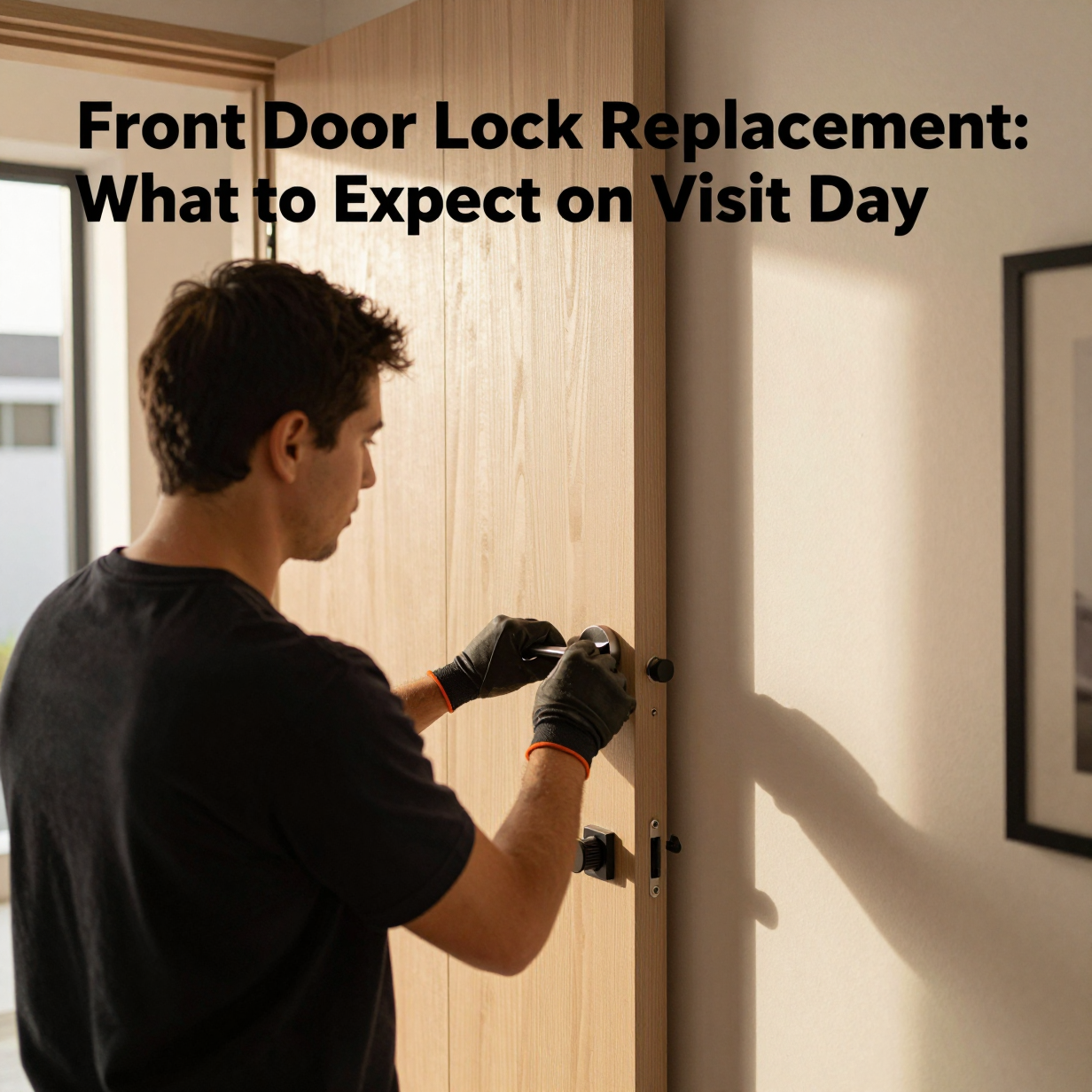
A front door lock replacement usually means removing the old hardware, checking that the door and strike plate line up, installing the new lock, and testing it with every key. Most of the work happens at the door itself, and you can make the visit smoother by choosing your lock ahead of time and clearing the entry area. Here is what a typical visit looks like, from the first look at your door to the final key test.
Before the Handyman Arrives
A little prep saves time on visit day. Spend ten minutes on the following:
- Decide what you are replacing. A deadbolt alone, a knob or lever with a deadbolt, a smart lock, or a full handleset are all different jobs.
- Buy the hardware or ask for help choosing. If you already have a lock, keep the box and any included template and screws.
- Gather every key you currently use, including spares, so the new lock can be tested against your household's habits.
- Clear the entry. Move shoes, mats, planters, and packages away from the door and the swing path.
- Note any problems. Does the door stick, drag on the floor, or need a hard push to latch? Tell your handyman up front.
- Plan for the door being open. Pets and small kids should be settled in another room.
If you are not sure what fits your door, send a photo for a written quote. A clear shot of the edge of the door, the existing lock, and the strike plate side of the frame helps a lot.
What Happens When the Work Starts
The visit usually follows the same order every time.
- Walk-through. Your handyman looks at the door, the lock, the frame, and how the door closes. This is the moment to mention any worries.
- Measure and confirm fit. The hole in the door for the lock (the bore), the distance from the edge of the door to the center of that hole (the backset), and the door thickness all need to match the new hardware.
- Remove the old lock. Screws come out, the lock body and latch are pulled, and the strike plate on the frame is unscrewed.
- Inspect the openings. Worn, enlarged, or splintered screw holes get fixed before the new lock goes in.
- Install the new lock. The latch, exterior cylinder, interior piece, and strike plate go in, and screws are snugged in the right order so nothing binds.
- Test and adjust. The bolt should extend and retract smoothly with the door open and closed.
- Clean up and walk-through. Old parts are bagged, and you get your keys and any paperwork from the box.
Standard door preparations are common, so a swap of like for like hardware often goes quickly. Odd bore sizes, older doors, or damaged edges add steps.
Choosing the Right Lock Type
Different locks suit different households. This table compares the common choices.
| Lock type | Good for | Things to know |
|---|---|---|
| Standard deadbolt | Simple, dependable security | Keyed outside, thumb turn inside |
| Knob or lever with deadbolt | Daily use, a full entry set | Two separate mechanisms, so two holes in the door |
| Keypad deadbolt | Families, guests, rentals | Needs batteries; keep a backup key |
| Smart lock | App control, shared access codes | Check that it fits your door and your phone setup |
| Handleset with deadbolt | Larger, decorative entry doors | More parts and often a more involved install |
Also check the grade marking on the package. Look for hardware rated by ANSI/BHMA, which is printed on the box for many residential locks. Compare the grade when shopping instead of relying on looks alone.
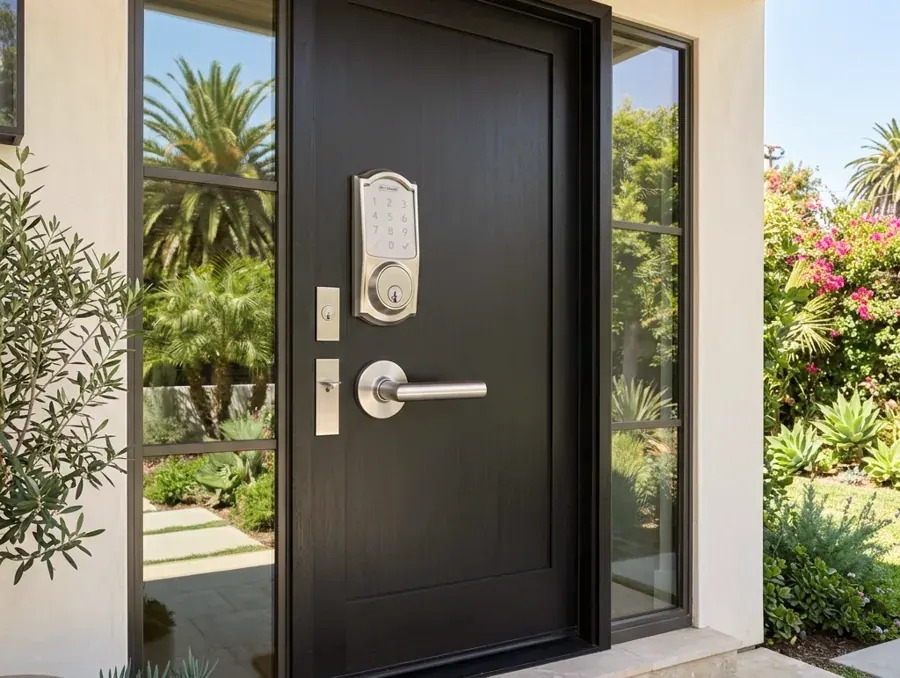
Measuring the bore and backset first keeps the new lock from fighting the door.
Problems That Show Up on Visit Day
Swapping a lock sounds simple, but old doors and frames often have surprises. These are the usual ones:
- Misaligned strike plate. If the bolt does not slide cleanly into the frame, the door is rubbing or has shifted. The plate may need to be moved or the hole opened up slightly.
- Loose or stripped screw holes. Wood filler, dowels, or longer screws can restore the grip.
- Sagging door. Loose hinges are a very common reason a lock feels stiff. Tightening hinge screws can fix it.
- Seasonal swelling or gaps. Doors can shift with weather changes and age, especially on older Los Angeles homes with original wood frames.
- Worn door edge. A cracked or chewed edge near the latch may need a reinforcement plate.
- Wrong size bore. If the new lock does not match the existing holes, an adapter or a different lock may be the answer.
Ask your handyman to explain any extra step before it starts. Good communication here avoids surprises.
Testing the New Lock Before Your Handyman Leaves
Do not skip the final check. Run through this list while your handyman is still there:
- Lock and unlock with the key from outside at least three times.
- Lock and unlock from inside with the thumb turn.
- Test every key you were given, including spares.
- Close the door gently, then with normal force, and listen for a clean latch.
- Confirm the bolt fully extends into the frame without scraping.
- For keypads and smart locks, set your code, test it, and confirm the backup key works.
- Check that no screws are left loose and the interior piece does not wobble.
Keep the packaging information and the key code card if one came with the lock. If you ever need extra keys, those details help.

A properly aligned strike plate lets the bolt slide in without force.
When to Call a Pro
Plenty of homeowners can replace a like for like deadbolt with a screwdriver and patience. If your door is in good shape and the new lock matches the old holes, it can be a reasonable DIY project.
Hiring help makes more sense when:
- The door sticks, sags, or does not latch smoothly.
- You need new holes drilled or an unusual bore sized correctly.
- The frame is cracked, split, or soft around the strike plate.
- You are installing a smart lock and want it set up and tested.
- You are changing several locks and want them keyed alike.
- You simply would rather not risk damaging the door.
Ask any contractor you consider about their qualifications and check the guidance on the California Contractors State License Board site before you hire. Our locks doors service covers lock swaps along with the door adjustments that often come with them.
FAQ
How long does a front door lock replacement take?
It depends on the door and the lock. A straightforward swap is often quick, while a sagging door, a new bore, or a smart lock setup adds steps. Ask your handyman for an estimate after they see the door.
Do I need to be home during the visit?
Someone should be there at the start to walk through the job and at the end to test the lock and receive keys. Many homeowners stay nearby the whole time.
Should I rekey or replace the lock?
Rekeying changes the internal pins so old keys stop working, and it works well if the lock itself is in good shape. Replace it if the lock is worn, damaged, or outdated, or if you want a different style.
Can I keep my existing keys?
If you are installing a new lock, it will come with its own keys. Some handymen can match a new lock to a key you already use, depending on the brand.
What should I do if the new lock feels stiff?
Stop forcing it and check whether the door is closing properly. Misaligned strike plates and loose hinges are the usual cause. Let your handyman adjust it before they leave.
Sources
- California Contractors State License Board: Hire a Contractor
- California Contractors State License Board: Consumers
- California Department of Consumer Affairs
STATOX Handyman Service · Send a photo · +1 (820) 200-4919
Keep reading
 locks doorsDoor Sticking or Not Latching? Common Causes and FixesDoor not latching or sticking in your LA home? Learn the common causes, simple fixes, and when to stop DIY, so you can sort it out with real confidence.
 locks doorsHow to Choose a Door Lock for Your Los Angeles HomeLearn how to choose a door lock for your Los Angeles home: grades, deadbolt types, smart options, and fit checks. Read before you buy a new lock.
 bathroomBathroom Repair Prep Checklist Before the Handyman VisitUse this bathroom repair prep checklist to clear the space, gather photos, and find your shutoffs so your handyman visit goes smoothly. Read before you book.