Door Sticking or Not Latching? Common Causes and Fixes
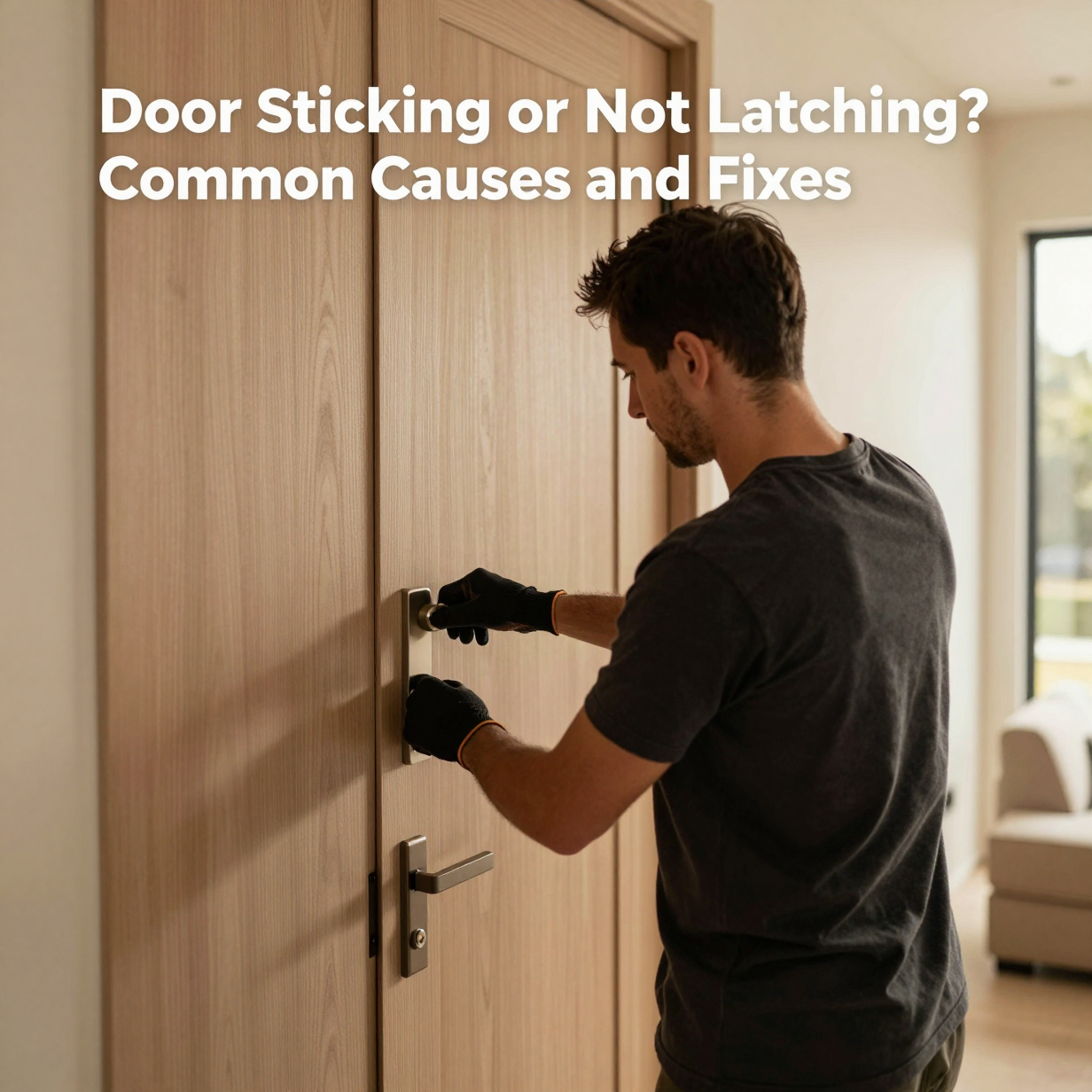
If your door is not latching, the cause is almost always one of three things: the latch and strike plate no longer line up, the hinges have loosened and the door has sagged, or the door has swollen or the frame has shifted. Most of these can be checked in ten minutes with a screwdriver and a pencil. Start by watching where the latch meets the strike plate as you close the door, because that tells you which fix you need.
Start by Finding Out Where the Door Is Binding
Before you tighten or sand anything, figure out what the door is actually doing. Guessing leads to extra holes, shaved wood, and a door that looks worse than when you started.
Close the door slowly and look at these spots:
- The latch side, near the strike plate. Does the bolt hit the wall of the frame instead of the opening?
- The top corner on the latch side. Rubbing here usually means the door has dropped on its hinges.
- The bottom edge. Rubbing on the floor or threshold points to sagging, a thick rug, or swelling.
- The hinge side. Gaps that are wider at the bottom than the top suggest loose hinge screws.
Look for shiny, burnished spots on the paint or bare wood. Those marks show where the door is touching the frame. You can also slide a sheet of paper around the edge of the closed door. Where the paper snags or tears, the fit is too tight.
Common Causes of a Door Not Latching
Here is how the usual suspects compare.
| Cause | What you will notice | Typical fix |
|---|---|---|
| Strike plate misaligned | Latch bolt hits the frame above, below, or beside the hole | Adjust or reposition the plate, or file the opening |
| Loose hinge screws | Door sags, rubs at the top latch corner, gap at the hinge side | Tighten or replace screws with longer ones |
| Swollen door or humid weather | Door sticks all around, worse in damp seasons | Let it dry, seal edges, plane only as needed |
| Worn or dirty latch | Bolt feels sluggish or does not spring out fully | Clean, lubricate, or replace the latchset |
| Shifted frame | Uneven gaps, door fits at the top but not the bottom | Shim the frame or adjust the plate; may need a pro |
| Paint buildup | Sticks after a repaint, latch edge feels tight | Scrape and sand paint from the edge and plate |
Many doors have more than one issue at once. A slightly sagging door can expose a strike plate that was always a little off.
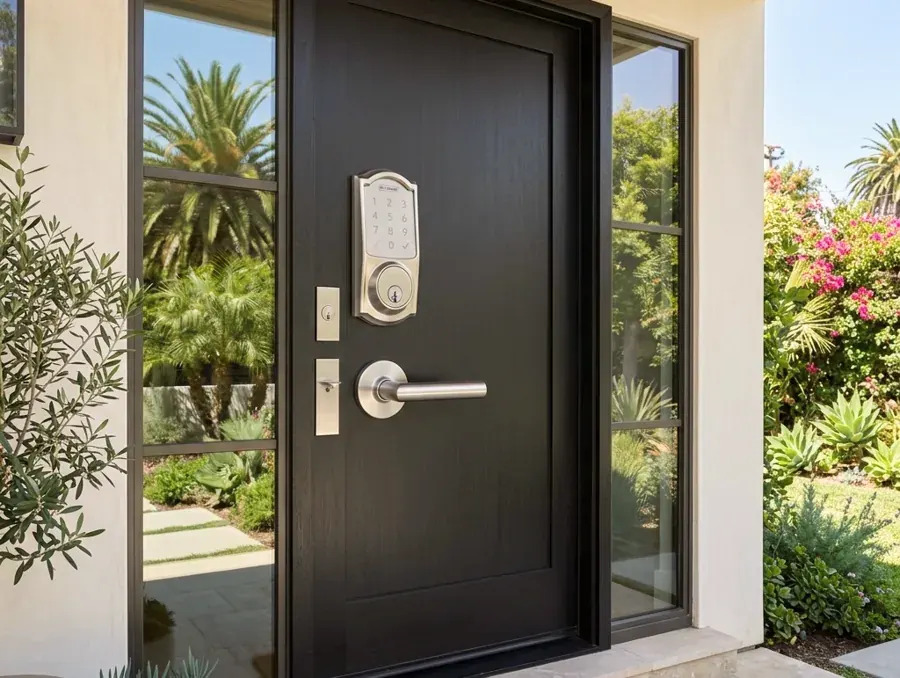
Checking where the latch bolt lands tells you whether the plate or the door needs adjusting.
Quick Fixes You Can Try First
Work from the simplest fix to the most involved. Stop as soon as the door closes and latches smoothly.
- Tighten the hinge screws. Use a screwdriver, not a drill, so you feel when they bite. If a screw spins without tightening, the hole is stripped.
- Fix stripped screw holes. Remove the screw, push a few wooden toothpicks or a small wood dowel with wood glue into the hole, let the glue set, trim flush, and drive the screw again. For the top hinge, a longer screw that reaches the wall stud pulls the door back up and in.
- Check the latch. Operate the knob or lever and watch the bolt. It should snap out fully. If it sticks, a small amount of dry graphite or a silicone-based lubricant helps. Avoid heavy oil, which collects dust.
- Look at the strike plate. Rub a little lipstick or pencil graphite on the end of the latch bolt, close the door, and turn the knob. The mark on the plate shows where the bolt lands.
- Adjust the plate. If the mark is off by a small amount, file the edge of the opening with a metal file. If it is off by more, unscrew the plate, shift it, and fill the old screw holes before re-mounting.
Keep the changes small. It is much easier to remove a little more material later than to put it back.
When the Door Sticks Because of Weather or Paint
Los Angeles is dry much of the year, but wood still moves. Coastal marine layer, rainy-season dampness, and bathrooms with poor ventilation can all make a door swell slightly. Doors that were never sealed on the top and bottom edges absorb the most moisture.
If your door sticks only in damp stretches, avoid cutting it down right away. A door planed in humid weather can end up with a gap once the air dries out. Try these steps first:
- Run a fan or dehumidifier in the room for a few days and see if the door eases.
- Check that the top and bottom edges are painted or sealed. Bare wood absorbs moisture quickly.
- Sand away paint drips on the latch edge and inside the frame, especially after a recent repaint.
If the door still binds after the weather settles, a light sanding or planing of the sticking spot is reasonable. Mark the high spots with pencil, remove the door if needed, and take off thin passes. Seal the bare wood afterward.
Frames That Have Shifted: Older LA Homes and Settling
Many Los Angeles homes have decades of settling, remodels, and seasonal movement behind them. A door that used to close fine can start to bind because the frame is no longer square. Signs include a gap that tapers from top to bottom, a door that fits only when pushed hard, or hairline cracks in the drywall or plaster near the corners.
Small shifts can often be handled by:
- Adding or adjusting shims behind the hinges.
- Setting the hinge a hair deeper, or placing a thin cardboard shim behind it, to tilt the door slightly.
- Repositioning the strike plate to meet the latch where it now lands.
A door that keeps moving, or a frame with growing cracks around it, may point to something beyond a door problem. In that case, adjusting the door is only a temporary fix, and it is worth having the area looked at before you spend time on cosmetic repairs.

A clean, tight strike plate with solid screws helps the latch seat the same way every time.
Latch and Lock Hardware Problems
Sometimes the door is fine and the hardware is tired. Knobs and levers loosen over time. Springs weaken. Deadbolts can stop lining up with their strike if the door has shifted even slightly.
Run through this checklist:
- Does the knob or lever feel loose or wobbly? Tighten the mounting screws.
- Does the latch bolt retract and extend smoothly when you turn the handle?
- Does the deadbolt throw fully into the frame without the door being lifted or pushed?
- Is the strike plate firmly screwed in, with screws that reach into solid framing?
- Does the key turn easily, or is it gritty? Gritty locks may need cleaning or replacement.
A deadbolt that only works if you lift the door is a sign of alignment trouble. It is also a security concern, since a bolt that does not fully seat gives less protection. If an exterior door is involved, make getting it latching and locking properly a priority.
When to Call a Pro
Plenty of door fixes are reasonable DIY jobs: tightening hinges, cleaning a latch, adjusting a strike plate, or sanding a small sticking spot. If you are comfortable with a screwdriver and a file, give those a try.
Consider bringing in help when:
- The door has been planed before and still does not fit.
- The frame is visibly out of square or cracked.
- An exterior or security door will not lock properly.
- You need to cut a new mortise, replace a latchset in a solid-core or metal door, or re-hang a heavy door.
- The door is a pocket, sliding, or specialty door with tracks or hidden hardware.
- You are not sure whether the problem is the door or the structure around it.
Our locks doors service covers adjusting, repairing, and replacing door hardware. If you want a sense of the work first, you can send a photo for a written quote showing the latch, hinges, and gaps around the door.
For any larger repair, it helps to read up on how to hire a contractor through the California Contractors State License Board, linked below.
FAQ
Why does a door stick only in certain seasons?
Wood takes on moisture and releases it, so doors often tighten up in damp weather and loosen when the air is dry. If the problem comes and goes, sealing the edges and improving ventilation is usually a better first step than cutting the door.
Can replacing the strike plate fix a door not latching?
Sometimes. If the old plate is bent, loose, or the wrong size, a new one can help. But if the bolt is landing in the wrong place, a new plate in the same spot will have the same problem. Check alignment first.
What should I do if hinge screws keep spinning?
The screw holes are stripped. Fill them with glue and wooden dowel or toothpicks, or use longer screws that reach the framing behind the jamb. Then tighten gently.
Is household oil okay for a sticky latch?
A light, dry lubricant such as graphite or a silicone-based product is a better choice. Heavy oils can attract dust and gum up the mechanism over time.
Is it a concern when a door suddenly stops closing right?
A sudden change is worth a closer look. Check hinges and the frame for cracks or movement. If the frame or nearby walls show new cracks, have the area assessed rather than just adjusting the door.
Sources
Safety note: work on electrical panels, gas, structure or anything that needs a permit should be done by a licensed contractor with the required permits.
STATOX Handyman Service · Send a photo · +1 (820) 200-4919
Keep reading
 locks doorsFront Door Lock Replacement: What to Expect on Visit DayPlanning a front door lock replacement in Los Angeles? Walk through visit day step by step, from prep to testing, so nothing catches you off guard.
 locks doorsHow to Choose a Door Lock for Your Los Angeles HomeLearn how to choose a door lock for your Los Angeles home: grades, deadbolt types, smart options, and fit checks. Read before you buy a new lock.
 bathroomBathroom Repair Prep Checklist Before the Handyman VisitUse this bathroom repair prep checklist to clear the space, gather photos, and find your shutoffs so your handyman visit goes smoothly. Read before you book.