Calabasas Hillside Homes: Cleaning Up Dust, Ash and Pollen
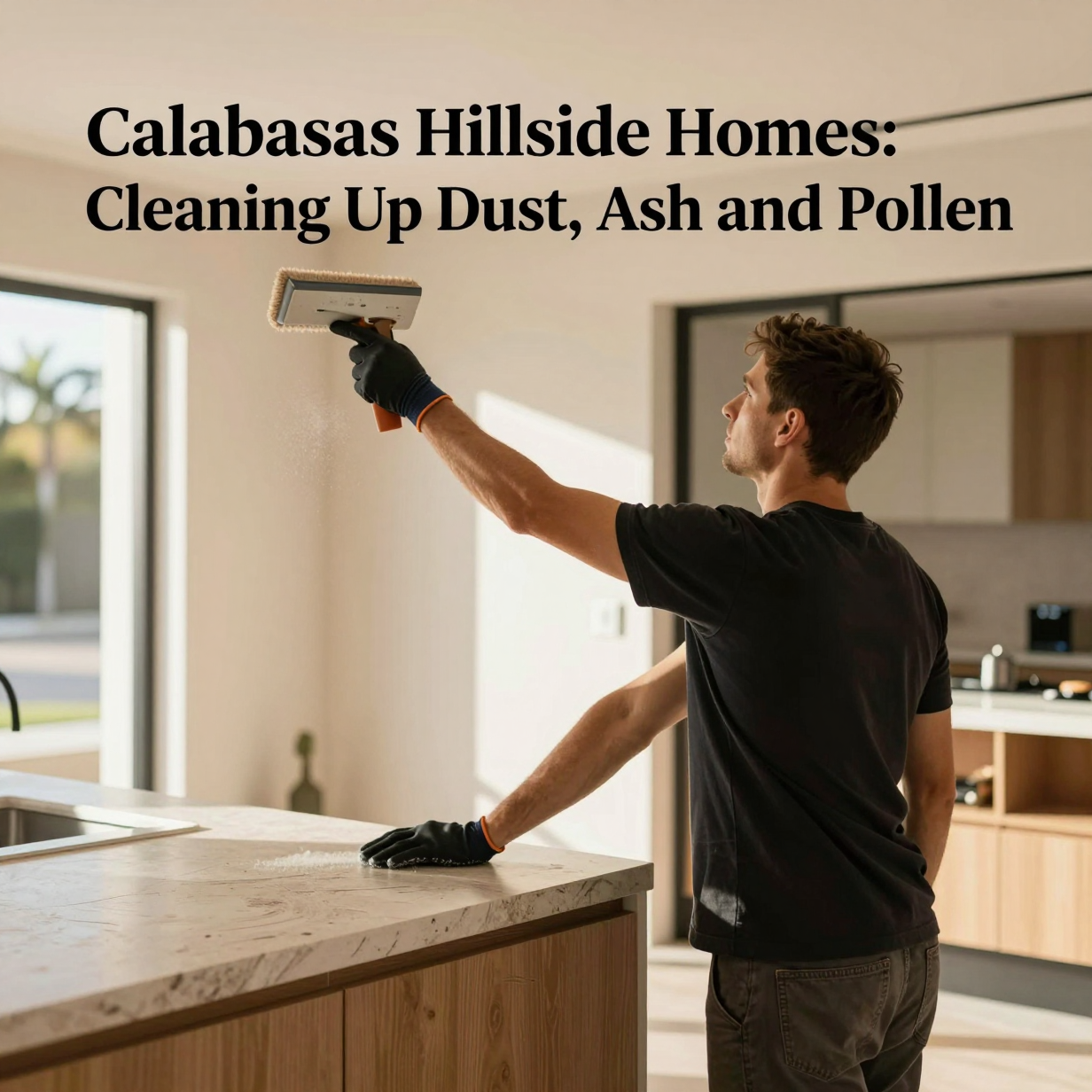
For house cleaning in Calabasas, the key is to remove fine dust, ash and pollen without pushing it back into the air. Work top to bottom, use damp cloths and a vacuum with a sealed filter, and clean the places where particles settle first: window tracks, vents, and soft surfaces. Dry sweeping and compressed air make the problem worse.
Hillside homes catch more of this material than most. Open slopes, native brush, wind, and big windows all work together to deliver a fine film to every surface. Here is how to handle it in a sensible order.
Why Calabasas Hillside Homes Collect So Much Dust, Ash and Pollen
Homes on slopes and ridgelines sit in the path of wind coming over dry brush and open ground. Fine particles ride that wind and settle wherever air slows down: on decks, in window tracks, around door thresholds, and on the filters that pull in outdoor air.
Three sources show up most often:
- Dust from dry soil, trails, construction, and unpaved lots.
- Ash after brush fires, even ones burning miles away. It is very fine and can be gritty.
- Pollen from oaks, grasses, and landscaping, usually coating horizontal surfaces in a yellow-green film.
Hillside design adds to it. Large windows, sliding doors, multi-level decks, and vaulted ceilings give particles more surface to land on and more places to hide. Many homes also rely on open windows for cooling, which lets everything in.
Start With Air and Entry Points Before You Clean Surfaces
If you wipe surfaces while the air is still carrying particles, you will be wiping again tomorrow. Settle the air first.
- Close windows and doors on windy or smoky days.
- Replace or check your HVAC filter. A clogged filter holds a lot of fine material and can recirculate it. Follow the filter rating your system is designed for.
- Set the system to recirculate during heavy ash or dust days if your equipment allows it.
- Check door sweeps and weatherstripping. Gaps you can see light through let particles in.
- Place a washable mat at each entry and take shoes off at the door.
The EPA's guide to indoor air quality explains how outdoor pollutants enter homes and why ventilation, filtration, and source control work together. It is a useful read before a big cleanup (see Sources).
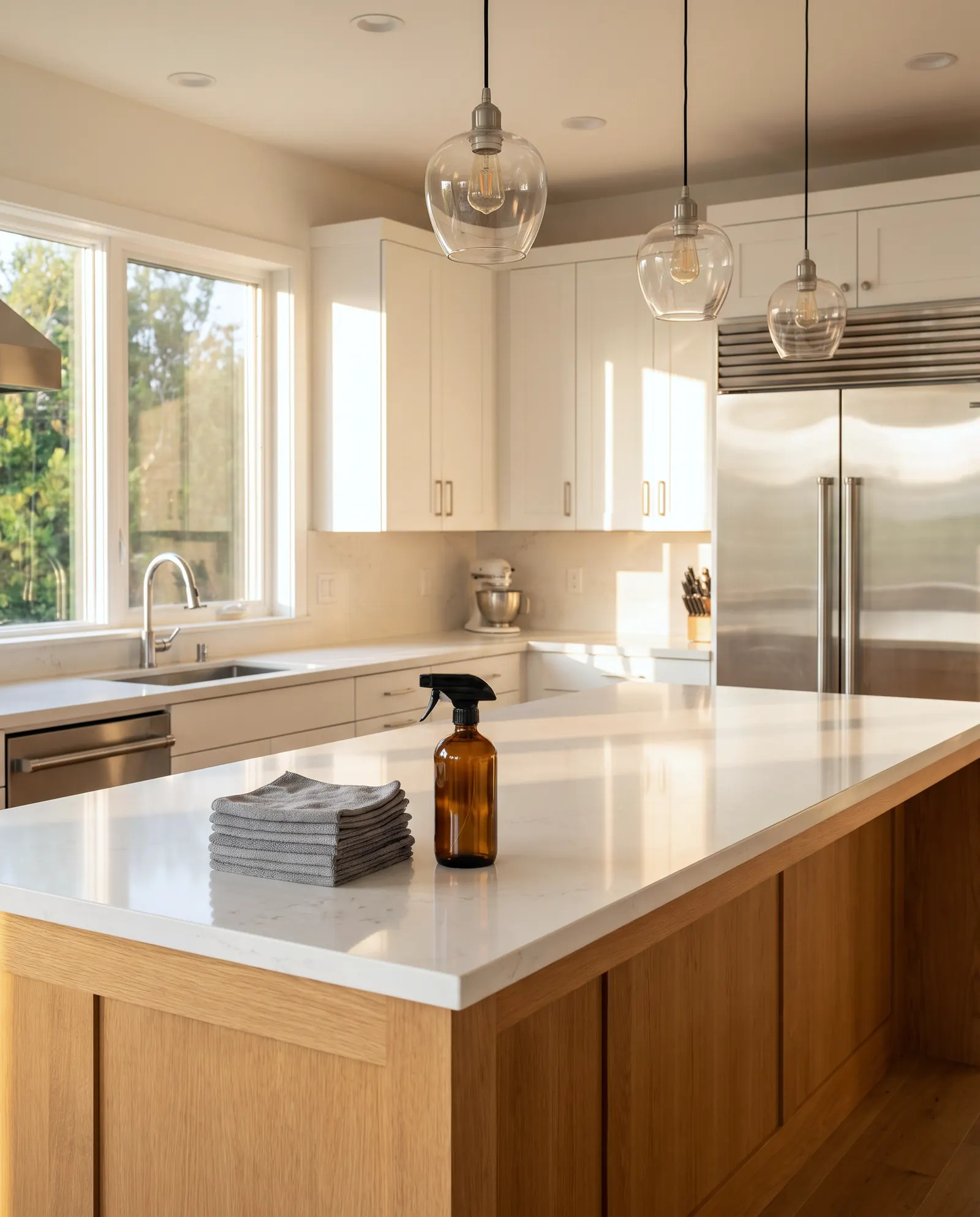
Window tracks and sills collect the most fine dust, so give them a slow, damp pass.
The Right Order: Top to Bottom, Dry to Damp
Gravity decides the order. Whatever you disturb will fall, so start high and finish on the floor.
What to use
- A vacuum with a sealed system and fine-particle filter
- Microfiber cloths, lightly dampened
- Soft brush attachments for vents and blinds
- A bucket of clean water, changed often
- A basic dust mask and gloves for heavy ash
Room-by-room sequence
- Ceiling fans, light fixtures, and high shelves. Use a damp cloth or a vacuum brush. Don't shake or blow.
- Walls and window frames. Wipe gently, working downward.
- Blinds and curtains. Vacuum blinds with a brush tool, then wipe slats. Launder washable curtains.
- Furniture and horizontal surfaces. Damp-wipe, rinsing the cloth often.
- Vents and returns. Remove covers if they come off easily, wash them, and vacuum the visible duct opening.
- Floors last. Vacuum first, then damp mop hard floors.
Handling Ash Safely and Without Smearing It
Ash behaves differently from ordinary dust. It is very fine, can be abrasive, and smears into a gray paste when wet with too much water.
- Wear a dust mask and gloves, and keep kids and pets out of the room while you work.
- Vacuum first to lift loose ash, using a vacuum with a fine filter. Standard bags and filters can let ash blow back out.
- Then wipe with a barely damp cloth. Too much water turns ash into a film that is harder to remove.
- Avoid leaf blowers, brooms, and compressed air. They throw ash back into the room.
- Bag vacuum contents and seal them before disposal.
On painted walls and glass, use gentle pressure. Ash can scratch if you grind it in with a dry rag.
Pollen, Outdoor Living Spaces, and Soft Surfaces
Pollen is lighter and stickier than dust. It clings to damp surfaces and builds up on decks, patio furniture, and screens.
Quick comparison: where to focus
| Area | Main problem | Recommended approach |
|---|---|---|
| Decks and patios | Pollen and dust layers | Rinse gently, then sweep or mop once loose material is wet |
| Window screens | Clogged mesh | Remove, brush lightly, rinse, and dry fully |
| Upholstery and cushions | Trapped particles | Vacuum with a soft tool, then launder removable covers |
| Bedding and curtains | Absorbed pollen | Wash in a hot setting the fabric allows |
| Floors and rugs | Tracked-in debris | Vacuum slowly, using several passes |
| HVAC vents | Recirculated dust | Wash covers and vacuum openings |
Outdoors, rinsing with a hose is fine for hard surfaces, but be mindful of runoff on slopes and of any local water-use rules. Sweep up heavy debris first so it doesn't clog drains.

Decks and sliders are the first line of defense, so clean them before the indoor pass.
Keeping It From Coming Back
You won't stop dust on a hillside, but you can slow it.
Weekly habits - Damp-wipe window sills and door thresholds. - Vacuum entry mats and nearby floors. - Check the HVAC filter during heavy seasons.
Seasonal habits - Wash screens and window tracks before pollen season. - Trim plants that rub against windows or the roofline. - Clear gutters and deck gaps of dry debris. - Inspect weatherstripping and replace worn pieces.
After a fire or windstorm - Hold off on opening windows until the air clears. - Replace the HVAC filter once the worst has passed. - Re-wipe surfaces a day or two later, since particles keep settling.
If you notice musty smells or damp spots while cleaning window areas, don't ignore them. The EPA's mold resources explain how moisture problems start and why drying and fixing the source matter more than surface wiping.
When to Call a Pro
Plenty of this is a good weekend DIY project. A single-story home with a modest dust layer is manageable with the steps above.
Consider hiring help when:
- The home is large or multi-level, with high windows, vaulted ceilings, or many sliders.
- Heavy ash has settled inside, in vents, or across soft furnishings.
- You can't safely reach high fixtures, clerestory windows, or upper decks.
- Someone in the household has breathing sensitivities and you'd rather limit exposure.
- You're short on time and want a consistent top-to-bottom reset.
Be honest with yourself about equipment, too. A professional setup includes fine-filter vacuums and tools that most households don't own. Our cleaning service covers hillside homes across Calabasas, and if you're not sure what you need, you can send a photo for a written quote.
Some jobs aren't cleaning at all. Damaged duct systems, persistent moisture, or suspected mold call for the right specialist, not more wiping.
FAQ
How often should I clean for dust and pollen in a hillside home?
A light weekly pass on sills, thresholds, and floors helps a lot. During windy, smoky, or high-pollen stretches, check more often and replace HVAC filters as needed.
Can I use a regular household vacuum for ash?
It's better to use one with a sealed system and a fine-particle filter. Standard vacuums can blow fine ash back into the air through the exhaust.
Should I wash windows before or after dusting the frames?
Dust frames and tracks first, then clean the glass. Otherwise loose dust drops onto clean glass and you'll wipe twice.
Is it okay to hose down my deck?
For hard surfaces, usually yes, after sweeping off heavy debris. Watch runoff on slopes and follow any local water-use guidance.
Will an air purifier replace cleaning?
No. Purifiers can help with airborne particles, but dust and ash that have settled on surfaces still need to be wiped and vacuumed away.
Sources
- EPA: Inside Story, A Guide to Indoor Air Quality
- EPA: Brief Guide to Mold, Moisture, and Your Home
- EPA: Mold
STATOX Handyman Service · Send a photo · +1 (820) 200-4919
Keep reading
 cleaningCleaning Older Cheviot Hills Homes: Plaster and HardwoodHouse cleaning Cheviot Hills homeowners can trust for plaster walls and old hardwood floors: what to use, what to skip, and why it matters. Read before you scrub.
 cleaningDeep Cleaning Prep Checklist: Before the Crew ArrivesUse this deep cleaning checklist to get your Los Angeles home ready before the crew arrives, so every hour goes to actual cleaning. Worth a quick read.
 cleaningDIY vs Professional Deep Cleaning: What Makes SenseDIY vs professional deep cleaning: compare effort, tools, and results for your Los Angeles home, and learn which jobs are worth handing off. Read before you start.