Deep Cleaning House Services: A Los Angeles Checklist
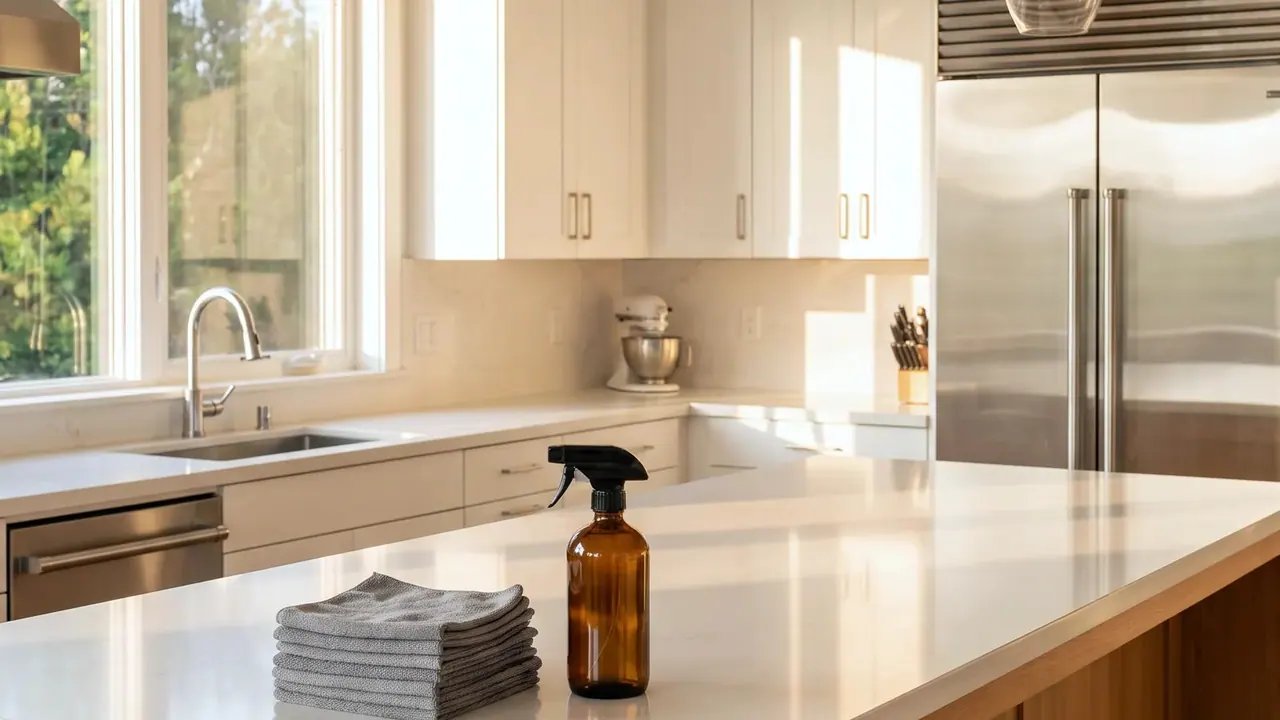
Deep cleaning house services are a one-time, top-to-bottom scrub of the places a routine clean skips: inside appliances, grout lines, baseboards, window tracks, vents, light fixtures and built-up grease or mineral scale. "Deep cleaning home services" means the same thing, and the work is measured in detail and surface care rather than just floor area.
Los Angeles homes add their own layer. Fine Santa Ana dust, hard water, old plaster walls and sliding aluminum windows all change how the job should be done, and they are where most DIY deep cleans go wrong.
What deep cleaning house services actually include
A routine clean wipes what you can see. A deep clean takes things apart, moves things and works on buildup. Here is where the line usually falls:
| Area | Routine clean | Deep clean |
|---|---|---|
| Baseboards and door casings | Dusted now and then | Wiped by hand, including the top edge and corners |
| Oven and range hood | Exterior wiped | Interior degreased, hood filter washed |
| Refrigerator | Shelves wiped | Shelves and drawers out, gaskets cleaned, coil area vacuumed |
| Shower and tub | Surface wipe | Scale removed from glass and fixtures, grout lines scrubbed |
| Window tracks and sills | Skipped | Vacuumed, scrubbed, weep holes cleared |
| Vents and fans | Skipped | Grilles and exhaust fan covers washed |
| Light fixtures and ceiling fans | Skipped | Dusted and wiped, glass shades washed |
| Cabinet fronts | Spot wipes | Degreased, especially near the stove |
If a provider's list does not name specific items like these, "deep clean" may just mean "longer routine clean." Ask for the list in writing.
Why Los Angeles homes get dirty differently
Santa Ana dust. Wind-driven dust settles in places that stay dry, so it collects on window sills, in sliding-window tracks, on ceiling fan blades and on the grille of your return-air vent. In the track it mixes with morning moisture or cleaning spray and turns to paste. Vacuum first with a crevice tool, then scrub. Wiping first just moves the paste around.
Hard water. Much of LA's tap water leaves calcium deposits, the white film on shower glass and the crust around faucet bases. A mild acid like white vinegar breaks it down on glass and plain chrome. But it etches marble, travertine and limestone, and repeated use can eat at cement grout. Know what your shower is made of before you reach for it. On brushed gold, matte black or oil-rubbed bronze finishes, test a hidden spot first, since acids can dull those finishes.
Plaster-and-lath walls. Many pre-1950 bungalows and Spanish-style homes have plaster over wood lath, often under decades of flat paint. Heavy water on these walls can lift old paint, and hard scrubbing leaves shiny patches. Use a barely damp microfiber cloth, work top to bottom, and test a low corner first.
Sliding aluminum windows. The outer track has small weep holes, roughly a quarter-inch slots, that let rain drain out. Dust clogs them, and then water sits in the track. A bamboo skewer or small stiff brush clears them. If water poured into the track doesn't drain, they're still blocked.

Window tracks are where Santa Ana dust and moisture turn into a paste that's easy to miss.
A room-by-room deep cleaning checklist
Work top to bottom in every room so dust falls onto surfaces you haven't done yet. Do dry steps (vacuum, dust) before wet ones.
Kitchen 1. Wash the range hood filter in hot water and dish soap. Skip strong alkaline cleaners and washing soda, which darken aluminum mesh. 2. Degrease the cabinet fronts above and beside the stove, where airborne grease builds into a tacky film. 3. Pull the refrigerator forward and vacuum the coils and floor underneath. Wash the door gasket with a soft brush. 4. Clean the oven interior and racks, then run the exhaust fan while it dries. 5. Scrub the sink drain flange and the faucet base, where scale collects.
Bathrooms 1. Run the exhaust fan, remove the cover and wash it. A fan clogged with dust moves less air, and moisture is what feeds mold. 2. Clear scale from shower glass with a plastic scraper held at a shallow angle, then wipe. 3. Scrub grout lines with a stiff nylon brush. Most tile joints are around 1/8 inch wide or less, so a toothbrush-width brush reaches them. 4. Soak removable showerheads only if the finish allows it. 5. Wipe the caulk line at the tub or shower base and look for gaps or dark spots.
Bedrooms and living areas 1. Dust ceiling fans with a pillowcase so dust stays inside it. 2. Wipe baseboards, door tops and window sills. 3. Vacuum return-air grilles, then check the HVAC filter size printed on the frame and replace it if it's loaded. 4. Vacuum the grille of any wall or floor furnace only after it has been turned off and has cooled. Leave the burner area to a gas professional.
What deep cleaning prices depend on (and why "near me" listings can't tell you)
Searches for "deep cleaning house services prices" and "near me prices" turn up numbers, but they rarely match the house in front of you. We don't publish figures here because the real inputs are specific:
- Condition. A kitchen that's been degreased every year is a different job from one with years of buildup.
- Surfaces. Natural stone, unsealed grout, brass and old painted plaster need slower, gentler methods.
- Scale. Count bathrooms and windows, not just square feet.
- Access. Stairs, tight crawl spaces and hillside homes with long walks from parking all affect the work.
- Extras. Inside cabinets, inside windows, garage, dryer vent. Ask whether each is in or out.
Our process is photo first. You send pictures of the kitchen, bathrooms and any problem spots through the estimate page, and we give you one written price for a defined list. On arrival we check surface types (stone, sealed or unsealed grout, painted plaster) and the water situation before choosing products. If something in person differs from the photos, we tell you before starting rather than adding it afterward.
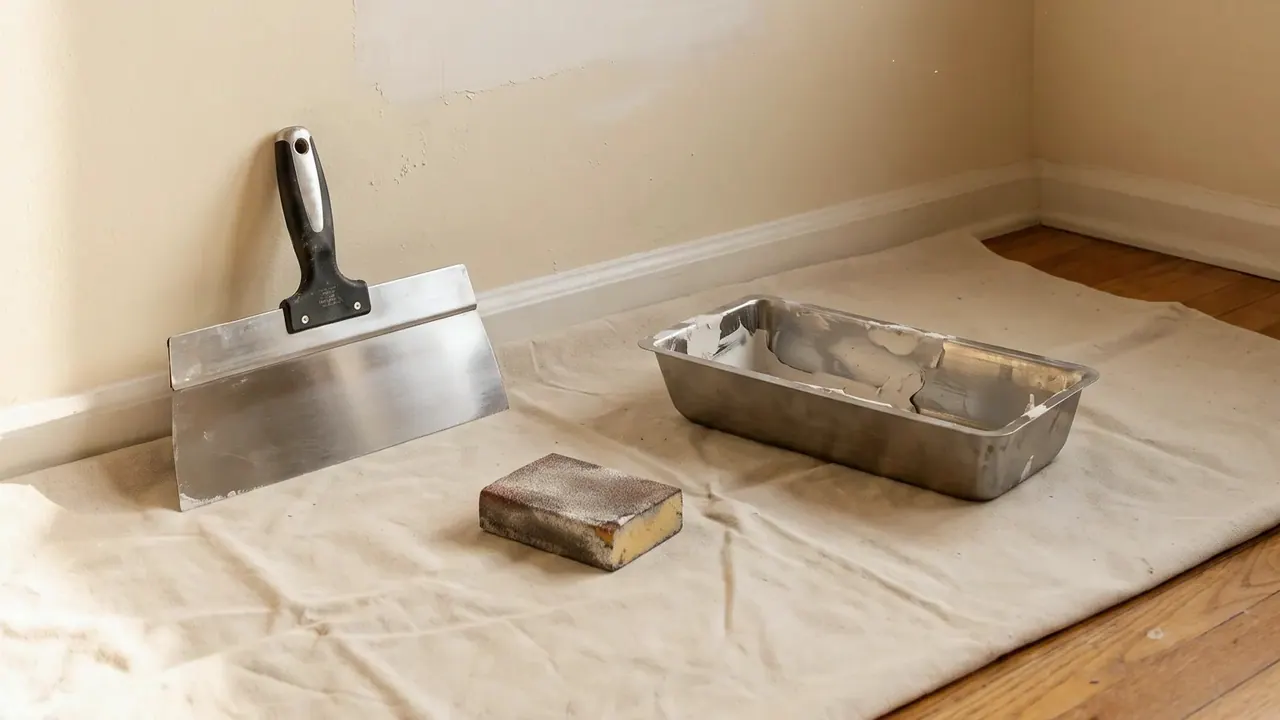
Grout lines and shower glass are where hard-water scale and soap film hold on longest.
When you compare providers, ask for a task list, not just a total, and ask what they use on stone and on old plaster. You can see how we scope the work on our cleaning service page.
When to call a pro
DIY works well for a single room, an oven or a window-track session. It's slower for a whole house, and the mistakes are costly: etched stone, stripped sealer, lifted paint on plaster.
Bring in help when:
- The house is more than two bathrooms or has lots of high windows and fixtures.
- You have natural stone, antique tile or old painted plaster and aren't sure what's safe.
- You're prepping for a move, a listing or a guest stay and the list is long.
- You see dark growth on caulk, grout or a ceiling. EPA's mold guidance centers on fixing the moisture source first and treats larger patches, roughly 10 square feet or more, as a job for specialists. Cleaning over an active leak won't hold.
Also avoid mixing products. Bleach and ammonia-based cleaners together release harmful gases, and the EPA notes that many household cleaners release volatile organic compounds, so open windows and run fans while you work.
FAQ
What's the difference between deep cleaning house services and regular cleaning?
Regular cleaning keeps surfaces tidy. Deep cleaning removes buildup in places like grout, tracks, inside appliances, vents and fixtures. It's usually done once or twice a year, or before a move or sale.
How do I find deep cleaning house services near me in Los Angeles?
Ask for a written task list, how they treat stone and plaster, and what's excluded. Photo-based estimates help you compare apples to apples. You can send a photo for a written quote and see what's covered before anyone arrives.
Why can't I find a single price for deep cleaning house services?
Condition, surface types, bathroom count and access all change the work. A fair quote lists the tasks it covers.
Do you handle deep cleaning house services in Bangalore or London?
No. STATOX works in Los Angeles. The checklist above still applies anywhere, but hard water, dust and building materials vary a lot by city, so local knowledge matters.
How often should a house be deep cleaned?
Once or twice a year suits most homes. Kitchens and bathrooms with hard-water buildup may need attention more often, and homes near open hillsides or construction collect Santa Ana dust faster.
Sources
- EPA: A Brief Guide to Mold, Moisture, and Your Home
- EPA: Volatile Organic Compounds' Impact on Indoor Air Quality
- EPA: The Inside Story, A Guide to Indoor Air Quality
STATOX Handyman Service · Send a photo · +1 (820) 200-4919
Keep reading
 cleaningCalabasas Hillside Homes: Cleaning Up Dust, Ash and PollenHouse cleaning Calabasas homeowners can use after dust, ash and pollen season: room-by-room steps, tool tips, and when to bring in help. Read before you scrub.
 cleaningCleaning Older Cheviot Hills Homes: Plaster and HardwoodHouse cleaning Cheviot Hills homeowners can trust for plaster walls and old hardwood floors: what to use, what to skip, and why it matters. Read before you scrub.
 cleaningDeep Cleaning Prep Checklist: Before the Crew ArrivesUse this deep cleaning checklist to get your Los Angeles home ready before the crew arrives, so every hour goes to actual cleaning. Worth a quick read.