DIY vs Handyman for Bathroom Repairs: What to Know
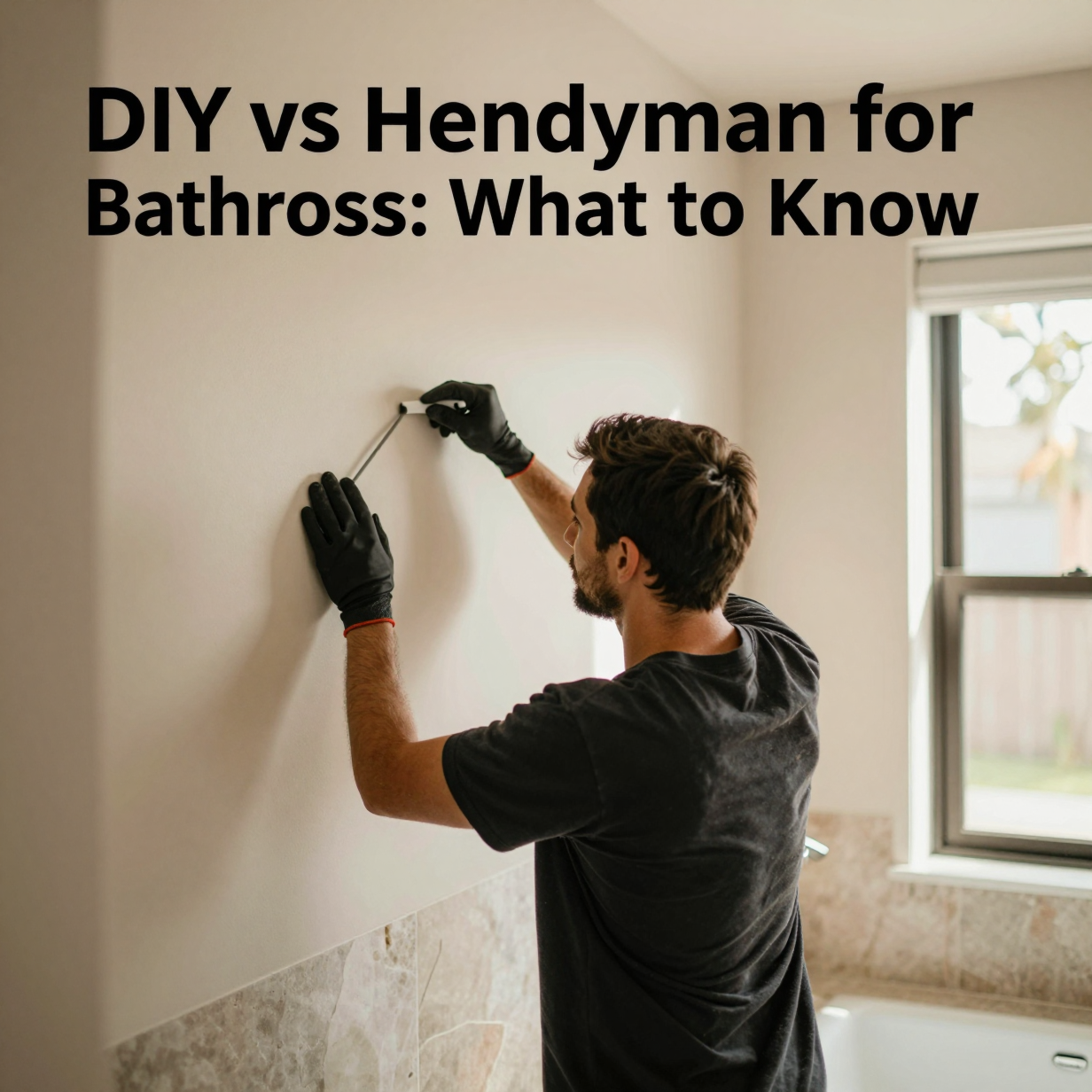
When it comes to DIY vs handyman bathroom repair, a good rule is this: do the small, visible, low-risk jobs yourself, and hand off anything involving hidden water, electrical work, or structure. Replacing a showerhead or re-caulking a tub is a fair weekend project. Chasing a leak behind a wall, resetting a toilet flange, or fixing soft flooring is where a mistake gets expensive fast.
This guide helps you sort your own list, with a checklist, a comparison table, and the warning signs that mean it's time to stop and call someone.
What Bathroom Repairs Are Realistic for DIY
Some bathroom jobs forgive beginners. If a mistake means you simply try again, the job is usually a good DIY candidate.
Common safe DIY tasks:
- Replacing a showerhead or aerator (the EPA's WaterSense program lists efficient options for showerheads and bathroom faucets)
- Swapping a toilet flapper or fill valve
- Re-caulking around a tub, shower, or sink
- Replacing a toilet seat, towel bar, or paper holder (into studs or proper anchors)
- Clearing a slow drain with a hand tool
- Touching up paint with a moisture-resistant product
- Regrouting a small area of tile
What these have in common: the water can be shut off at a fixture valve, the work is in plain sight, and you can check the result right away.
Where DIY Bathroom Repairs Go Wrong
Bathrooms are unforgiving because water finds every shortcut. A repair that looks fine today can hide a slow problem for months.
The most common DIY missteps:
- Caulking over mold or wet material. Sealant traps moisture instead of fixing the source.
- Overtightening supply lines and fittings. This cracks porcelain or strips threads.
- Skipping surface prep. Caulk and grout need clean, dry, old-product-free surfaces.
- Using the wrong sealant. Bathrooms need a product made for wet areas.
- Patching tile without matching the setback or layout. Cracked tile often signals movement or water underneath.
- Ignoring the cause. A stained ceiling below a bathroom is a symptom, not the repair.
The EPA notes that controlling moisture is the key to preventing mold, and that mold growth can follow water problems that aren't dried promptly. See its brief guide to mold, moisture, and your home for background.

Old caulk has to come out completely before new sealant goes in.
DIY vs Handyman: A Side-by-Side Comparison
Use this table as a quick filter. If a task lands in the right-hand column, think twice before starting.
| Task | Usually DIY-friendly | Better handled by a handyman |
|---|---|---|
| Showerhead or aerator swap | Yes | If the arm is loose inside the wall |
| Toilet running | Flapper or fill valve | Rocking toilet, leaking base, flange issues |
| Caulk refresh | Yes, if surface is sound | Black staining that returns, soft backing |
| Grout repair | Small areas | Large areas, cracked tile, hollow-sounding tile |
| Faucet replacement | Simple, accessible sinks | Corroded shutoffs, tight vanities, wall-mount |
| Exhaust fan | Cleaning the cover | Replacing or re-ducting the fan |
| Vanity or mirror install | Light items into studs | Heavy, plumbing-connected, or tiled walls |
| Soft floor or wall | Never a DIY patch | Yes, to find and fix the cause |
| Electrical outlets and lighting | Not recommended | Yes |
The deciding factors are usually access, hidden damage, and how much you'd need to know to confirm the job is truly done.
A Quick Decision Checklist Before You Start
Run through these questions before buying parts:
- Can I shut off the water at the fixture or main? If not, stop.
- Can I see the entire problem? Hidden leaks need investigation first.
- Is anything soft, stained, swollen, or musty? That points to moisture damage.
- Does the job involve electrical or the fan? Bring in help.
- Do I have the right tools? Buying several single-use tools can erase the savings of DIY.
- What happens if I get it wrong? If the answer is "water in the wall," consider hiring.
- Do I have the time to do it properly? Caulk and grout need drying time before water use.
If you answer "no" or "not sure" to more than one, a handyman visit is probably the safer path.
What a Handyman Can Handle (and What Needs Another Trade)
A handyman is a good fit for the many small and mid-size repairs that pile up in a bathroom: re-caulking, grout and tile touch-ups, fixture swaps, hardware installs, door and cabinet adjustments, and minor patching. It often makes sense to bundle several small items into one visit.
Some work belongs with a specialized contractor or may need a permit. In California, the Contractors State License Board (CSLB) offers guidance on hiring a contractor, and it's worth reading before agreeing to larger work. In Los Angeles, check with LADBS permits and inspections if you're unsure whether your project, such as moving plumbing or changing electrical, needs a permit.
A good handyman will tell you plainly when a job is outside their scope instead of improvising. You can learn more about what we handle on our bathroom service page.

Checking shutoff valves and supply lines is a routine part of a bathroom repair visit.
When to Call a Pro
Be honest with yourself: saving effort today isn't a win if it leads to a bigger repair next month. Call a professional if you notice:
- A toilet that rocks, or water around its base
- Soft, spongy, or bouncing floor near the tub or toilet
- Tile that sounds hollow or is popping loose
- Stains on the ceiling below the bathroom
- A musty smell that returns after cleaning
- Water pressure changes or noises in the walls
- Shutoff valves that won't turn or that drip when touched
- Any wiring, outlet, or light fixture problem near water
- Mold covering a large area (the EPA has mold resources for deciding how to proceed)
DIY is a perfectly good choice when the job is simple, visible, and reversible. Hiring is the better choice when the damage is hidden, the repair needs specialized tools, or the cost of a mistake is high.
If you're not sure which category you're in, send a photo for a written quote and get a clear picture of what the job involves before you commit either way.
Tips for Los Angeles Bathrooms
Local housing stock shapes the repair. Many LA homes and apartments have older plumbing, original tile, or past patchwork, so a "simple" swap can reveal surprises like stiff valves or mismatched fittings.
A few local-minded habits help:
- Know where your main water shutoff is before you need it.
- Check for small leaks regularly. The EPA's Fix a Leak Week page explains common household leak sources, including toilets.
- Choose water-efficient fixtures when replacing parts; see EPA WaterSense on residential toilets.
- If you rent, check your lease and notify your landlord before altering fixtures.
- Run the exhaust fan during and after showers to reduce lingering moisture.
FAQ
Is it cheaper to do bathroom repairs myself?
Not always. Small jobs can be economical to do yourself, but redoing a failed repair, buying one-time tools, or fixing water damage can outweigh the savings. Consider the full picture, including your time.
Can I fix a leaking toilet myself?
If the leak is from a worn flapper or fill valve inside the tank, many homeowners can handle it. If water appears at the base, the issue may involve the seal or flange, which is better for a pro.
How do I know if caulk or grout needs replacing?
Look for cracks, gaps, peeling, or dark staining that doesn't wipe away. If the material underneath feels soft, there may be moisture damage that needs attention before any new sealant goes on.
Do bathroom repairs need a permit in Los Angeles?
Simple repairs and fixture swaps typically don't, but work that changes plumbing, electrical, or structure may. Check with LADBS if you're unsure.
What should I have ready before a handyman visit?
Clear access to the area, photos of the problem, a list of every item you want addressed, and the location of your water shutoff. Bundling small tasks makes the visit more productive.
Sources
- California CSLB: Hire a Contractor
- LADBS: Permits and Inspections
- EPA: A Brief Guide to Mold, Moisture, and Your Home
- EPA WaterSense: Fix a Leak Week
Safety note: work on electrical panels, gas, structure or anything that needs a permit should be done by a licensed contractor with the required permits.
STATOX Handyman Service · Send a photo · +1 (820) 200-4919
Keep reading
 bathroomBathroom Repair Prep Checklist Before the Handyman VisitUse this bathroom repair prep checklist to clear the space, gather photos, and find your shutoffs so your handyman visit goes smoothly. Read before you book.
 bathroomBathroom Tile vs Vinyl vs Acrylic Surrounds: ComparedBathroom tile vs vinyl vs acrylic: how each surround handles water, cleaning, and repairs in Los Angeles homes. Read before you choose your material.
 bathroomBel Air Bathroom Repairs in Hillside and Older HomesPlanning bathroom repair Bel Air homes need? Learn what hillside and older houses hide behind tile and drywall, and what to check first before it gets costly.