DIY vs Hiring a Pro for Furniture Assembly: What to Weigh
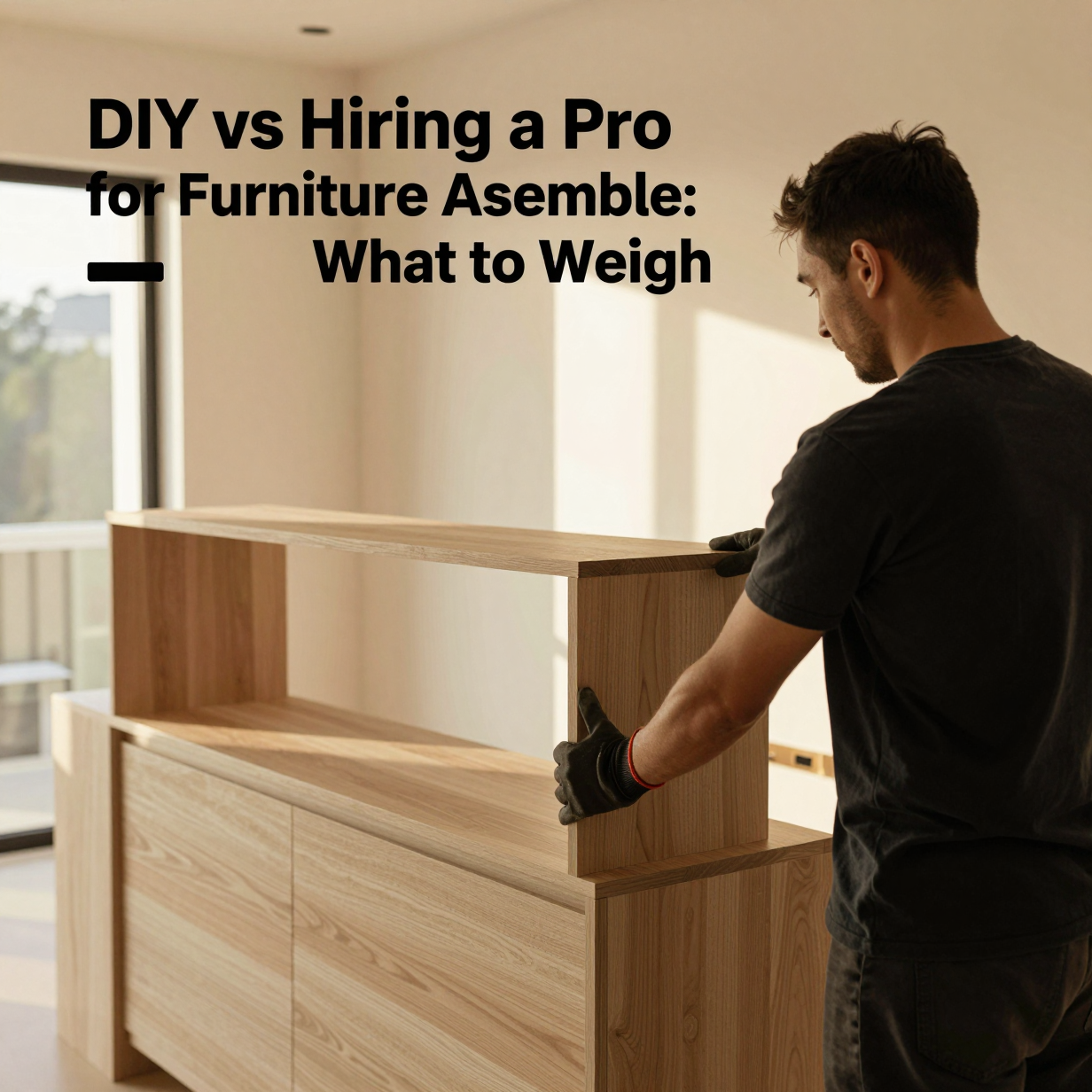
If you're deciding whether to hire someone to assemble furniture, the short answer is this: DIY makes sense for small, simple pieces when you have a free afternoon and basic tools. Hiring a pro makes more sense for large, heavy, or complex pieces, for anything that must be anchored to a wall, or when you simply don't want to spend a weekend on the floor with an Allen key.
Here's how to weigh it honestly, with a Los Angeles home in mind.
What Furniture Assembly Really Involves
The instruction booklet makes it look like a 20-step diagram. In practice, assembly is a mix of sorting, reading, lifting, aligning, and tightening, and each part can go wrong.
A typical flat-pack project includes:
- Unboxing and checking every part against the parts list
- Sorting dozens of screws, cams, dowels, and brackets
- Holding large panels square while fasteners are started
- Tightening in the right order so nothing binds
- Attaching back panels, drawer slides, and doors, and then adjusting them
- Anchoring tall pieces to the wall
- Hauling out the cardboard and foam
None of it is mysterious. But it's more physical and more detail-heavy than many people expect, especially for wardrobes, bunk beds, and sectional-style units.
DIY vs Hiring a Pro: Side-by-Side Comparison
| Factor | Doing it yourself | Hiring a pro |
|---|---|---|
| Your time | Your own hours, often longer on the first piece | Your time is freed up for other things |
| Tools | Whatever you own; the included hex key is often the only one | Brings drivers, levels, stud finders, and the right bits |
| Heavy lifting | Often needs a second person | Typically handled without recruiting a friend |
| Wall anchoring | Easy to skip or do poorly | Done as part of the job when requested |
| Mistakes | A reversed panel may mean disassembling and starting over | Experience reduces common errors |
| Packaging cleanup | Yours to haul and break down | Can be included in the visit scope |
| Learning curve | Fun for some, frustrating for others | Not your concern |
| Control | You decide every detail | You describe the layout and finish; the pro executes |
Neither column is always better. The right choice depends on the piece and on you.
When DIY Is a Good Call
Plenty of furniture is perfectly reasonable to build on your own. Consider DIY if:
- The piece is small: a nightstand, side table, or simple shelf
- The instructions are short and the hardware is limited
- You own a drill/driver, a level, and a few bits
- You enjoy the process and have no deadline
- Nobody will sleep on it, climb on it, or load it with heavy items
- You have a helper for any step that needs two sets of hands
A useful test: if you can comfortably lift the largest panel alone and the booklet fits on a few pages, you're likely fine.
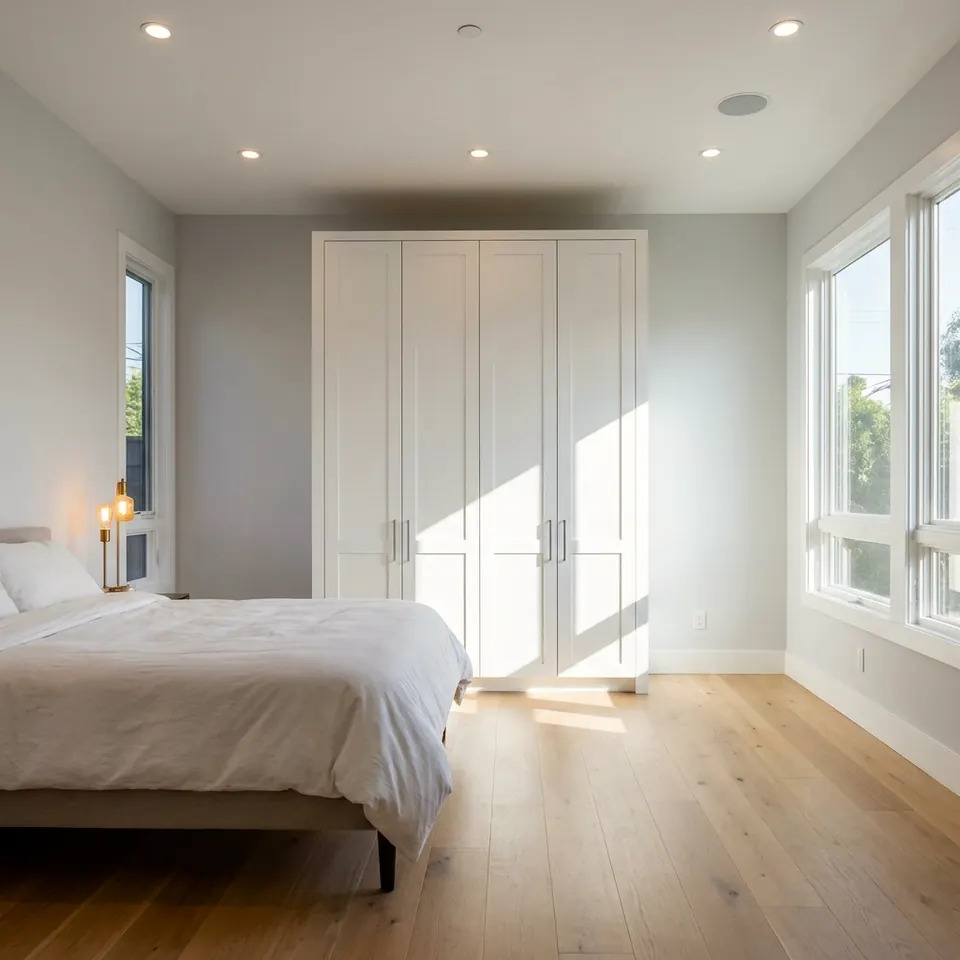
A simple bookshelf is a good DIY candidate when you have the right bits and a little patience.
Hidden Costs of DIY That People Forget
The box price isn't the whole story. Before you commit, think about what DIY quietly asks of you.
Time. A first-time builder often works more slowly than the instructions suggest. Rechecking steps, hunting for a missing screw, and fixing a flipped panel all add up.
Tools. The tiny wrench in the box can strip screw heads and tire your hand. A proper driver, a rubber mallet, and a level make a real difference.
Space. Large pieces need floor room to lay out panels. In a small LA apartment, that can mean moving other furniture first.
Risk to the piece. Over-tightening can crack particleboard, and cam locks can pull out of thin material. Damaged parts can be hard to replace.
Risk to the home. Dragging heavy boxes down a hallway can scuff paint and flooring.
Your patience. A job that stretches across several evenings can leave a half-built wardrobe taking over the bedroom.
Safety Matters More Than Most People Think
Tall furniture can tip. Dressers, bookcases, and wardrobes are top-heavy, particularly when drawers are open or shelves are loaded. Los Angeles homeowners have one more reason to take this seriously: earthquakes. Guidance from Earthquake Country Alliance recommends securing items in your home that could fall or move, and tall furniture is a common example.
Good anchoring depends on finding studs or using the right wall hardware for the wall type. Plaster, drywall, and masonry each behave differently. If you're unsure what's behind your wall, that's a good moment to ask for help rather than guess.
Also think about air quality. New composite furniture can give off odors from the materials and finishes. The EPA's page on volatile organic compounds explains how some products release compounds indoors, and basic ventilation while you unpack and assemble is a sensible habit.

Tall pieces should be anchored to the wall, not just stood upright.
When to Call a Pro
Be honest with yourself. Hiring help is the smarter move when:
- The piece is large or heavy. Wardrobes, sectionals, big desks, and platform beds are awkward to handle and easy to damage.
- It has many parts or moving mechanisms. Bunk beds, murphy-style beds, motorized pieces, and multi-door systems need precise alignment.
- It must be anchored. Tall units, wall-mounted shelving, and anything near children deserve proper attachment.
- You have several pieces at once. A move-in, a nursery, or a home office setup can mean a dozen boxes.
- Access is tricky. Stairs, narrow hallways, and apartment elevators make a large build in place difficult.
- You're short on time or energy. Nobody gets a medal for spending Saturday on a dresser.
- Physical limits apply. Bending, lifting, and kneeling aren't for everyone.
On the other hand, if the job is a single small table and you like building things, there's no need to hire anyone. A good pro will tell you the same.
If you want help, our furniture assembly service covers flat-pack and ready-to-assemble pieces, including anchoring and placement. You can also send a photo for a written quote so the scope is clear before anyone arrives.
How to Choose Help and Prepare
Whoever you hire, a little diligence goes a long way. The California Contractors State License Board offers consumer guidance on hiring a contractor, and it's worth reading for the general principles: get scope in writing, ask questions, and understand what's included. Assembly alone is usually a small job, but clear communication still helps.
Before the visit, run through this checklist:
- Keep boxes sealed until the helper arrives, or note any that were opened.
- Clear a work area and a path from the door to the room.
- Tell them the exact room and where each piece should sit.
- Mention wall types and any spots where you don't want holes.
- Flag anything missing, damaged, or previously started.
- Decide whether you want packaging removed.
- Keep the instruction booklets and extra hardware in one place afterward.
After assembly, check:
- Drawers and doors open and close smoothly
- No wobble when you push gently on the frame
- Tall pieces are anchored
- Hardware bags are returned or stored
- Floors and walls are clean and unmarked
FAQ
Is it cheaper to assemble furniture myself?
You'll skip the service fee, but DIY has other costs: your time, tool purchases, and the chance of damaging a part. Whether it's the better value depends on how much your time is worth and how complicated the piece is.
Can I hire someone to assemble furniture I bought online?
Yes. Furniture assembly doesn't depend on where you bought the piece. Have the boxes, all parts, and booklets ready, and describe each item when you ask for a quote.
Do I need to anchor furniture to the wall?
For tall or top-heavy pieces, anchoring is strongly recommended, especially in earthquake country and in homes with kids. The Earthquake Country Alliance outlines why securing furniture is a good first step.
What if a part is missing or damaged?
Stop and contact the manufacturer or retailer for a replacement rather than improvising with other hardware. Take a photo of the issue first. A pro can often assemble what's ready and leave the affected section for later.
Can a handyman also mount the furniture or fix it afterward?
Often, yes. Anchoring, wall mounting, adjusting doors, and tightening loose joints are all common handyman tasks. Mention them up front so the job is scoped properly.
Sources
- California Contractors State License Board: Hire a Contractor
- Earthquake Country Alliance: Step 1, Secure Your Space
- U.S. EPA: Volatile Organic Compounds' Impact on Indoor Air Quality
STATOX Handyman Service · Send a photo · +1 (820) 200-4919
Keep reading
 furniture assemblyFlat-Pack Furniture Problems and How to Fix ThemNeed a wobbly flat pack furniture fix? Learn why assembled pieces rock, sag, or gap, and what to check first. Worth a read before you take it apart.
 furniture assemblyFurniture Assembly Prep Checklist Before Your Handyman VisitUse this furniture assembly checklist to get your space, boxes, and walls ready before your handyman arrives. A few minutes of prep makes the visit smoother.
 furniture assemblyFurniture Assembly in Rancho Palos Verdes Coastal HomesPlanning furniture assembly Rancho Palos Verdes style? Learn how coastal air, hillside layouts, and quake safety shape a solid build. Read before you unbox.