Flat-Pack Furniture Problems and How to Fix Them

A wobbly flat pack furniture fix usually starts with three things: re-tighten every fastener in the right order, check that the frame is square, and make sure the piece sits flat on the floor. Most rocking, racking, and gaps come from fasteners tightened too early or too little, a skipped step, or an uneven floor. You can solve many of these at home with a screwdriver, a level, and some patience.
Why Flat-Pack Furniture Wobbles in the First Place
Flat-pack pieces are made from particleboard, MDF, or thin fiberboard panels held together by small metal hardware. They are designed to be assembled once, with the right sequence, on a flat surface. When something goes slightly off, the whole piece feels it.
The most common causes:
- Fully tightening too early. Cam locks and bolts need the frame to be aligned first. Locking one corner hard can pull the whole piece out of square.
- Missing or swapped hardware. Many kits include screws that look alike but differ in length. The wrong one can bottom out or never grip.
- Skipped back panel. The thin back panel is not decoration. It keeps a bookcase or dresser from leaning sideways, which installers call racking.
- Stripped holes. Particleboard crumbles when screws are over-tightened or removed and reinstalled several times.
- Uneven floors. Older Los Angeles homes, especially those with settled hardwood or tile over a slab, often have floors that slope slightly.
Diagnose Before You Disassemble
Don't pull everything apart yet. A few minutes of testing tells you where the problem is.
- Check the floor. Set a level on the top of the piece, then on the floor beside it. If the floor is out, the furniture may be fine.
- Push gently at the top corner. If it sways side to side like a parallelogram, the frame is racking. Look at the back panel and the fasteners.
- Check the gaps. Uneven gaps between doors or drawer fronts suggest the carcass is out of square.
- Measure the diagonals. Measure corner to opposite corner on the front and on the back panel. Equal measurements mean it's square.
- Look for movement at joints. Watch each joint while you rock the piece. The one that shifts is your culprit.
Quick Fixes for Common Problems
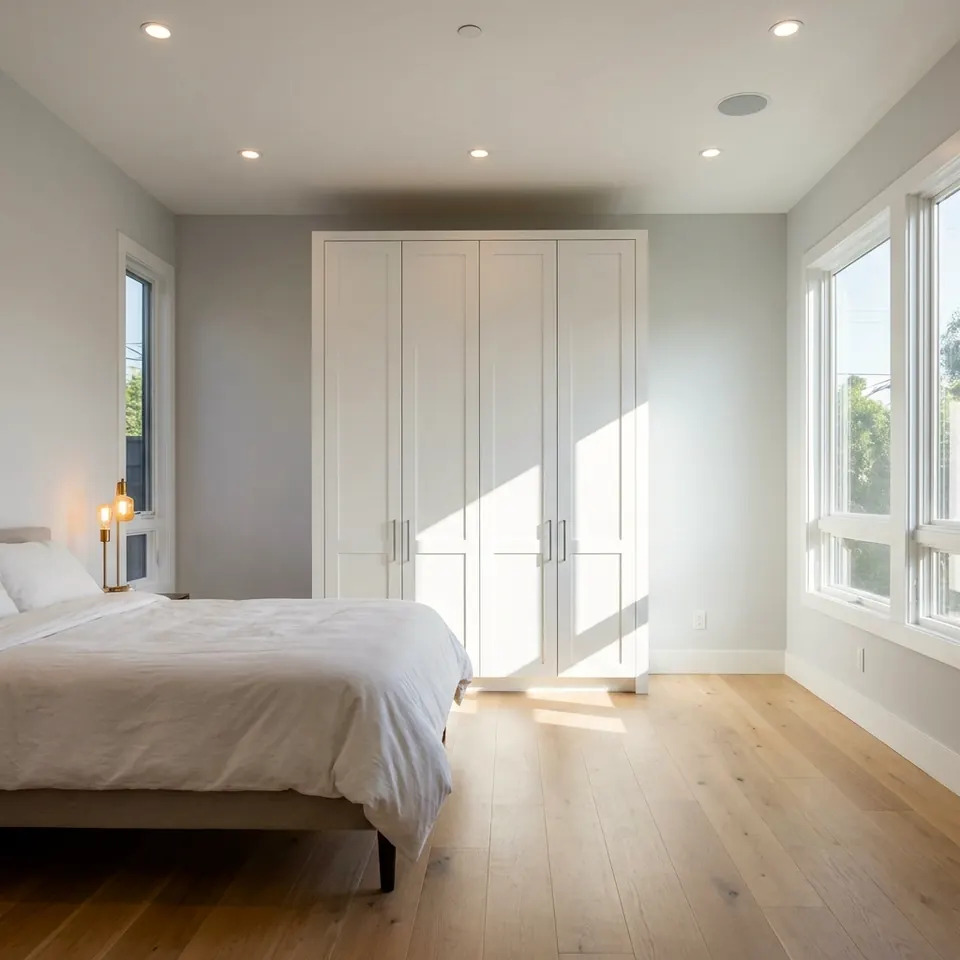
Checking cam locks and dowels one joint at a time usually finds the loose spot.
Here is how the usual problems compare and what to do about each.
| Problem | Likely cause | First fix to try |
|---|---|---|
| Whole piece rocks on the floor | Uneven floor or uneven feet | Adjust feet or shim the low corner |
| Sways side to side | Loose fasteners or back panel not seated | Loosen, square, retighten, then secure the back panel |
| Drawers stick or drift | Frame out of square | Square the carcass, then re-set the drawer runners |
| Screws spin without gripping | Stripped particleboard | Fill the hole with glue and wooden toothpicks, or move to a new spot |
| Visible gaps at seams | Cam locks not fully turned | Turn cams until they stop, with the arrow facing the bolt |
| Shelf sags | Span too long or weight too heavy | Add a center support or move heavy items lower |
Re-tightening the right way
Loosen the fasteners a half turn, then press the frame square against a wall corner or a known square object. Tighten from the bottom up, going back and forth between sides. Snug is the goal. Cranking harder rarely helps and often strips the hole.
Repairing stripped holes
Dab wood glue on a few toothpicks or a wooden dowel sliver, push them into the hole, and snap them off flush. Let the glue dry fully, then drive the screw back in gently. For a hole used repeatedly, a slightly longer screw into fresh material, where the design allows, can also work.
Fixing the Floor, Not the Furniture

A small shim under the low corner can stop a rock that no screw will cure.
Sometimes the furniture is perfectly built and the floor is the issue. Place the level on top, find the low corner, and slip a hard plastic or composite shim under that foot. Trim the visible part with a utility knife once the piece is steady. Felt pads help protect the finish.
If your piece has adjustable feet, turn them one at a time until the bubble centers. Make small changes and recheck, because adjusting one foot affects the others.
Anchoring Tall Pieces in Earthquake Country
In Los Angeles, a wobbly tall bookcase or dresser is more than an annoyance. Tall, top-heavy furniture can tip, especially during shaking. Earthquake Country Alliance and Ready.gov both recommend securing tall furniture to wall studs as part of preparing a home.
Practical points:
- Use the anti-tip hardware that comes with the piece, or a rated strap kit.
- Find a stud rather than relying on drywall alone.
- Keep heavy items on lower shelves.
- Don't put the beds or seating areas where a tall unit could fall across them.
If you rent, ask your landlord about acceptable anchoring methods, such as straps designed to leave small, repairable holes.
Mistakes That Make Flat-Pack Problems Worse
- Assembling on carpet. Soft flooring lets the frame twist while you build it. Use a firm, flat surface.
- Ignoring the instruction order. The order often matters for access to hidden fasteners.
- Using a power drill at high speed. It strips particleboard quickly. Use low torque or a hand screwdriver for final turns.
- Reassembling many times. Each move weakens the joints. If you plan to relocate soon, take photos and label the hardware.
- Forcing misaligned holes. If holes don't line up, something is backward or upside down. Check the panel orientation.
When to Call a Pro
Plenty of wobble fixes are fair DIY work. If you have the time, the right tools, and a single piece to tackle, go for it.
Consider help when:
- The piece is large or heavy, such as a wardrobe, a wall unit, or a bed frame, and needs two people.
- You are anchoring to studs or masonry and aren't sure what's behind the wall.
- Multiple holes are stripped and the structure no longer holds.
- You are assembling several pieces and want them square, level, and secured in one visit.
- Parts are missing or damaged and you can't tell what the design requires.
Our furniture assembly service covers building, re-squaring, and securing flat-pack pieces. If you want to know what's involved first, you can send a photo for a written quote.
FAQ
Can I fix a wobbly flat-pack table without taking it apart?
Often, yes. Loosen the fasteners slightly, square the frame, then retighten in order. Check the floor with a level too, since an uneven surface can mimic a loose joint.
Why do my cam locks keep coming loose?
They may not be fully turned, or the bolt may not be seated deep enough. The arrow on the cam should point toward the bolt, and the cam should turn until it stops firmly. Worn particleboard around the hole can also let it slip.
Is the thin back panel really necessary?
Yes. It keeps the frame from racking and holds the piece square. Leaving it off or nailing it on loosely is a common cause of sway.
How do I stop a bookcase from leaning forward?
Check the floor with a level, shim or adjust the feet, make sure the back panel is attached, and secure the top to a wall stud with anti-tip hardware.
Can stripped screw holes in particleboard be repaired?
Often they can. Glue and wooden toothpicks or a small dowel give the screw new material to grip. If the damage is widespread, the panel may need replacing.
Sources
- Earthquake Country Alliance: Step 1, Secure Your Space
- Ready.gov: Earthquakes
- California Contractors State License Board: Consumer Resources
STATOX Handyman Service · Send a photo · +1 (820) 200-4919
Keep reading
 furniture assemblyDIY vs Hiring a Pro for Furniture Assembly: What to WeighWondering whether to hire someone to assemble furniture or do it yourself? Compare time, tools, risk, and safety before you open the box.
 furniture assemblyFurniture Assembly Prep Checklist Before Your Handyman VisitUse this furniture assembly checklist to get your space, boxes, and walls ready before your handyman arrives. A few minutes of prep makes the visit smoother.
 furniture assemblyFurniture Assembly in Rancho Palos Verdes Coastal HomesPlanning furniture assembly Rancho Palos Verdes style? Learn how coastal air, hillside layouts, and quake safety shape a solid build. Read before you unbox.