DIY vs Hiring a Pro for Floor Installation
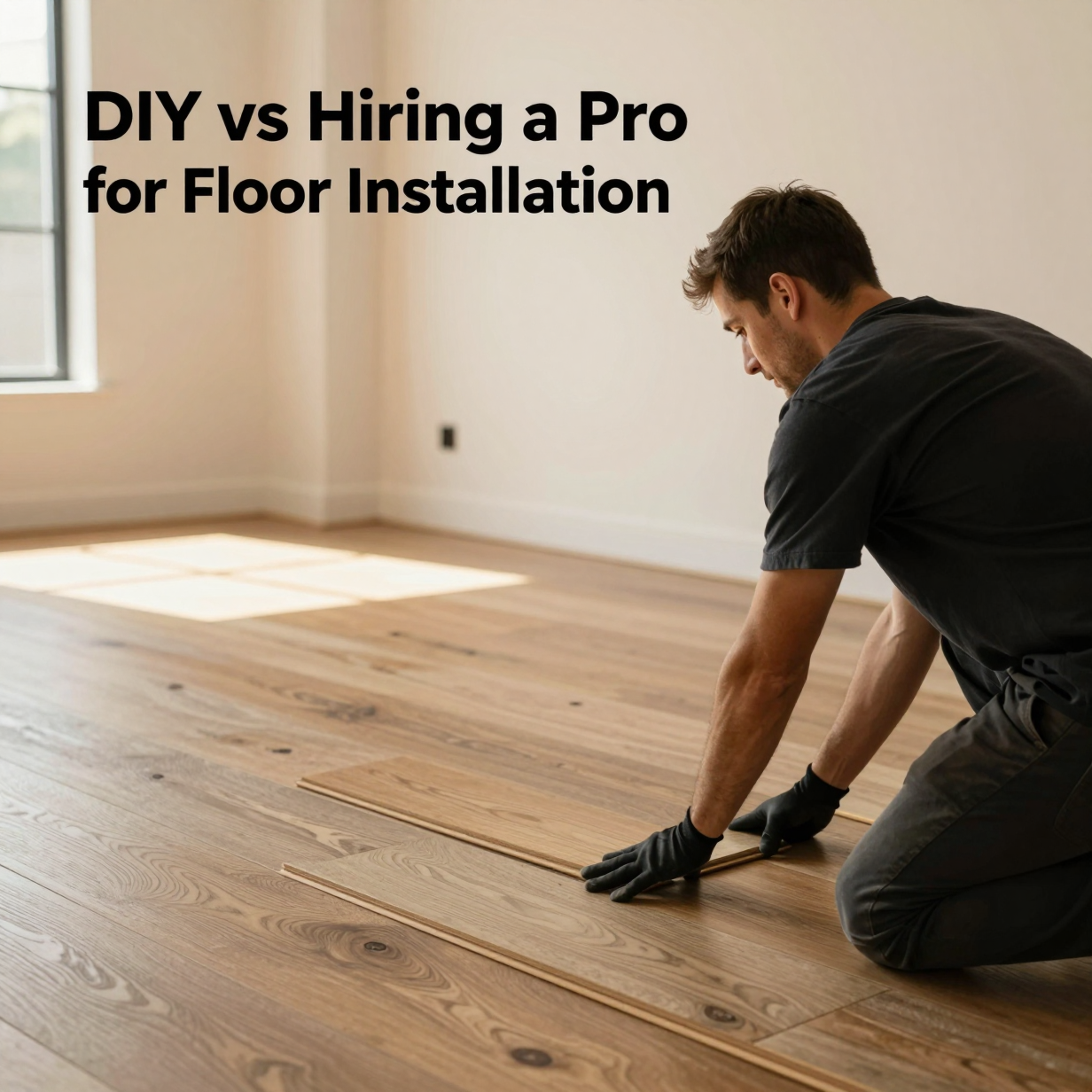
If you're comparing DIY vs professional flooring installation, the short answer is this: click-together floating floors in a simple, dry, flat room are realistic DIY projects, while glue-down, nail-down, tile, and anything over uneven or damaged subfloor usually go better with a pro. The deciding factors are less about the flooring itself and more about your subfloor, your layout, your tools, and how much patience you have for details.
Here's how to sort out which side of the line your project falls on.
What Floor Installation Really Involves
Most people picture the part where planks go down. That's often the smallest part of the job. A good installation is mostly preparation:
- Removing old flooring, tack strips, staples, and adhesive
- Checking the subfloor for moisture, squeaks, dips, and high spots
- Flattening and repairing the surface
- Planning the layout so the last row isn't a thin sliver
- Handling transitions, door casings, baseboards, and vents
- Cleaning up and disposing of old material
Skipping or rushing prep is the most common reason a new floor gaps, buckles, squeaks, or feels hollow underfoot. The National Wood Flooring Association (NWFA) publishes installation guidance that stresses subfloor condition and moisture checks for wood floors, and manufacturers' instructions for other products say much the same.
Which Floor Types Suit DIY
Difficulty varies a lot by material. Here's a general comparison.
| Flooring type | DIY friendliness | Why |
|---|---|---|
| Click-lock vinyl plank or laminate | Good for beginners | Floating install, basic cutting tools |
| Carpet tiles | Good for beginners | Modular, forgiving layout |
| Engineered wood (floating) | Moderate | Needs careful spacing and a flat subfloor |
| Glue-down vinyl or engineered wood | Challenging | Adhesive timing, trowel technique, full-contact needs |
| Nail-down solid hardwood | Challenging | Specialty nailer, layout, and subfloor requirements |
| Tile (ceramic or porcelain) | Challenging | Flatness, thinset, grout, and cutting skills |
| Stairs | Pro territory for most | Many precise cuts, safety concerns |
Floating floors are forgiving because they aren't fastened to the subfloor. But "forgiving" doesn't mean "foolproof." They still need a flat surface, proper expansion gaps, and correct underlayment.
Los Angeles Factors That Change the Decision
Los Angeles homes bring a few quirks worth considering before you commit to DIY.
Concrete slabs. Many homes and condos have concrete subfloors. Slabs can carry moisture, and they're rarely perfectly level. Moisture testing and leveling are important before many products go down.
Older homes. Pre-war bungalows and mid-century houses may have wood subfloors with dips, squeaks, or past repairs hiding underneath. Old adhesives or layers can also complicate removal.
Condos and apartments. Many buildings have rules about flooring type, underlayment, and sound ratings, and may require approval before work begins. Check your HOA or building management first.
Indoor air. New flooring, adhesives, and finishes can release volatile organic compounds (VOCs). The EPA notes that VOC levels are often higher indoors than outdoors and recommends ventilation during and after projects using these products. Plan for open windows and read product labels.
Permits. Simple flooring replacement usually doesn't need a permit, but if your project grows into structural repairs or other changes, check with the Los Angeles Department of Building and Safety (LADBS).

A flat, dry, clean subfloor is the foundation of every lasting floor.
The Real Tradeoffs: Time, Tools, and Risk
DIY and hiring out both have honest advantages. Neither is automatically smarter.
What DIY offers: - You control the schedule and pace - You save on labor if your time is flexible - You get the satisfaction of doing it yourself
What DIY costs you in other ways: - Tool purchases or rentals (saws, tapping blocks, spacers, rollers, undercut saw) - Mistakes in material estimates and cuts, which can mean extra trips for more boxes (and dye-lot mismatches) - Furniture moving, old floor removal, and disposal, which take longer than most people expect - Risk of a finish that looks off at edges, thresholds, and doorways
What hiring a pro offers: - Experience reading a subfloor and fixing problems early - Proper tools already on the truck - Cleaner details at trim, transitions, and tricky cuts - Fewer weekends lost
What hiring a pro asks of you: - Scheduling around someone else's availability - Clear communication about expectations - Vetting who you hire
A Quick Self-Check Before You Decide
Answer these honestly:
- Is the subfloor flat, solid, and dry, with no soft spots or squeaks?
- Is the flooring a floating, click-lock type?
- Is the room a simple shape, without many angles, curves, or built-ins?
- Do you have the tools, or are you comfortable renting or buying them?
- Can you leave furniture out of the room for the duration?
- Have you checked HOA or building rules if you're in a condo?
- Are you comfortable with a result that has small imperfections?
If you answered yes to most of these, DIY is a reasonable choice. Several no's suggest getting a pro involved, at least for prep or the trickiest rooms.
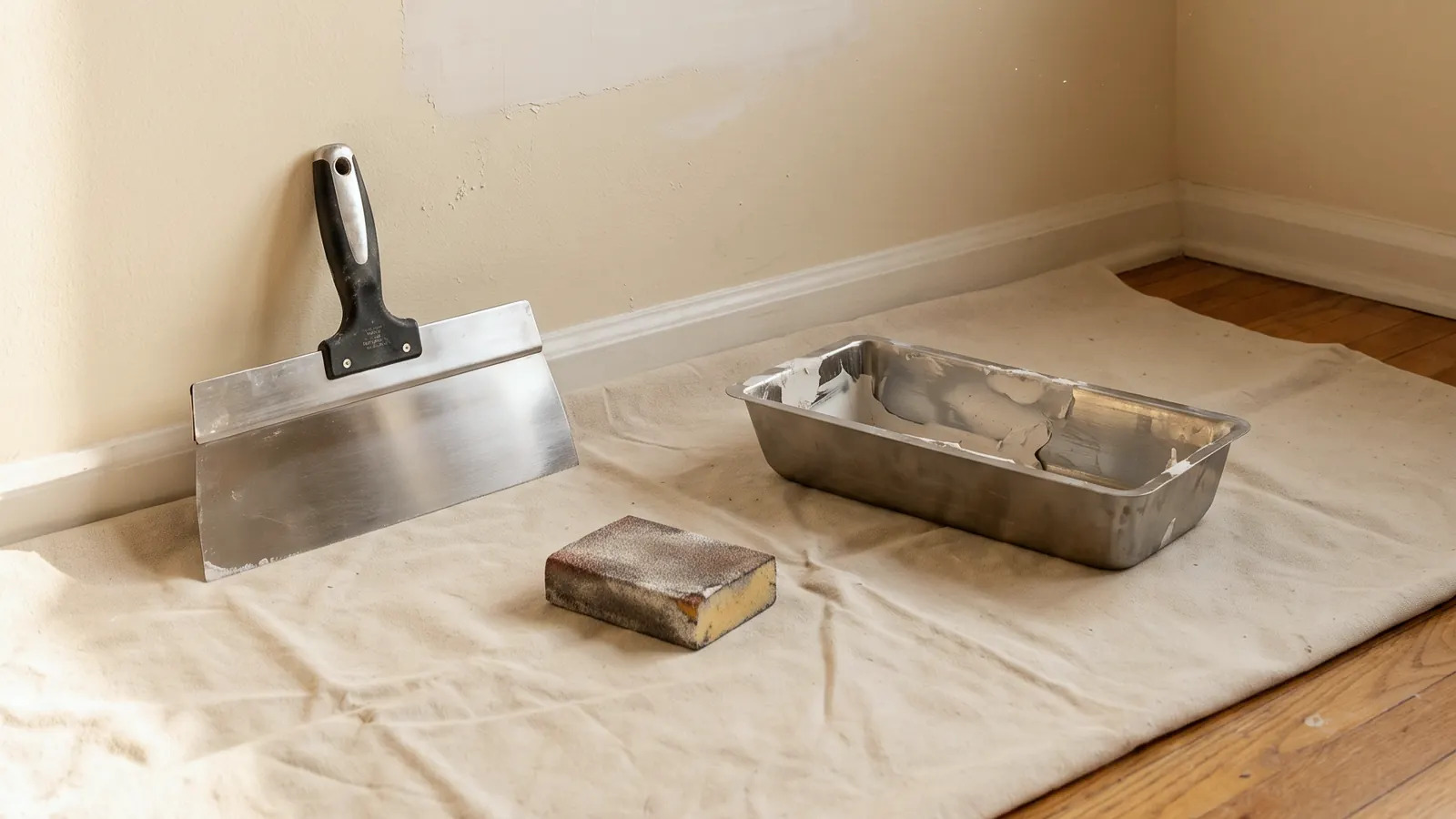
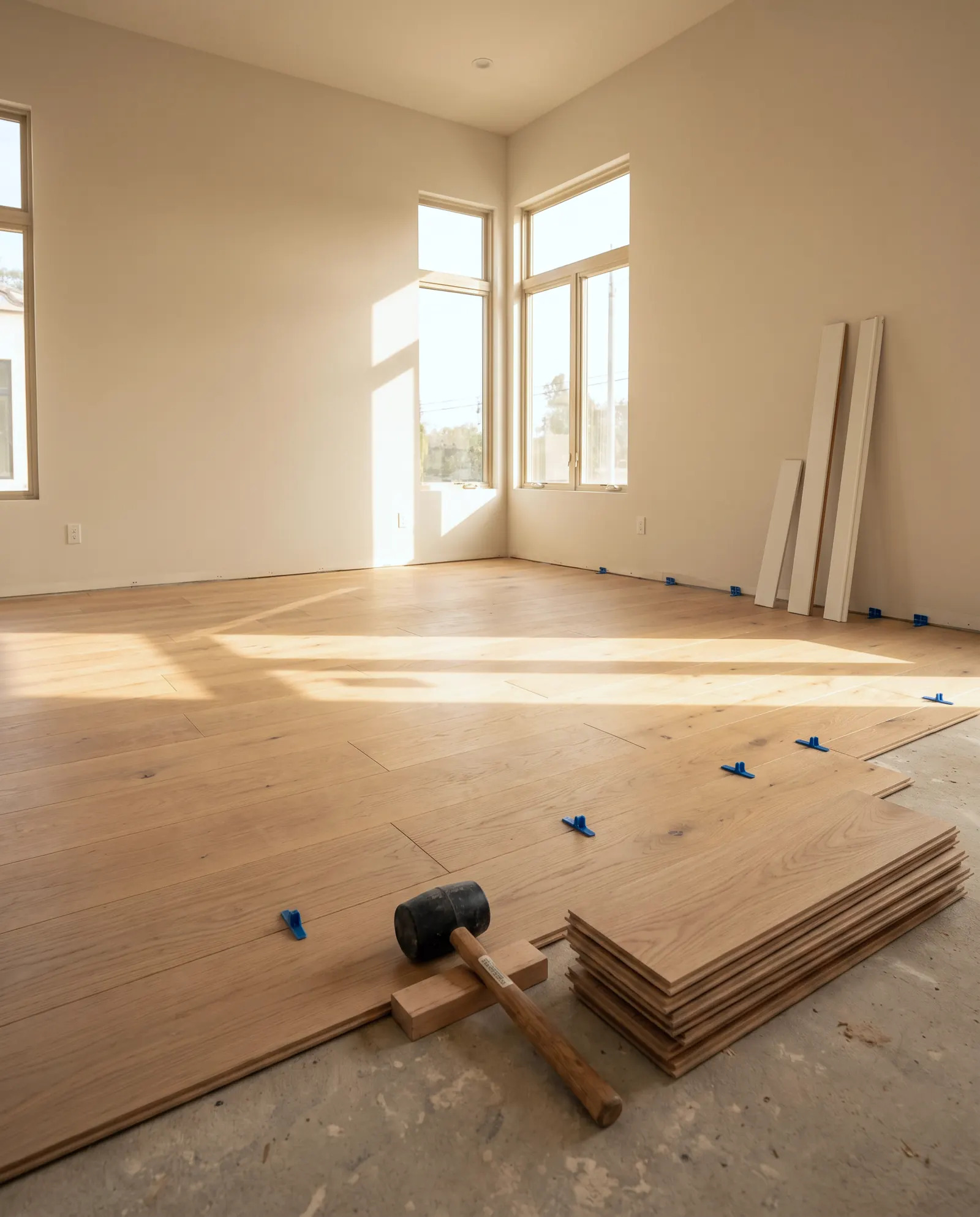
Laying out tools and a few rows dry first helps you catch layout problems early.
If You Go DIY: Steps That Prevent Regrets
- Read the manufacturer's instructions first. Warranty terms and acclimation rules vary by product.
- Acclimate the material as directed, usually inside the room where it will be installed.
- Remove the old floor and clean the subfloor thoroughly.
- Check flatness with a long straightedge, and fix high and low spots.
- Test for moisture on concrete, especially on ground-level slabs.
- Plan your layout so both walls end with a reasonable width.
- Leave expansion gaps at walls and fixed objects, as directed.
- Mix planks from several boxes to blend color and pattern.
- Ventilate while using adhesives, sealants, or finishes.
- Finish the details: transitions, trim, and a final cleanup.
Take your time on the first three rows. Errors there carry through the entire room.
When to Call a Pro
Be honest about the limits of a weekend project. Consider hiring a professional when:
- The subfloor is uneven, damaged, or has moisture concerns
- You're installing tile, nail-down hardwood, or glue-down products
- The project includes stairs, large open areas, or several connected rooms
- You need old flooring removed and the subfloor repaired
- You're working on a tight deadline
- The layout has many angles, thresholds, or built-ins
- You'd rather spend the weekend on something else
You can also split the work: hire out the prep or the trickiest areas, and handle simpler rooms yourself.
If you hire anyone for home improvement work in California, the Contractors State License Board (CSLB) offers consumer guidance on hiring a contractor and checking requirements for your project. It's worth a few minutes before you sign anything.
Interested in what a pro would handle? Our flooring service page explains what we do. If you'd like a sense of scope before committing, you can send a photo for a written quote.
FAQ
Is it cheaper to install flooring myself?
Often you save on labor, but tools, extra material from cutting mistakes, disposal, and repairs from errors can offset some of that. Count your time and risk, not only the material.
What is the easiest flooring for a beginner to install?
Click-lock vinyl plank and laminate are the most common starting points, along with carpet tiles. They float over the subfloor and need only basic cutting tools.
Can I install new flooring over old flooring?
Sometimes, depending on the product and the existing surface. Floors must be flat, solid, and dry. Check the manufacturer's instructions, since many require a bare, clean subfloor.
Do I need a permit to replace flooring in Los Angeles?
Straightforward flooring replacement typically doesn't, but additional work like structural changes might. Contact LADBS if you're unsure, and check your HOA or building rules if you live in a condo.
How do I reduce fumes from new flooring?
Choose products with lower emissions where possible, follow label directions, and ventilate well during and after installation. The EPA's indoor air quality resources explain more about VOCs.
Sources
- CSLB: Hire a Contractor
- LADBS: Permits and Inspections
- EPA: Volatile Organic Compounds' Impact on Indoor Air Quality
- National Wood Flooring Association
Safety note: work on electrical panels, gas, structure or anything that needs a permit should be done by a licensed contractor with the required permits.
STATOX Handyman Service · Send a photo · +1 (820) 200-4919
Keep reading
 flooringSqueaky, Buckled, or Gapped Floors: Causes and FixesSqueaky floors, buckling, and gaps usually trace back to movement, moisture, or loose fastening. Learn how squeaky floors buckling gaps fix choices work.
 flooringFlooring Installation Prep Checklist for HomeownersUse this flooring installation prep checklist to clear rooms, check subfloors, and plan acclimation so install day goes smoothly. Read before you order.
 flooringFlooring for Manhattan Beach Homes: Salt Air and SandChoosing flooring in Manhattan Beach? Learn how salt air, sand, and moisture affect floors and which materials hold up, so you can plan with confidence.