Door Lock Keeps Jamming? Causes, Quick Checks, and Fixes
If your door lock keeps jamming—whether the key sticks, turns hard, or the deadbolt won’t fully throw—it can be frustrating and concerning. This guide helps you identify common causes, perform quick checks, and try simple fixes. You’ll also learn when it’s time to stop DIY and reach out for professional help.
Common Causes of a Door Lock That Keeps Jamming
Several factors can cause a door lock to jam. Understanding these can help you narrow down the issue:
- Misaligned door or strike plate: If the door or strike plate shifts, the deadbolt or latch may not line up correctly, causing resistance.
- Worn or damaged key: A bent or worn key can get stuck or fail to turn smoothly.
- Dirt, dust, or debris inside the lock: Accumulated grime can block the lock mechanism.
- Lack of lubrication: Locks need occasional lubrication to operate smoothly.
- Internal lock mechanism wear or damage: Over time, parts inside the lock can wear out or break.
- Weather effects: Swelling wood from humidity or cold temperatures can affect door fit and lock operation.
Knowing these causes helps you decide which quick checks to perform next.
Quick Checks to Diagnose Your Jammed Door Lock
Start with these simple steps to identify the problem:
- Inspect the key: Look for bends, cracks, or worn teeth. Try a spare key if you have one.
- Check door alignment: Close the door slowly and observe if the latch or deadbolt lines up with the strike plate hole.
- Examine the strike plate: Look for loose screws or damage that could misalign it.
- Test lock operation without the key: Turn the thumb turn or knob inside to see if the deadbolt moves smoothly.
- Look for visible dirt or debris: Check the keyhole and latch area.
- Feel for stiffness or resistance: Note if the key turns hard or sticks at a certain point.
These checks often reveal whether the problem is simple or more complex.
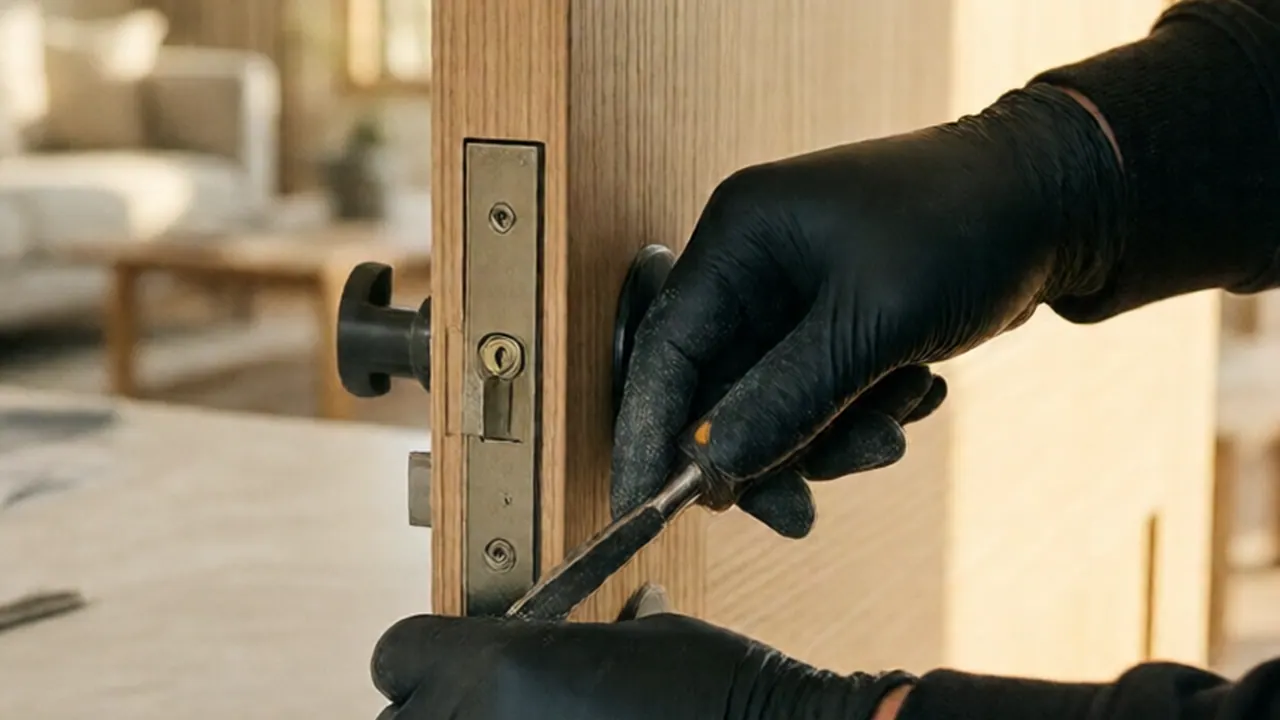
Simple Fixes You Can Try at Home
If your quick checks point to minor issues, try these fixes:
- Lubricate the lock: Use a graphite powder or a silicone-based lubricant designed for locks. Avoid oil-based lubricants, which attract dust.
- Tighten strike plate screws: Use a screwdriver to secure any loose screws.
- Realign the strike plate: If the deadbolt doesn’t enter smoothly, loosen the strike plate screws, adjust its position, and retighten.
- Clean the key and lock: Wipe the key with a clean cloth and gently blow compressed air into the keyhole to remove dust.
- Use a spare key: Sometimes a different key works better if the original is worn.
When lubrication and alignment fixes don’t work
If the lock still jams after these steps, the internal mechanism might be damaged or worn.
Comparing Common Lock Problems and DIY Fixes
| Problem | DIY Fixes to Try | When to Call a Pro |
|---|---|---|
| Key sticks or won’t turn | Lubricate lock, try spare key | Key breaks inside lock, persistent jamming |
| Deadbolt won’t fully throw | Adjust strike plate, tighten screws | Deadbolt mechanism damaged or stuck |
| Lock feels stiff or rough | Clean and lubricate | Internal parts worn or broken |
| Misaligned door or frame | Adjust door hinges or strike plate | Door frame warped or damaged |
This table helps you decide when a DIY fix is enough and when professional help is needed.
When to Call a Pro
While many lock jams can be fixed with simple maintenance, some situations require professional attention:
- Key breaks inside the lock: Removing broken keys safely requires special tools.
- Persistent jamming after lubrication and alignment: Internal lock parts may be damaged.
- Deadbolt or latch won’t move at all: This could indicate a mechanical failure.
- Door or frame damage: Warped doors or frames can affect lock operation and may need repair.
- Security concerns: If you suspect lock tampering or want to upgrade your lock system.
If you’re unsure or uncomfortable with any step, it’s wise to contact a professional locksmith or handyman. They can diagnose and fix the problem safely and efficiently. For expert help, consider our locks doors service or send a photo for a written quote to get started.
FAQ
Why does my key stick in the lock?
A sticking key often means dirt, dust, or lack of lubrication inside the lock. It can also be caused by a worn or bent key.
Can I use WD-40 to fix a jammed lock?
WD-40 is not recommended for locks because it can attract dust and grime. Use graphite powder or a silicone-based lubricant instead.
What causes a deadbolt to not fully extend?
Misalignment between the deadbolt and strike plate is the most common cause. It can also be due to internal lock damage or door/frame warping.
How often should I lubricate my door locks?
Lubricate locks once a year or when you notice stiffness or difficulty turning the key.
Is it safe to force a jammed lock open?
Forcing a lock can cause further damage. It’s better to try lubrication and alignment first or call a professional if the problem persists.
Sources
- https://www.cslb.ca.gov/Consumers/Hire_A_Contractor/
- https://www.cslb.ca.gov/Consumers/
- https://www.ladbs.org/permits-inspections
- https://www.dca.ca.gov/
Permit work: Permit jobs get a written project estimate; permits handled as required.
STATOX Handyman Service · Send a photo · +1 (820) 200-4919
Keep reading
 locks doorsBel Air Hillside Homes: Door and Lock Upgrade GuidePlanning door lock installation in Bel Air? Learn how hillside homes, gates, and entry doors affect lock choices, fit, and security. Read before you buy.
 locks doorsBeverly Hills Older Homes: Door Hardware Repair TipsDoor hardware repair Beverly Hills homeowners can trust: fix sticking latches, loose knobs, and worn hinges in older homes. Read before you replace anything.
 locks doorsDeadbolt vs Smart Lock: Which Fits Your Home Better?Deadbolt vs smart lock: compare security, convenience, batteries, and fit for Los Angeles homes so you can pick the right lock for your front door.