Earthquake Prep for TVs in Los Angeles Homes and Condos
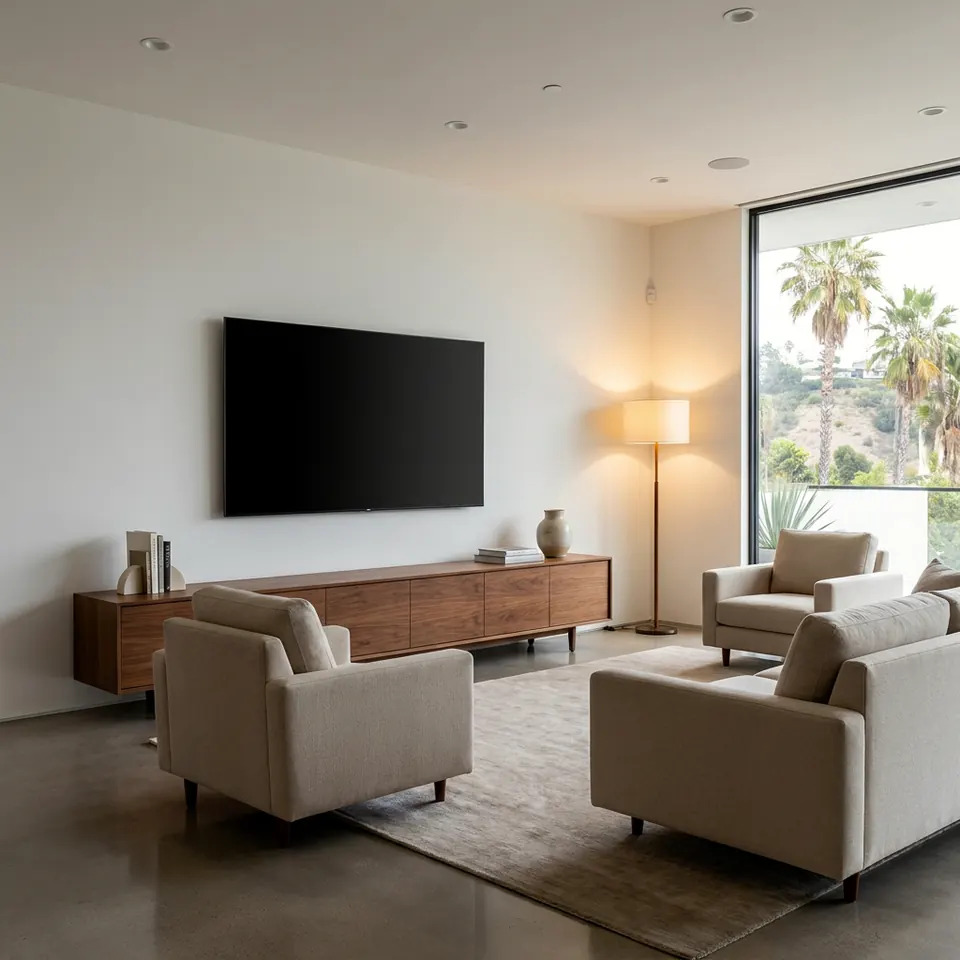
Earthquake safe TV mounting in Los Angeles comes down to three things: anchoring into solid framing (not just drywall), using a mount rated well above your TV's weight, and securing any TV that sits on furniture with proper straps. A TV on a wall mount that is fastened correctly is usually safer than one balanced on a dresser. If your TV stays on a stand, anchor both the TV and the furniture.
Here is how to think it through for your home or condo.
Why TVs are a real earthquake risk in Los Angeles
We live on shaky ground, and a TV is one of the heaviest, most top-heavy things in the average living room. During strong shaking, a TV on a media console can slide, tip forward, or fall off the edge. Modern flat panels are thin, light for their size, and have small bases, which makes them easy to topple.
The danger isn't only a broken screen. A falling TV can injure people and pets, especially in a bedroom or a family room where people sit close. Earthquake Country Alliance and Ready.gov both advise securing heavy items such as TVs as part of preparing your space, and that is a good rule of thumb for any LA household.
Two things make this worth doing before the next quake rather than after:
- Shaking can start without warning, and you won't have time to react.
- Most fixes are simple in terms of materials, but they need to be done correctly.
Wall mount vs. stand: which is safer?
Both can work. What matters is how well each is secured. Here is a quick comparison.
| Setup | Strengths | Weak points | Earthquake notes |
|---|---|---|---|
| Fixed or low-profile wall mount | Sits close to the wall, little room to swing | Needs solid anchoring into studs or approved masonry anchors | Strong choice when installed correctly |
| Tilting or full-motion arm mount | Flexible viewing angles | Longer arm creates more leverage on the wall | Keep the arm retracted; check fasteners periodically |
| TV on a console with straps | Easy to set up, no wall work | Furniture can still tip or slide | Strap the TV and anchor the furniture to the wall |
| TV on a stand with no restraints | Quick and portable | Can slide or topple | Least protected option |
If you rent or can't drill into walls, restraint straps and anti-slip pads are a sensible middle ground. If you own and want a cleaner look, a well-anchored wall mount is hard to beat.
Marking and confirming stud locations is the first step of a secure mount.
What a secure wall mount actually needs
A mount is only as strong as what it is fastened to. Here is what to look at.
Solid backing. Wood studs are the usual target in LA homes. Standard stud spacing is common, but older houses can vary, so confirm with a stud finder and a test measurement rather than assuming.
The right fasteners. Use the hardware designed for your mount and wall type. Lag bolts into studs are typical for wood framing. Drywall anchors alone are not a safe substitute for a heavy screen.
A rating above your TV. Check the mount's weight capacity and VESA pattern against your TV's specs. Choose a mount rated comfortably higher than the TV's weight.
Level and locked in. Once the TV is hung, confirm the safety latch or locking screw on the mount is engaged. Many mounts have a small locking feature that gets skipped.
Cable management. Tight, tugged cables can pull a TV out of position. Leave a little slack and secure cords along the wall.
Condos, stucco, brick, and other tricky LA walls
Los Angeles housing is varied, and the wall type changes the plan.
- Condos and apartments: Walls may be metal studs, concrete, or double-layer drywall. Metal studs need specific anchors, and concrete needs masonry hardware. Check your HOA rules before drilling, especially on shared walls or in buildings with noise and construction restrictions.
- Stucco exteriors: For patio or outdoor TVs, you need to anchor through the stucco into framing and seal the holes against water.
- Brick or block fireplaces: Mounting above a fireplace can be done, but the surface needs the right masonry anchors, and heat and viewing height are worth thinking through.
- Plaster-and-lath in older bungalows: Studs can be harder to locate and plaster can crumble. Go slowly and use a stud finder that works on plaster.
- Behind-the-wall wiring: If you want hidden cables, route low-voltage and power through approved methods. Don't run a standard power cord inside the wall.
When in doubt about what's behind the wall, stop and check before drilling.
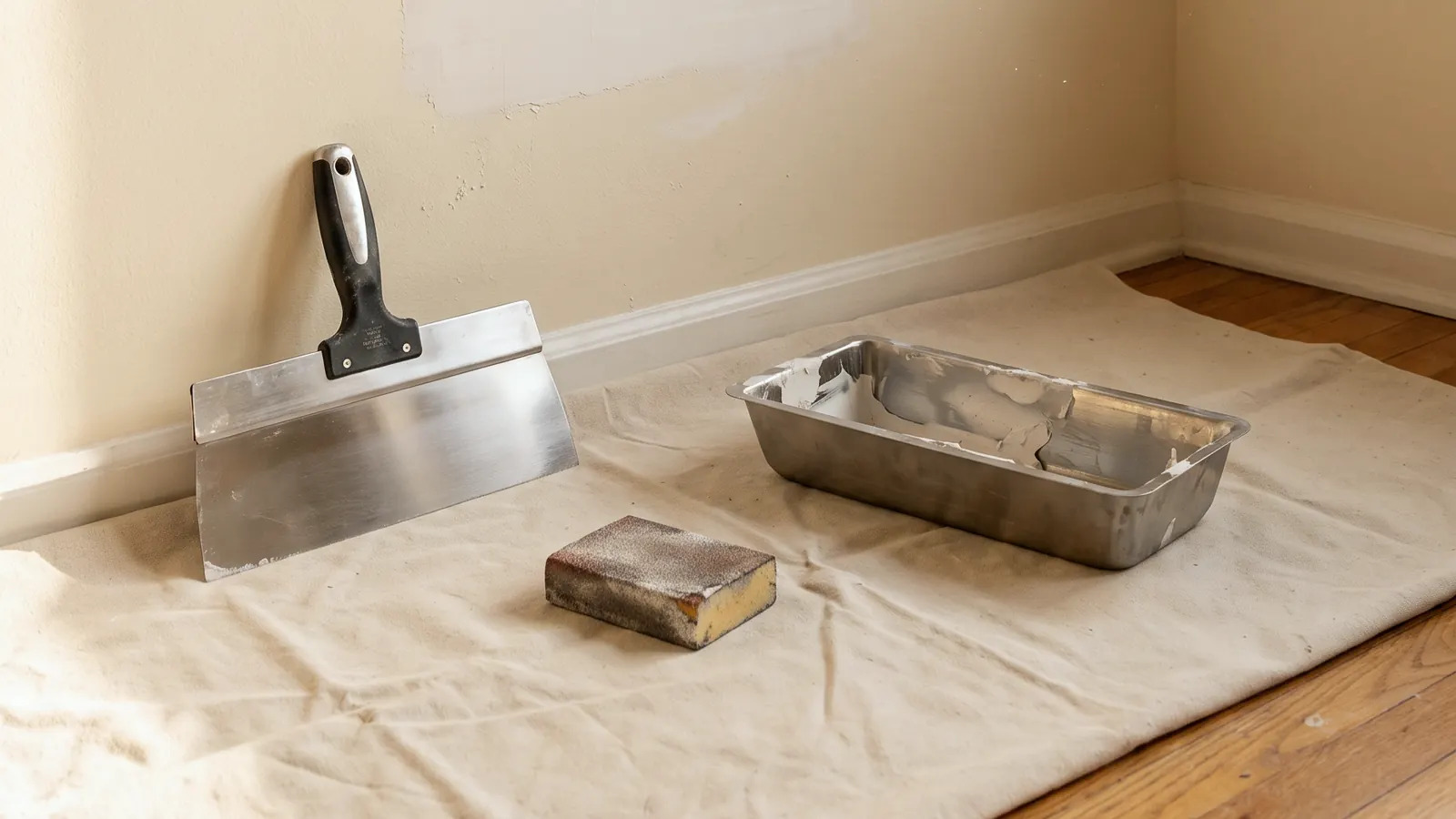
If your TV stays on furniture, strap the TV and anchor the furniture, too.
A step-by-step plan for securing your TV
Use this checklist whether you're mounting or strapping.
- Look up your TV's weight, size, and VESA pattern in the manual or on the back label.
- Decide on placement. Avoid spots over beds or directly above seating where a fall would do the most harm.
- Locate studs or identify the wall material. Mark them clearly.
- Choose a mount rated above your TV's weight and compatible with your wall type.
- Install the wall plate level, using the supplied hardware and a drill with the proper bit.
- Attach brackets to the TV, then lift it with a helper onto the wall plate.
- Engage the safety lock and give the TV a gentle tug to confirm it is secure.
- Tidy cables and leave a little slack.
- Re-check every few months. Bolts can loosen over time, especially on articulating arms.
For TVs on furniture:
- Use manufacturer-approved straps that anchor to the TV and to the wall or the back of the furniture.
- Anchor tall or narrow furniture to wall studs.
- Add anti-slip pads under the TV base as a supplement, not a replacement.
- Keep the heaviest items on lower shelves.
When to call a pro
Plenty of people mount a small or mid-size TV themselves, and that can be reasonable if you can find studs, use a level, and lift safely. But some jobs are worth handing off.
Consider help if:
- The TV is large or heavy and needs two capable people to lift.
- You're mounting over a fireplace, on brick, concrete, stucco, or metal studs.
- You can't confirm what's behind the wall, such as wiring or plumbing.
- You want cables concealed in the wall.
- You'd be working on a tall ladder. OSHA's ladder guidance is a good reminder to use the right ladder and keep three points of contact.
- You're worried about HOA rules or building requirements.
A professional can bring the right anchors, tools, and a second set of hands. Our tv mounting service covers wall mounts, cable tidying, and securing setups for LA homes and condos. If you'd like an idea of the scope first, you can send a photo for a written quote.
If you hire anyone, the Contractors State License Board has consumer guidance on how to check a contractor and what to ask before work begins.
FAQ
Is a wall-mounted TV safer than a TV on a stand in an earthquake?
Often yes, if the mount is anchored into solid framing and the TV is locked onto it. A TV on a stand can slide or tip unless it is strapped and the furniture is anchored.
Can I mount a TV on drywall alone?
Drywall by itself isn't strong enough for most TVs. Mounts should be fastened into studs or use anchors designed for the wall type and load, such as metal-stud or masonry hardware.
Do TV straps really work?
They help limit sliding and tipping when installed as directed and attached to something solid. They work well alongside anchored furniture and a stable base.
What should I do with my TV during shaking?
Follow standard guidance from Ready.gov and Earthquake Country: drop, cover, and hold on, and stay away from heavy items that could fall. Move away from the TV rather than trying to catch it.
Should I check my mount after an earthquake?
Yes. Inspect the wall plate, bolts, and safety lock for loosening, cracks around the mount, or any shift in position. If anything looks off, take the TV down until it's rechecked.
Sources
- Earthquake Country Alliance: Step 1, Secure Your Space
- Ready.gov: Earthquakes
- OSHA: Ladder Safety
- CSLB: Hire a Contractor
STATOX Handyman Service · Send a photo · +1 (820) 200-4919
Keep reading
 tv mountingTV Mount Problems and Fixes: Wobble, Sag and Crooked ScreensNeed a tv wall mount wobbly fix? Learn why mounts wobble, sag or hang crooked, what to check first, and which repairs are safe to try yourself.
 tv mountingTV Mounting: DIY vs. Hiring a Handyman, Honestly ComparedWeighing diy tv mounting vs professional installation in Los Angeles? See what each route really involves, where DIY goes wrong, and how to choose wisely.
 tv mountingMounting a TV in a Pasadena Craftsman or Older Plaster HomePlanning tv mounting in Pasadena? Learn how plaster, lath, and old wiring change the job, and what to check before you drill a single hole.