Encino ADU and Guesthouse Cleaning: A Turnover Routine
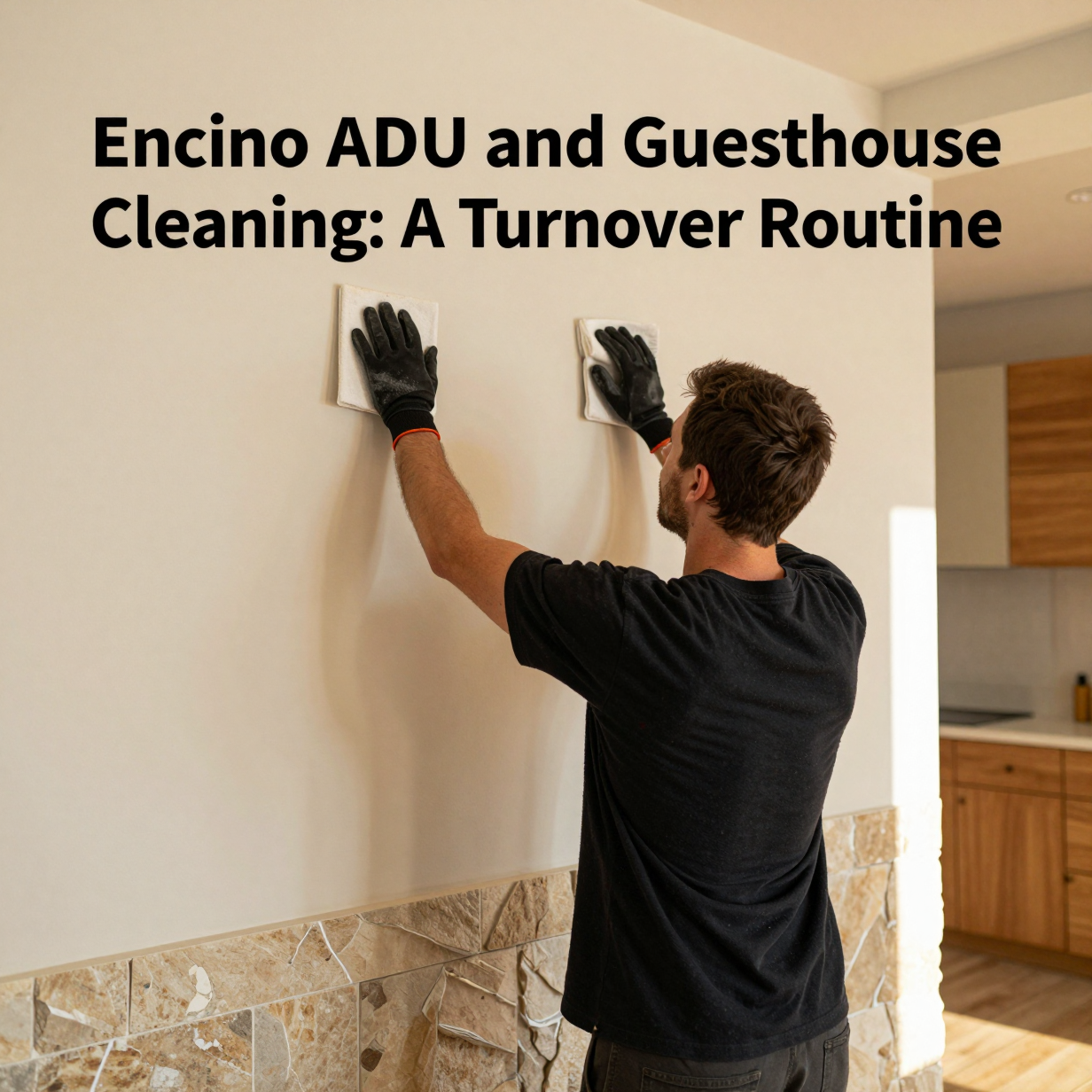
The fastest way to handle ADU cleaning in Encino is a repeatable turnover routine: strip and reset the bedding, clean top to bottom, deep-clean the kitchenette and bathroom, check for moisture or damage, and restock. Do it in the same order every time, with a written checklist, and nothing gets missed. This guide walks through that routine for small backyard units and guesthouses.
Why ADUs and guesthouses need their own cleaning routine
A small unit works hard. Everything is within arm's reach, so cooking smells, shower steam, and pet dander settle into fabric and air faster than in a large house. There is also less room for ventilation, and many ADUs have just one door and a couple of windows.
Add the Encino factors: dry Valley air that carries dust through every gap, hot summer afternoons that bake closed rooms, and patios or yards that bring dirt, leaves, and pollen in on shoes. A unit that looks fine at a glance can feel stale to a new guest within minutes.
A turnover routine solves this by treating each stay as a reset, not a quick tidy. The goal is that every guest walks into the same clean, neutral, comfortable space.
The turnover routine, step by step
Work in this order. It keeps you from re-cleaning surfaces you've already finished.
- Open up and air out. Open windows and the door, and run any fan. Fresh air first makes it easier to notice odors.
- Strip and bag linens. Take off sheets, pillowcases, duvet covers, towels, and bath mats. Check mattress protectors and pillow protectors for spots.
- Remove trash and left-behind items. Check drawers, closets, under the bed, behind the door, and the patio.
- Dust high to low. Start with ceiling fans, light fixtures, vents, and shelves. Then work down to tables, nightstands, and baseboards.
- Clean the kitchenette. See the next section for detail.
- Clean the bathroom. Fixtures, glass, grout lines, drain, and toilet base.
- Make the bed with fresh linens. Tight, tidy corners hold up between guests.
- Vacuum and mop last. Finish at the door so you walk out over clean floors.
- Final walk-through. Stand in the doorway like a guest and look, smell, and touch.
Kitchenette, bathroom, and the spots people miss
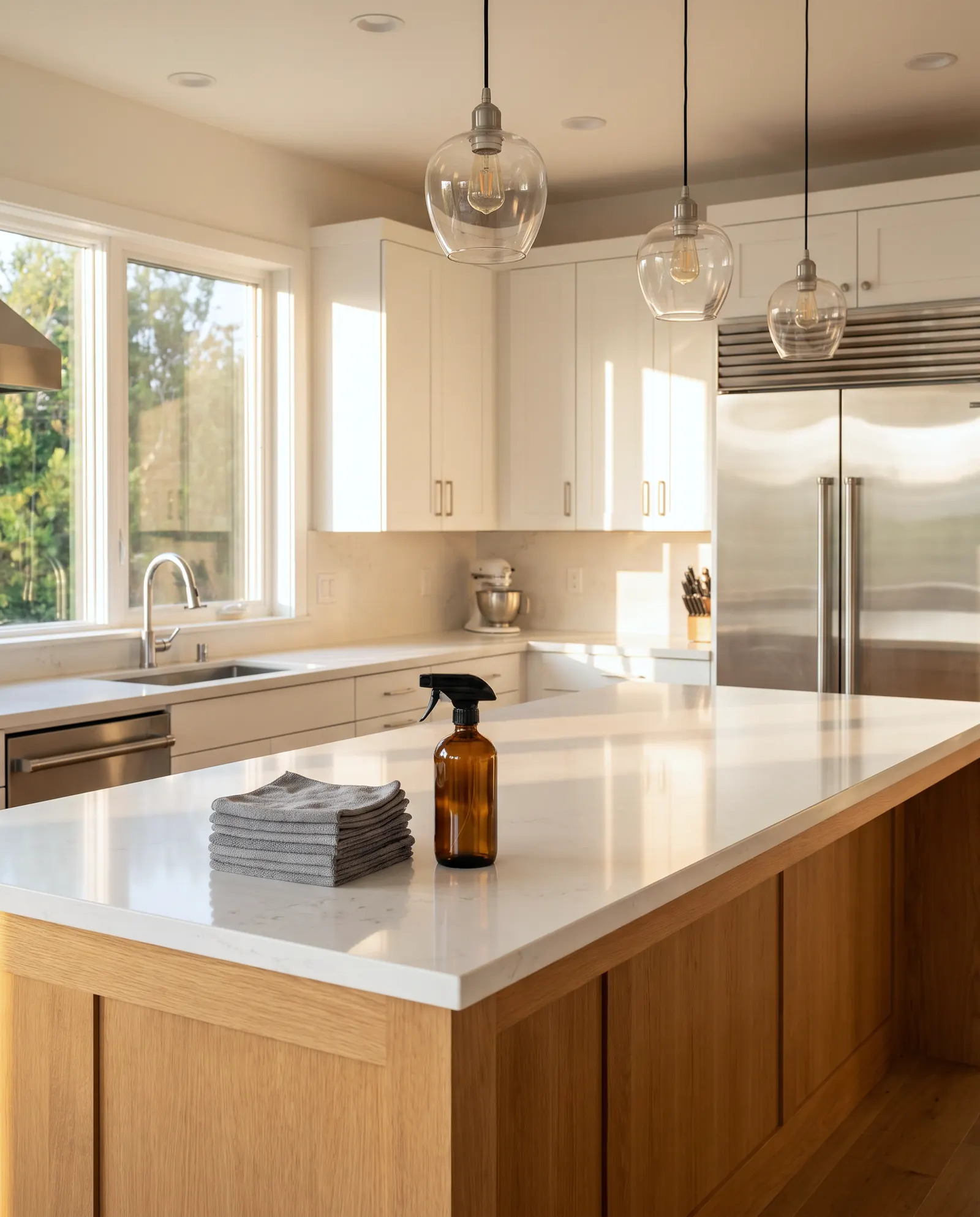
A simple linen shelf with labeled sets keeps every turnover consistent.
Small kitchens collect grease and crumbs in places a quick wipe won't reach. Bathrooms in compact units stay damp longer, so they deserve extra attention.
Kitchenette - Wipe the inside and outside of the microwave, including the door seal. - Empty and wipe the fridge, and check the door gasket and shelves. - Clean the sink, drain strainer, and faucet base. - Wipe cabinet handles, the backsplash, and the area behind the stove top. - Check coffee makers and kettles for residue and scale.
Bathroom - Scrub the shower walls, door track, and curtain or liner. - Clean around the drain and the base of the toilet. - Wipe the mirror, faucet, and light switch. - Run the exhaust fan and confirm it pulls air. - Check caulk lines for dark spots or peeling.
Often missed - Remote controls, thermostat, door handles, and lockbox - Under cushions and between sofa seats - Window tracks and sliding door tracks - Inside the closet and on the shelf - Outdoor patio furniture and the entry mat
Linens, laundry, and restocking
Linens are the biggest time sink in turnover, so plan them. Keep at least two full sets of sheets and towels per bed so you can swap right away and wash later. Store each set together, folded as a bundle.
A basic restock list for the unit:
- Toilet paper, tissues, and paper towels
- Hand soap, dish soap, and trash bags
- Shampoo, conditioner, and body wash, if you provide them
- Coffee, tea, and a few basics, if offered
- Extra pillows and a spare blanket
- Light bulbs and batteries for remotes
Check the stock at every turnover rather than when something runs out. A short note on a clipboard or phone tracks what's low.
Wash on a setting appropriate for the fabric label, and dry fully. Damp linens stored in a closed cabinet can develop a musty smell.
Air quality, moisture, and what to check between guests
Small spaces can trap humidity and odors. The EPA notes that controlling moisture is the key to preventing mold growth indoors, so a quick moisture check belongs in every turnover.
Look for: - Water stains on the ceiling or around windows - Soft or discolored areas under the sink - Dark spots on bathroom caulk or grout - A musty smell that returns after cleaning - Condensation on windows or walls
If you find any of these, fix the source, not just the surface. Cleaning products also matter. The EPA's guidance on indoor air quality points out that some household products release volatile organic compounds, so use only what you need, keep the unit ventilated while cleaning, and skip heavy air fresheners that mask odors instead of solving them.

Bathrooms and kitchenettes deserve the most careful pass in a compact unit.
Comparing DIY, a part-time helper, and a pro
Each option works for different situations.
| Factor | DIY turnover | Part-time helper | Professional cleaning service |
|---|---|---|---|
| Good fit for | Occasional guests, family stays | Regular, predictable bookings | Frequent turnovers, deep resets |
| Consistency | Depends on your energy | Depends on training | Follows a set checklist |
| Deep tasks (grout, tracks, oven) | Often skipped | Sometimes covered | Usually included in scope |
| Your time | Highest | Moderate | Lowest |
| Supplies and equipment | You provide | Varies | Usually provided |
Many owners mix approaches: light turnovers themselves, with a periodic deep clean from a pro.
When to call a pro
Doing it yourself is perfectly reasonable for a unit used a few times a year. A checklist, a good vacuum, and an hour or two can keep it guest-ready.
Consider calling a pro when: - Bookings come close together and you can't keep up. - You see recurring mildew, odors, or stains that return after cleaning. - Grout, carpet, upholstery, or windows need more than a surface pass. - You're preparing the unit for a new tenant or the first guest after a long vacancy. - Cleaning reveals small repairs, like loose caulk, a dripping faucet, or a sticky door, that need handling too.
A handyman team can pair cleaning with minor fixes so the unit is both clean and in working order. You can learn more about our cleaning service or see how we help across Encino. If you'd like to scope the work first, you can send a photo for a written quote.
For any larger work, such as plumbing changes or structural fixes, check permit requirements through LADBS before starting. Cleaning itself doesn't require permits, but repairs sometimes do.
FAQ
How often should I deep clean an ADU used for guests?
Do a full turnover clean after every stay, and a deeper pass periodically. That deeper pass covers grout, window tracks, appliance interiors, mattress and upholstery, and vents. How often depends on how many guests you host.
What is the most overlooked area in guesthouse cleaning?
High-touch items and hidden spots: remotes, door handles, lockboxes, window tracks, and under cushions. Guests notice these quickly.
How do I keep a small unit from smelling stale?
Ventilate during and after cleaning, wash linens fully, empty trash every turnover, and check for moisture under sinks and around the shower. Persistent odors usually mean a hidden source, not a need for more fragrance.
Should I leave cleaning supplies in the unit?
A few basics, like a small broom, trash bags, and dish soap, are helpful for guests. Store stronger products in a locked or separate spot.
Can a handyman service handle cleaning and small repairs together?
Yes, in many cases. Combining the two means issues found during cleaning, like worn caulk or a loose handle, can be dealt with during the same visit.
Sources
- EPA: A Brief Guide to Mold, Moisture, and Your Home
- EPA: Volatile Organic Compounds' Impact on Indoor Air Quality
- LADBS: Permits and Inspections
Safety note: work on electrical panels, gas, structure or anything that needs a permit should be done by a licensed contractor with the required permits.
STATOX Handyman Service · Send a photo · +1 (820) 200-4919
Keep reading
 cleaningCalabasas Hillside Homes: Cleaning Up Dust, Ash and PollenHouse cleaning Calabasas homeowners can use after dust, ash and pollen season: room-by-room steps, tool tips, and when to bring in help. Read before you scrub.
 cleaningCleaning Older Cheviot Hills Homes: Plaster and HardwoodHouse cleaning Cheviot Hills homeowners can trust for plaster walls and old hardwood floors: what to use, what to skip, and why it matters. Read before you scrub.
 cleaningDeep Cleaning Prep Checklist: Before the Crew ArrivesUse this deep cleaning checklist to get your Los Angeles home ready before the crew arrives, so every hour goes to actual cleaning. Worth a quick read.