Bathroom Exhaust Fan Not Clearing Steam? Causes and Fixes
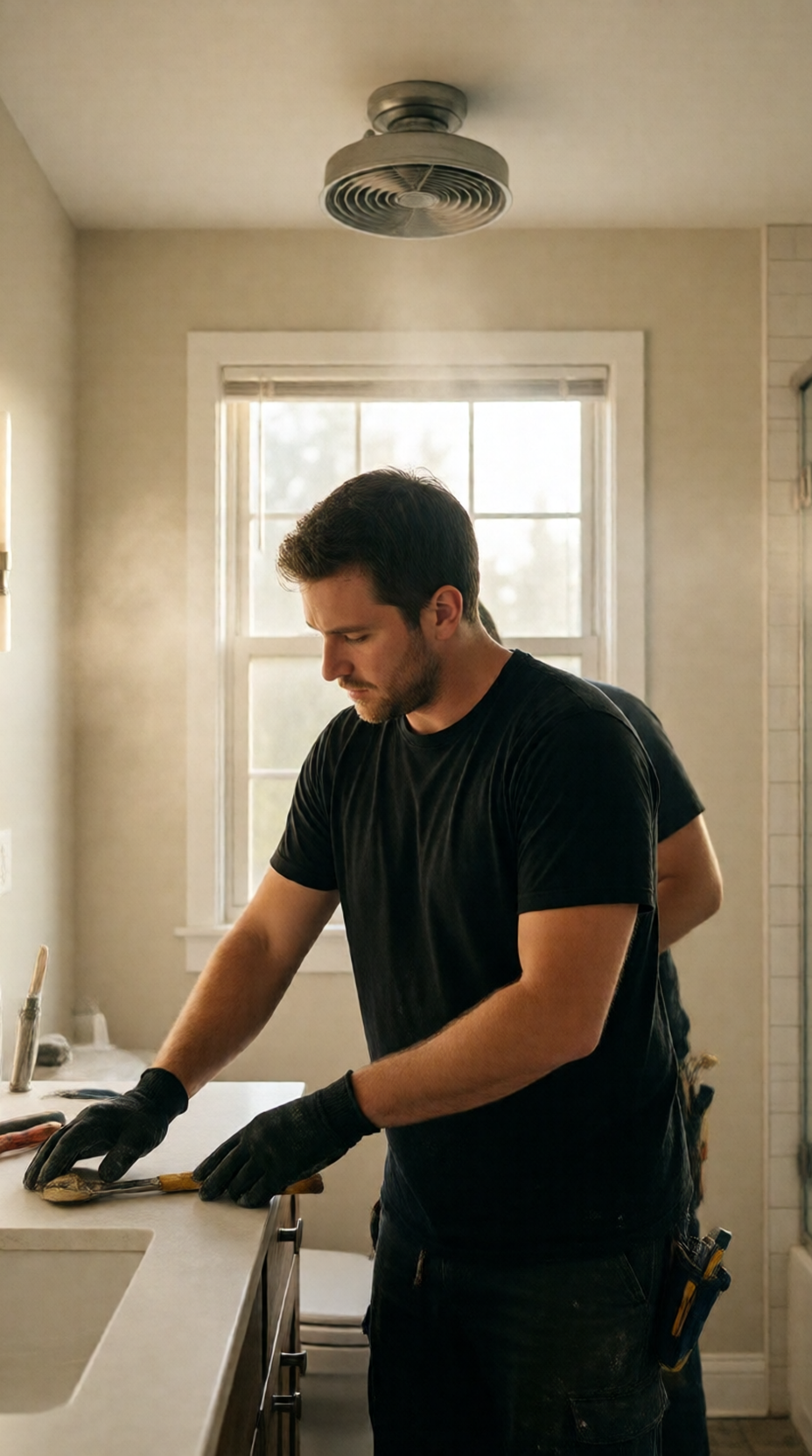
If your bathroom exhaust fan is not removing steam, the cause is usually one of four things: a dirty or clogged fan, a duct that is crimped, disconnected, or too long, a fan that is too weak for the room, or a damper stuck shut at the exterior. Most of these can be checked in under an hour with a flashlight and a screwdriver. Fixing them early protects your paint, drywall, and grout from lingering moisture.
How to Tell Your Fan Is Really the Problem
A fan can hum happily and still move almost no air. Noise is not a measure of performance. Before you take anything apart, run two quick tests.
The tissue test. Turn the fan on and hold a single square of toilet tissue against the grille. A working fan holds it firmly in place. If it flutters, slides off, or drops, airflow is weak.
The fog test. Take a normal shower with the door closed and the fan on. If the mirror is still fogged well after you finish, the fan is not keeping up. Also watch for these signs over time:
- Paint bubbling or peeling near the ceiling
- Dark spots in the corners or along grout lines
- Water droplets forming on the ceiling or the fan grille
- A musty smell that returns soon after cleaning
- Door or trim that feels damp after showers
The EPA's guidance on moisture notes that controlling moisture is the key to controlling mold indoors, so persistent damp is worth taking seriously.
Common Causes of Weak Steam Removal
Here is how the usual suspects compare, and what you can do about each.
| Cause | What you notice | Practical fix |
|---|---|---|
| Dust-clogged grille and blades | Weak pull, extra noise | Clean grille, blades, and housing |
| Crimped or sagging duct | Fan runs but little air exits | Straighten, shorten, or replace the duct |
| Disconnected duct in the attic | Moisture in attic, damp ceiling | Reconnect and secure the duct |
| Stuck exterior damper or blocked vent cap | Tissue test fails, no air outside | Clean or replace the damper or cap |
| Undersized or old fan | Fan works but fog lingers | Replace with a better-matched unit |
| Fan on a timer that is too short | Steam returns after fan shuts off | Run the fan longer after showers |
| No makeup air | Weak flow with door shut | Leave a gap under the door |
Many Los Angeles homes, especially older bungalows and mid-century houses, have ducts that were installed with long runs, tight bends, or even no outside termination at all. Some fans were vented only into the attic. That moves steam out of the bathroom but dumps it into the framing, where it can do quiet damage.
Clean the Fan First
Cleaning is the simplest and most common fix. Dust builds up on the blades and housing and cuts airflow more than most people expect.
- Turn off the fan at the wall switch, and turn off the breaker for added safety.
- Remove the grille. Most pull down gently and are held by two spring clips; some use a screw.
- Vacuum the housing with a brush attachment.
- Wipe the blades and grille with a damp cloth and mild soap. Let everything dry.
- If the motor assembly unplugs or unscrews easily, remove it and clean behind it.
- Reinstall, restore power, and repeat the tissue test.
If the fan still sounds rough or the blades wobble, the motor may be wearing out. Replacement is often simpler than repair.

Dust on the blades and housing is the most common reason a fan feels weak.
Check the Duct and the Exterior Vent
If a clean fan still fails the tissue test, look at where the air goes. The duct is the usual culprit.
What to look for in the attic or ceiling space:
- Flexible duct that sags or is crushed. Low spots collect condensation and restrict flow. Rigid or smooth-walled duct moves air better than ribbed flex.
- Disconnected joints. Vibration and age can pull the duct off the fan housing. Reattach it with a proper clamp and seal the joint with foil tape or mastic.
- Long, winding runs. The more bends and distance, the more the fan struggles. Shorter and straighter is better.
- Missing insulation. In cooler weather, warm steam can condense inside an uninsulated duct and run back toward the fan.
- Venting into the attic. Bathroom air should go outside, not into the attic space.
At the exterior: Find the roof jack or wall cap. A damper flap that is gummed with dust, painted shut, or blocked by a nest will choke airflow. With the fan on, you should feel air pushing the flap open. If nothing moves, clean it or replace the cap.
Attic work in Los Angeles summers can be hot and cramped, so plan it for a cooler part of the day, step only on framing, and avoid disturbing insulation more than needed.
Is the Fan Too Small or Running Too Briefly?
Sometimes nothing is broken; the fan simply does not match the room. Older fans are often weaker than modern ones, and a bathroom with a big shower, high ceiling, or a bathtub plus shower may need more capacity than the original unit offered.
Fan performance is labeled in CFM, which means cubic feet of air per minute. Check the label inside the housing. If it is hard to read, that often signals an old unit worth replacing. When comparing replacements, look at the CFM rating and the sone rating, which describes noise. A quieter fan tends to get used more, which helps.
Habits matter as much as hardware:
- Turn the fan on before you start the shower.
- Leave it running for a good while after you finish, until the mirror clears and the room feels dry.
- Consider a humidity-sensing switch or a countdown timer so you do not have to remember.
- Crack the bathroom door slightly after the shower if the room feels sealed, since a fan needs replacement air to pull from.
- Wipe wet walls and the shower door with a squeegee to cut down on how much moisture needs to be removed.

A short, sealed, well-supported duct to the outdoors gives the fan its strongest performance.
When to Call a Pro
Plenty of fan fixes are friendly DIY jobs: cleaning, swapping a grille, adding a timer, or clearing a vent cap. Call a professional when:
- The duct is in a tight attic or crawl space that is hard or unsafe to reach
- You need a new exterior penetration through the roof or wall
- The fan has no ducting to the outdoors and a new route must be created
- You find wiring that looks old, damaged, or undersized
- There is staining, soft drywall, or visible mold growth on the ceiling
- The fan replacement requires cutting into finished ceiling material
- You are not comfortable working on a ladder or around electrical connections
Wet drywall and recurring mold deserve extra caution. The EPA's mold resources explain that fixing the moisture source is the step that actually stops growth, and cleaning alone is not enough if the damp keeps returning. Also, if the job involves new circuits or structural work, ask about permit requirements with LADBS, and check any contractor's status through the state's consumer pages before hiring.
If you want help with a fan swap, duct repair, or moisture-damaged finishes, take a look at our bathroom service. You can also send a photo for a written quote of the fan, ceiling, and any damage so we can understand the job before anyone visits.
FAQ
How long should I run the bathroom fan after a shower?
Run it until the mirror is clear and the room feels dry, not for a fixed number of minutes. In a humid or poorly vented bathroom, that can take longer than you expect. A timer or humidity switch takes the guesswork out.
Can a bathroom fan vent into the attic?
It should not. Venting steam into the attic lets moisture settle on framing and insulation, which can lead to mold and rot. Bathroom ducts should terminate outdoors through a roof jack or wall cap.
Why does my fan run but barely pull any air?
Most often the cause is dust buildup, a crushed or disconnected duct, or a stuck damper at the exterior. Clean the fan first, then inspect the duct and vent cap. The tissue test helps you confirm each fix.
Do I need to replace the whole fan or just the motor?
It depends on the model. Some fans have a replaceable motor assembly, but on older or noisy units a full replacement is often simpler and gives stronger airflow and quieter operation. Check that the new housing fits the existing ceiling opening.
Is a fogged mirror always a sign of a bad fan?
Not always. Hot showers, a closed door without makeup air, or turning the fan on too late can all leave the mirror fogged. If walls or the ceiling also look damp, or the fan fails the tissue test, the fan or duct needs attention.
Sources
- EPA: A Brief Guide to Mold, Moisture, and Your Home
- EPA: Mold
- LADBS: Permits and Inspections
- CSLB: Hire a Contractor
Safety note: work on electrical panels, gas, structure or anything that needs a permit should be done by a licensed contractor with the required permits.
STATOX Handyman Service · Send a photo · +1 (820) 200-4919
Keep reading
 bathroomBathroom Repair Prep Checklist Before the Handyman VisitUse this bathroom repair prep checklist to clear the space, gather photos, and find your shutoffs so your handyman visit goes smoothly. Read before you book.
 bathroomBathroom Tile vs Vinyl vs Acrylic Surrounds: ComparedBathroom tile vs vinyl vs acrylic: how each surround handles water, cleaning, and repairs in Los Angeles homes. Read before you choose your material.
 bathroomBel Air Bathroom Repairs in Hillside and Older HomesPlanning bathroom repair Bel Air homes need? Learn what hillside and older houses hide behind tile and drywall, and what to check first before it gets costly.