Flooring in Older Pasadena Homes: What to Check First
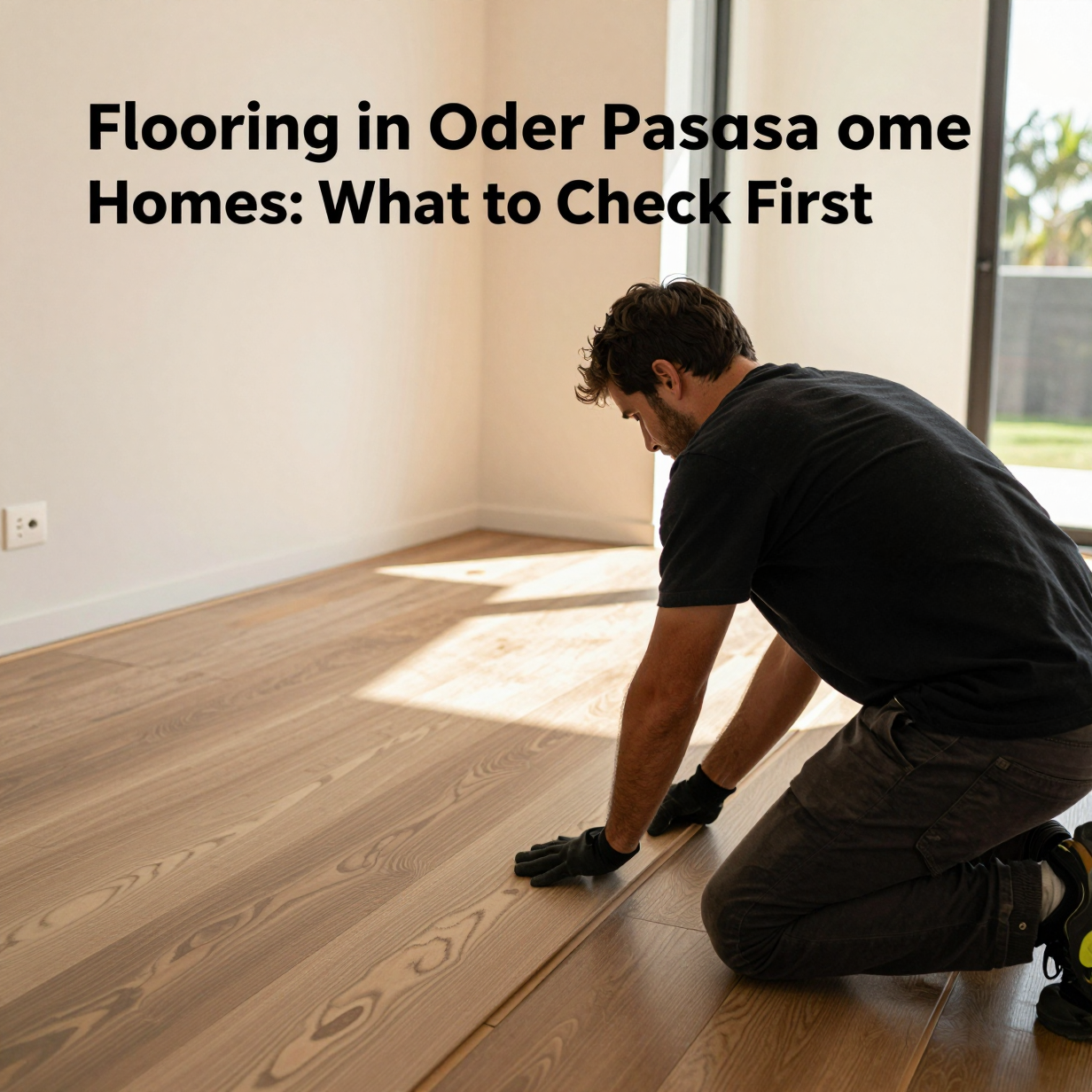
If you own an older home, the first things to check before any flooring work are moisture under the house, the condition and level of the subfloor, and what is already on top of it. Most problems in Pasadena Craftsman, bungalow, and Spanish-style homes start below the surface, not with the boards you can see. A little investigation up front tells you whether to refinish, repair, or replace.
Why older Pasadena homes need a different approach
Pasadena has a rich stock of early-20th-century houses: Craftsman bungalows, Spanish Revival homes, and mid-century ranches. Many were built with raised foundations, wood subfloors, and solid hardwood laid over diagonal planks. That construction can last for generations, but it behaves differently from a modern slab-on-grade house.
Older homes have also been remodeled many times. It is common to find a patched kitchen, a bathroom that was added later, or a layer of vinyl or carpet hiding the original boards. Each change can leave behind uneven heights, odd transitions, and old adhesives.
The goal is simple: understand what you have before choosing what to do with it.
Start with what is under the house
Most older Pasadena homes sit on a raised foundation with a crawl space. That space tells you a lot about your floors.
Look for these signs, using a flashlight and staying safe (wear a mask and gloves, and do not crawl into tight or unstable areas):
- Damp soil or standing water. Moisture can cup, swell, or rot wood from below.
- Dark staining or soft spots on joists and subfloor. Press gently with a screwdriver tip; wood that crumbles or feels spongy needs attention.
- Blocked or missing foundation vents. Airflow helps keep a crawl space dry.
- Plumbing leaks. Look for drips, green corrosion, or wet insulation under kitchens and bathrooms.
- Pest damage. Sawdust-like droppings or tunnels in wood should be evaluated before new flooring goes down.
- Sagging or bouncing. If a floor feels springy underfoot, joists, girders, or piers may need work.
Fix the cause of moisture first. New flooring over a damp or failing structure is just a more expensive version of the same problem.
Identify what your floor is made of
Knowing the material guides every decision. Walk the house and check closets, under vents, and at thresholds, where you can often see a cross-section of the floor.
Common finds in older Pasadena homes:
- Original solid hardwood, often oak, usually thinner strips than modern boards. Many can be refinished more than once, depending on how much wear layer remains.
- Fir or pine in bedrooms and service areas, softer and more prone to dents.
- Layers of vinyl, linoleum, or tile added over time, sometimes over older adhesives.
- Plank subfloor (diagonal boards) under the finish floor, which affects how new materials are fastened.
Older resilient flooring, adhesives, and backing can contain materials you should not sand or tear up casually. If you are unsure what is under a layer, have it assessed before demolition. The EPA's indoor air quality guidance is a good starting point for understanding dust and fumes during renovation work.
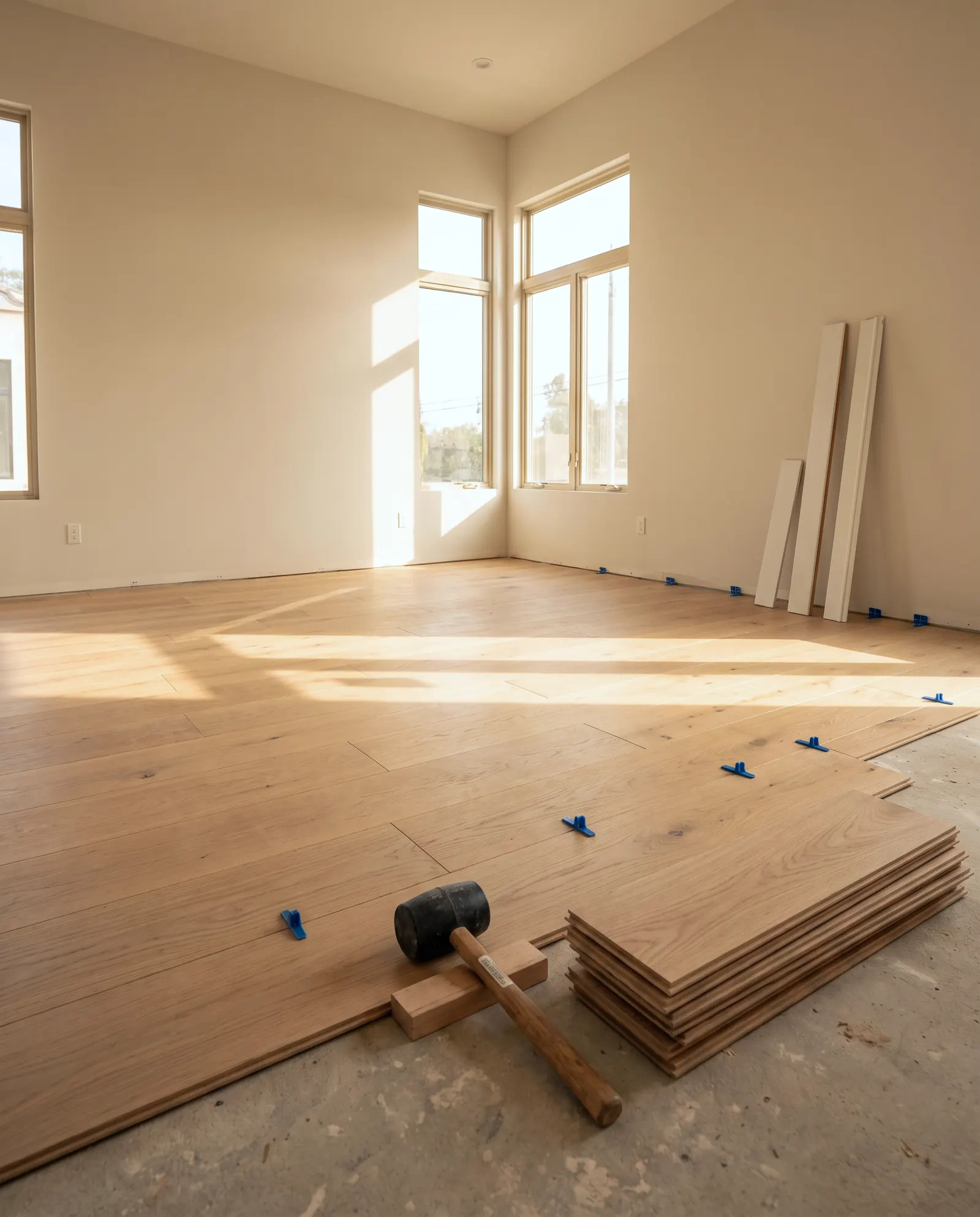
Peeling back one corner of an old covering can show whether hardwood is hiding underneath.
Check level, squeaks, and gaps
Old houses settle. A floor that is not perfectly flat is normal, but there is a difference between character and a problem.
Try these simple checks:
- Roll a marble or ball across the room to see which way the floor slopes.
- Use a long straightedge to spot dips and humps.
- Walk slowly and listen. Squeaks often mean loose boards or subfloor not tight to joists.
- Look at gaps between boards. Seasonal gaps are normal in solid wood; wide, uneven gaps can mean movement or moisture changes.
- Check near doors and thresholds. Height differences here limit your options for new flooring.
Minor squeaks and small dips can often be corrected. Large slopes or soft areas point back to the structure and are worth a closer look before finishing work.
Refinish, repair, or replace: how to decide
Not every old floor needs to be replaced. In many cases, the original hardwood is the most valuable thing in the room.
| Situation | Often a good fit | Why |
|---|---|---|
| Original hardwood with surface wear, scratches, dull finish | Refinishing | Preserves original material; removes worn finish |
| A few damaged or stained boards | Spot repair and blending | Replaces only what is needed |
| Thin, heavily sanded boards or widespread rot | Replacement | Little wear layer left, or structure compromised |
| Floor hidden under layers of old covering | Inspect first, then decide | Condition is unknown until exposed |
| Moisture-prone areas like kitchens and baths | Water-resistant flooring options | Better suited to humidity and spills |
The National Wood Flooring Association (NWFA) publishes general guidance on wood floor care, installation, and moisture considerations that can help you frame questions for any installer.
If you are matching new boards to old ones, expect that species, width, and aged color rarely match perfectly. Skilled blending usually looks better than trying for an exact match.
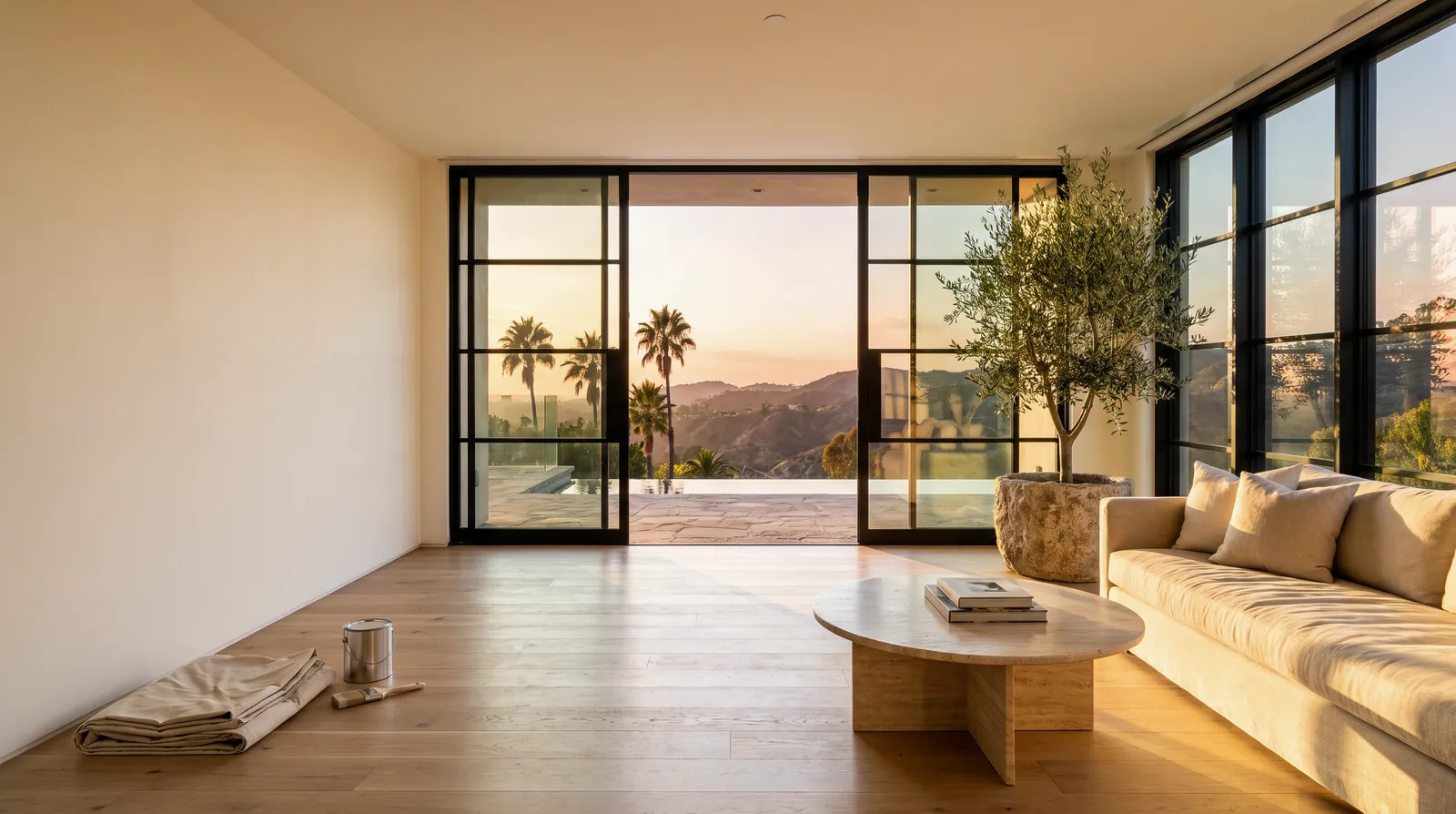
A repair that blends new boards into original flooring keeps the home's character intact.
Plan for permits, noise, and living in the house
Most simple flooring work does not require much paperwork, but structural repairs, plumbing changes, or removing walls can. The Los Angeles Department of Building and Safety lists permit and inspection requirements, and Pasadena properties may fall under different local rules depending on location, so check before you start anything structural.
Also think about daily life:
- Dust and fumes. Sanding and finishing create dust, and many finishes release volatile organic compounds (VOCs). Ventilate well and ask about low-VOC options. The EPA explains how VOCs affect indoor air.
- Furniture and access. Plan where everything will go, including built-ins and heavy pieces.
- Pets and kids. Keep them away from work areas and curing finishes.
- Doors and trim. Older doors may need trimming if floor height changes, and original baseboards deserve careful removal and reinstallation.
When to call a pro
Plenty of flooring tasks are reasonable for a careful homeowner: tightening a few squeaks, replacing a loose board, cleaning and re-coating a lightly worn floor, or removing a small area of carpet.
Bring in help when you see:
- Moisture, mold, or pest damage under the house
- A floor that sags, bounces, or slopes noticeably
- Unknown old layers that may contain hazardous materials
- Refinishing of floors with thin wear layers, where a sanding mistake cannot be undone
- Repairs that need to blend new wood into original flooring
- Any work touching plumbing, framing, or electrical
Hiring through a reputable contractor is also about protecting yourself. The California Contractors State License Board (CSLB) offers consumer guidance on how to hire a contractor and what to confirm before work begins.
If you want a second set of eyes, our flooring service covers inspection, repair, and installation for homes across Pasadena. You can also send a photo for a written quote and describe what you are seeing.
FAQ
Can I refinish the original hardwood in my Pasadena Craftsman?
Often, yes. Many original floors can be refinished, but it depends on how much wood remains above the nails or tongue after past sanding. An experienced installer can check board thickness and condition before work starts.
What if my floor feels bouncy?
Bounciness usually points to something below the surface: loose subfloor, undersized or damaged joists, or foundation issues. Have the crawl space inspected before covering or refinishing the floor.
Should I remove old vinyl or carpet before deciding?
It helps to look. Lift a small corner in a closet or low-traffic area to see what is underneath. If the covering is old or adhesive is present, get guidance before sanding or tearing up large areas.
Do I need a permit for flooring work?
Simple surface work often does not. Structural repairs or changes to plumbing, framing, or other systems can. Check with the relevant building department, such as LADBS resources for Los Angeles, and confirm local rules for your address.
Can new flooring match my old floors?
Close, but rarely identical. Age, finish, and wood species affect color. Blending and refinishing adjacent areas usually gives a more natural result than trying to find a perfect match.
Sources
- California CSLB: Hire a Contractor
- Los Angeles Department of Building and Safety: Permits and Inspections
- EPA: Volatile Organic Compounds' Impact on Indoor Air Quality
- National Wood Flooring Association
Safety note: work on electrical panels, gas, structure or anything that needs a permit should be done by a licensed contractor with the required permits.
STATOX Handyman Service · Send a photo · +1 (820) 200-4919
Keep reading
 flooringSqueaky, Buckled, or Gapped Floors: Causes and FixesSqueaky floors, buckling, and gaps usually trace back to movement, moisture, or loose fastening. Learn how squeaky floors buckling gaps fix choices work.
 flooringDIY vs Hiring a Pro for Floor InstallationWeighing diy vs professional flooring installation in Los Angeles? See which floors suit a weekend project and which need a pro. Read before you buy.
 flooringFlooring Installation Prep Checklist for HomeownersUse this flooring installation prep checklist to clear rooms, check subfloors, and plan acclimation so install day goes smoothly. Read before you order.