Furniture Assembly for Sherman Oaks ADUs and Small Homes
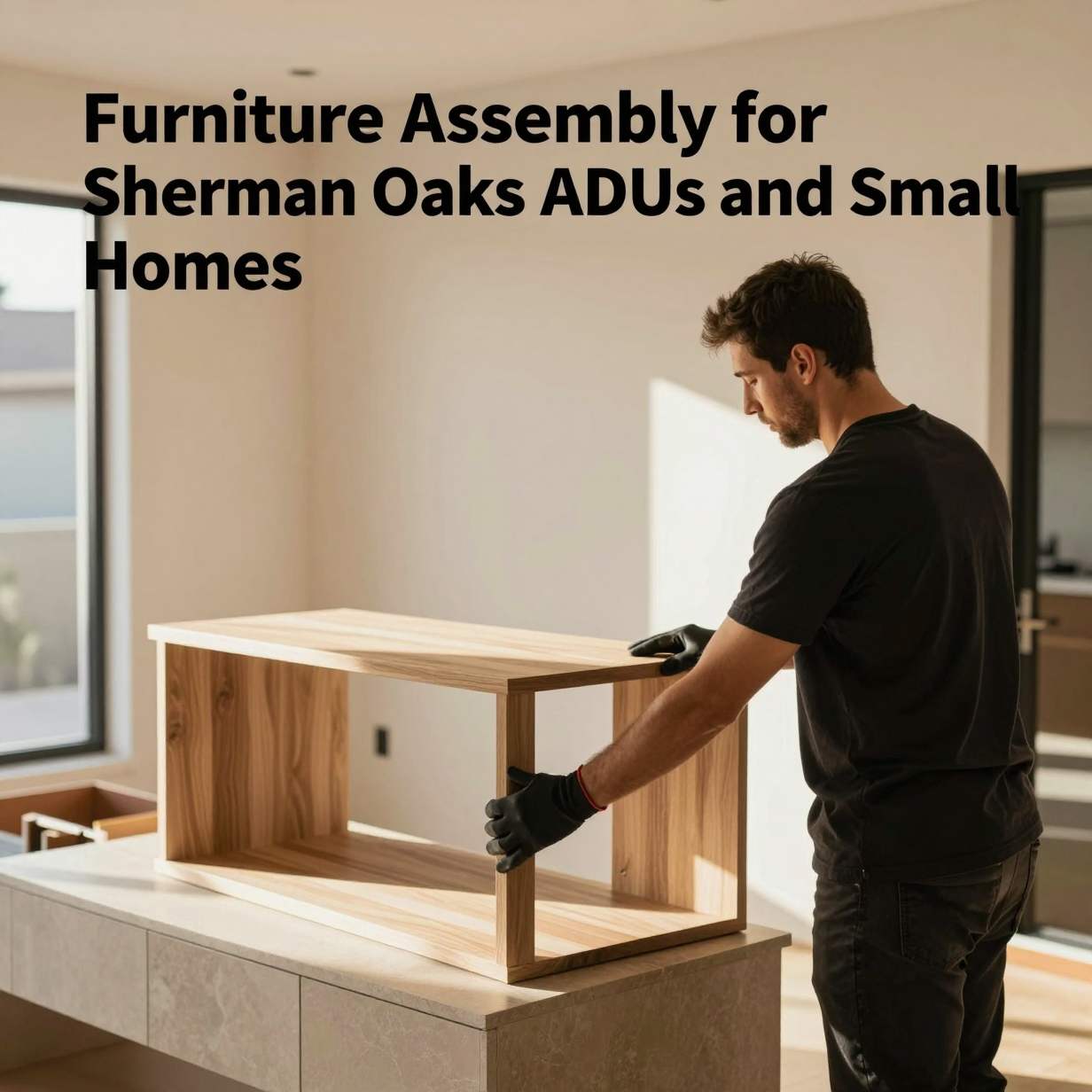
For furniture assembly in Sherman Oaks ADUs and small homes, the winning approach is simple: measure first, assemble in the right order, and secure tall pieces to the wall. Small spaces leave no room for mistakes, so a few minutes of planning saves hours of rework. This guide walks you through how to do it, and when it makes sense to hand the job to a pro.
Why Small Spaces Change How You Assemble Furniture
In a large house, you can spread boxes across the living room and sort it out as you go. In a compact ADU or a small Sherman Oaks bungalow, you can't. Every box you open takes up floor space you need to walk on.
Small spaces also mean tighter tolerances. A wardrobe that is an inch too tall for a ceiling, or a bed frame that blocks a closet door swing, becomes a real problem once it's built. Many flat-pack pieces can't be easily taken apart and rebuilt without weakening the joints.
Here is what tends to go wrong in small homes:
- Pieces get built in the wrong room and won't fit through the doorway.
- Beds are assembled before nightstands and dressers, blocking access.
- Tall units are placed without checking outlets, vents, or window sills.
- Packaging piles up and slows the whole job.
Plan the Layout Before You Open a Single Box
Start with a simple sketch on paper or a phone note. Mark doors, door swings, windows, outlets, heating and cooling vents, and any built-in closets. Then place each furniture piece using its listed dimensions from the box or the manufacturer's site.
Measure the paths, not just the spots
Measure the route the finished piece must travel: front gate, entry door, hallway turns, and the ADU door. Many ADUs sit behind the main house and are reached by a narrow side path or stairs. If a large piece won't clear the route, assemble it in place from its parts.
Leave working clearance
Allow roughly an arm's length of open floor around the piece you are building. For beds and sofas, that often means building before other furniture goes in.
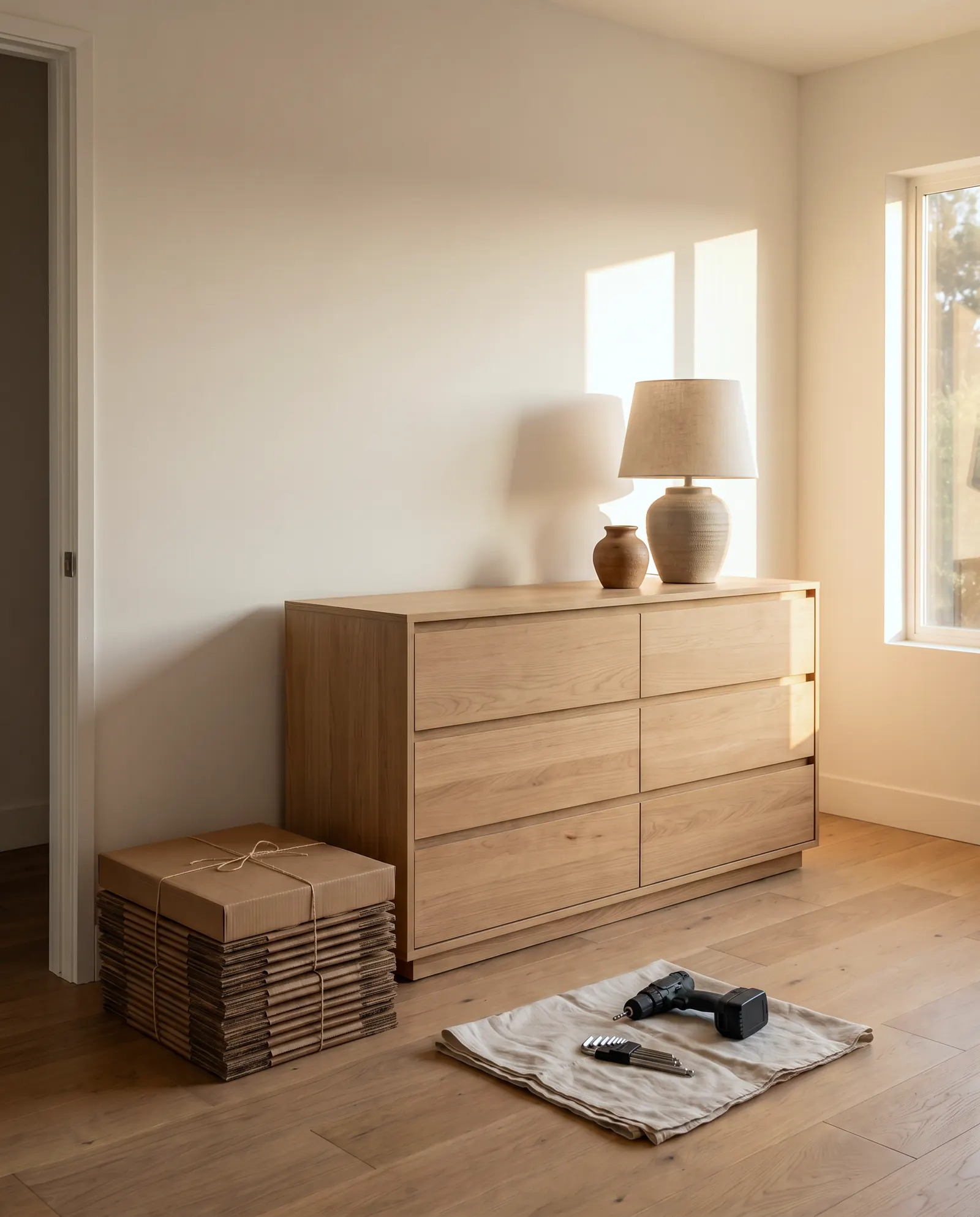
Sorting hardware by step before you start keeps a small room organized and prevents lost screws.
Build in the Right Order
Sequence matters more in a small room than in any other setting. Think of it as working from the back of the room to the front, and from the largest pieces to the smallest.
- Clear and protect the floor. Lay down a moving blanket or cardboard to protect hardwood, laminate, or vinyl plank.
- Build the biggest, most fixed pieces first. Bed frames, wardrobes, and large bookcases go in before anything else.
- Anchor tall furniture as you place it. Do not leave this for later.
- Add mid-size pieces. Dressers, desks, and media consoles come next.
- Finish with small items. Nightstands, side tables, shoe racks, and stools go in last.
- Break down packaging as you go. Flatten boxes after each piece and stage them outside.
Space-Saving Pieces and What They Demand
ADU owners often choose furniture that does double duty. These pieces are clever, but they are less forgiving to assemble. Here is how common types compare.
| Piece | Why it suits small spaces | Assembly watch-outs |
|---|---|---|
| Murphy or wall bed | Frees floor space during the day | Must be anchored into framing; mechanism alignment matters |
| Loft or storage bed | Uses space under the mattress | Heavy, many fasteners, needs room to build in place |
| Fold-down desk | Disappears when not in use | Wall anchoring and level mounting are critical |
| Modular shelving | Adapts to odd walls | Needs to be level and tied to the wall when tall |
| Sofa bed | Seating plus guest sleeping | Frame bolts and mechanism must be tightened evenly |
| Storage ottoman | Hidden storage and seating | Lid hinges should be checked for smooth, safe closing |
Wall-mounted items depend on what is behind the drywall. A stud finder helps, but in older Sherman Oaks homes with plaster or unusual framing, it's worth confirming before drilling.
Anchoring Furniture in an Earthquake Zone
Los Angeles homeowners live with seismic risk, and small spaces make falling furniture more dangerous because there's less room to get clear. Tall bookcases, wardrobes, and dressers should be secured to wall studs. Earthquake Country Alliance offers practical guidance on securing your space, and Ready.gov covers earthquake preparedness in general.
A few practical points:
- Use anti-tip straps or brackets sized for the piece and fasten into studs when possible.
- Drywall anchors alone may not hold a heavy loaded unit.
- Place heavy items low and lighter items high.
- Keep beds away from tall, unsecured shelves.
- Re-check fasteners after the first few weeks as wood and joints settle.
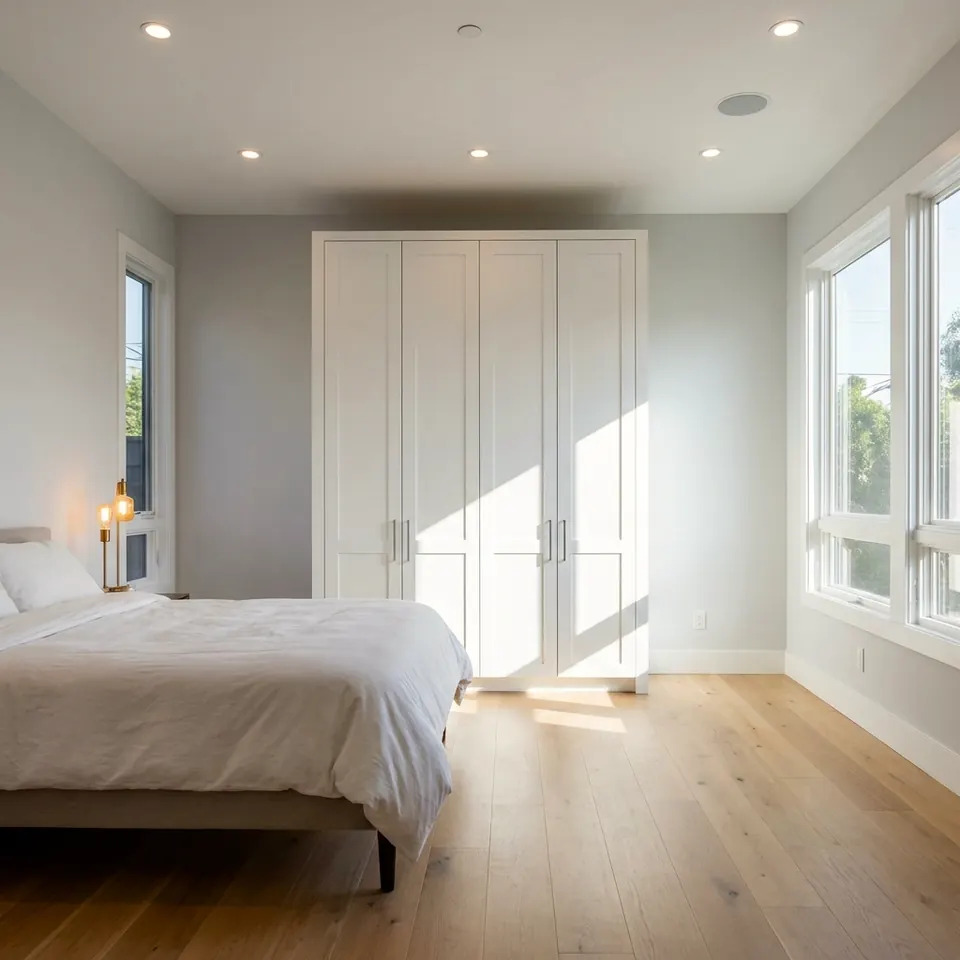
Anchoring tall pieces to studs is a small step that matters in every Los Angeles home.
Common Mistakes in ADU and Small-Home Setups
Skipping the instructions. Flat-pack furniture often has steps that must be done in order. Tightening everything fully too early can make later steps impossible.
Overtightening cam locks and screws. Particleboard strips easily. Snug is better than forced.
Ignoring the floor. Slightly uneven floors, common in older homes and some ADU slabs, can leave doors and drawers out of square. Small shims under feet can help.
Blocking access. Keep panels, water heater closets, and electrical panels reachable. Many ADUs have utilities in tight spots.
Forgetting ventilation. New furniture, especially pressed-wood pieces, can release volatile organic compounds. The EPA explains how VOCs affect indoor air. Opening windows during and after assembly helps in small, closed-up rooms.
When to Call a Pro
Plenty of furniture assembly is a good DIY weekend project. A nightstand, a simple desk, or a single bookcase is manageable with basic tools and patience.
Consider hiring help when:
- You are furnishing an entire ADU at once and boxes are stacking up.
- Pieces are heavy or need two people, like wardrobes, loft beds, or sectional frames.
- Wall-mounted or fold-down units must be anchored into framing.
- The instructions are unclear, or parts seem missing or mismatched.
- You are short on time before a tenant or guest arrives.
- You'd rather not risk damaging walls, floors, or the furniture itself.
A professional won't change what the furniture is, but can bring the right tools, a systematic process, and the experience of having built similar pieces many times. If you're hiring any contractor for broader work, the Contractors State License Board has consumer guidance on how to hire responsibly, and some work beyond assembly may need a different trade.
Our furniture assembly service covers Sherman Oaks homes and ADUs. If you'd like to know what your project involves, you can send a photo for a written quote.
FAQ
How should I prepare my ADU before furniture assembly?
Clear a staging area, protect floors, and confirm the path from the street to the door. Have your layout sketch and the box dimensions ready. Keep outlets and walkways accessible.
Do I need to anchor furniture if I rent the ADU out?
Anchoring tall furniture is a sensible safety step in any Los Angeles home. If tenants live there, check lease terms and your plans for wall repairs, then use brackets that suit the wall type.
Can furniture be assembled in a different room and carried in?
Sometimes, for smaller pieces. Large, fully built pieces often won't fit through ADU doors or turn tight hallways. When in doubt, build in the final room.
What tools do I need for basic assembly?
A screwdriver set, a rubber mallet, a level, a tape measure, a stud finder, and a drill with proper bits cover most jobs. Use the hardware included with the furniture unless a specific fastener is needed for your wall.
What if parts are missing or damaged?
Stop and contact the manufacturer or retailer before continuing. Forcing substitutes can weaken the piece and sometimes affect your return options.
Sources
- California Contractors State License Board: Hire a Contractor
- Earthquake Country Alliance: Step 1, Secure Your Space
- Ready.gov: Earthquakes
- U.S. EPA: Volatile Organic Compounds' Impact on Indoor Air Quality
Safety note: work on electrical panels, gas, structure or anything that needs a permit should be done by a licensed contractor with the required permits.
STATOX Handyman Service · Send a photo · +1 (820) 200-4919
Keep reading
 furniture assemblyDIY vs Hiring a Pro for Furniture Assembly: What to WeighWondering whether to hire someone to assemble furniture or do it yourself? Compare time, tools, risk, and safety before you open the box.
 furniture assemblyFlat-Pack Furniture Problems and How to Fix ThemNeed a wobbly flat pack furniture fix? Learn why assembled pieces rock, sag, or gap, and what to check first. Worth a read before you take it apart.
 furniture assemblyFurniture Assembly Prep Checklist Before Your Handyman VisitUse this furniture assembly checklist to get your space, boxes, and walls ready before your handyman arrives. A few minutes of prep makes the visit smoother.