How to Choose a Bathroom Handyman in Los Angeles
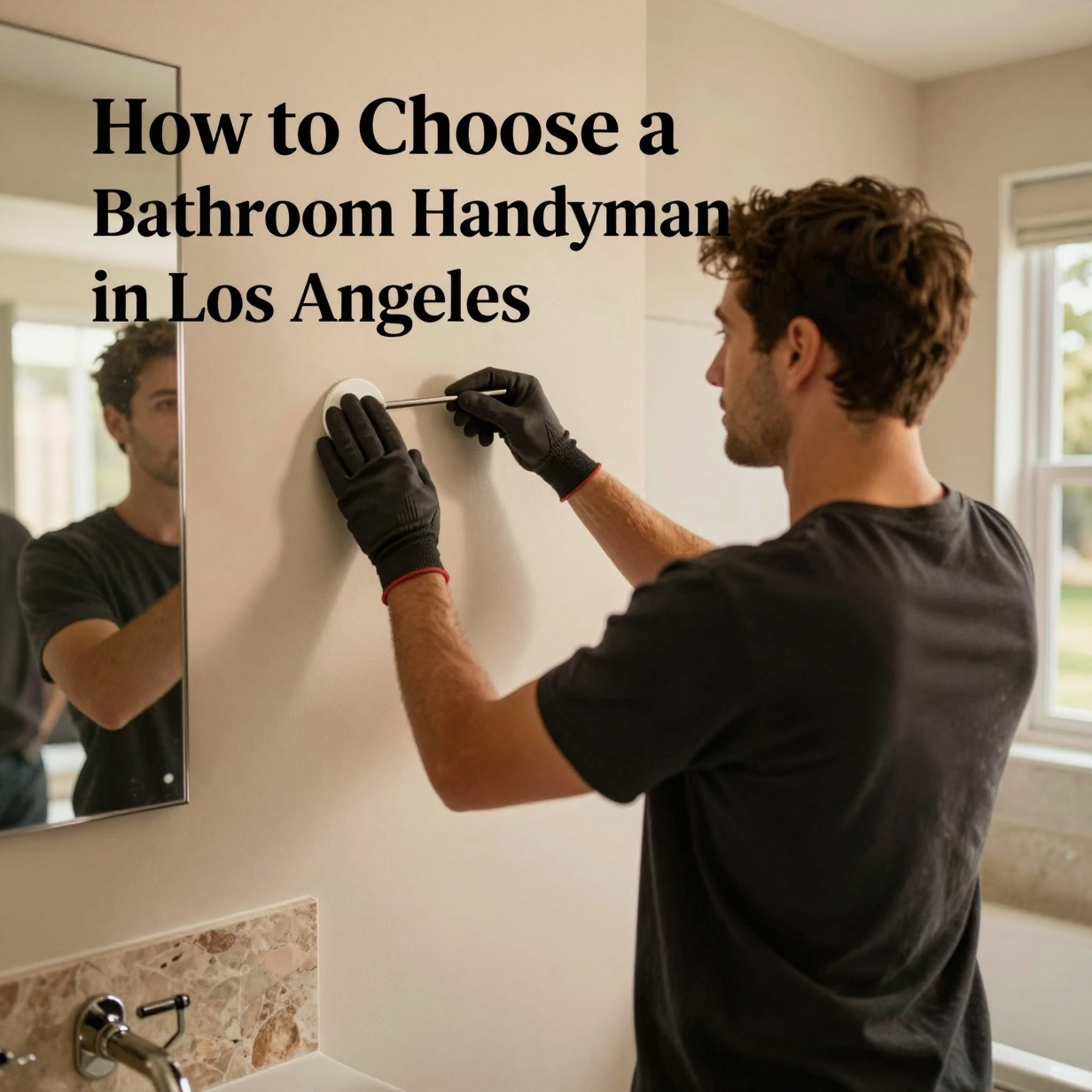
The right bathroom handyman in Los Angeles is someone who clearly describes the work they will do, explains what falls outside a handyman's scope, and puts the plan in writing before starting. Look for relevant bathroom experience, specific estimates, and honesty about when a job needs a permit or a specialty trade. This guide walks you through how to sort the clear from the vague.
What a Bathroom Handyman Actually Does
A handyman covers the small and mid-size repairs that keep a bathroom working and looking good. Think of the jobs that are too fiddly for a weekend or too small for a full remodel crew.
Common bathroom handyman tasks include:
- Replacing a faucet, showerhead, or toilet fill valve
- Re-caulking a tub, shower, or vanity
- Repairing grout and replacing a few cracked tiles
- Installing towel bars, grab bars, shelves, and mirrors
- Swapping a vanity light, exhaust fan cover, or toilet seat
- Fixing a sticking door, loose toilet, or wobbly vanity
- Patching and painting around moisture-damaged spots
What it usually does not include: moving plumbing lines, rewiring a circuit, or tearing out a whole shower. Those jobs bring in other trades, and sometimes permits. A good handyman tells you that up front instead of stretching beyond their scope.
You can see the kinds of repairs we handle on our bathroom service page.
Questions to Ask Before You Hire
A short conversation reveals a lot. You are listening for specifics, not sales polish.
- "What exactly will you do, step by step?" A clear answer shows they have thought about the job.
- "What have you done that is similar to this?" Bathrooms are wet, tight spaces. Experience matters.
- "Will this need a permit?" An honest pro will tell you when a job goes beyond simple repair.
- "What could change the scope once the wall or floor is open?" Hidden water damage is common in bathrooms, and a good answer shows realism.
- "Who is doing the work, and who will be on site?" You should know who will be in your home.
- "How will we handle changes?" Change orders should be written, not verbal.
- "What happens with cleanup and debris?" Tile dust and old caulk get everywhere.
If answers are vague, rushed, or full of pressure, that is information too.
How to Check Credentials and Permits in Los Angeles
California regulates contractors through the Contractors State License Board (CSLB). Its consumer pages explain how to hire a contractor, what to verify, and what a written contract should contain. Start at the CSLB hiring guide and confirm what applies to your project's size and type.
The Department of Consumer Affairs also provides general consumer protection resources at dca.ca.gov.
For permits, the City of Los Angeles handles them through LADBS. Cosmetic repairs generally differ from work that changes plumbing, electrical, or structure, so check the LADBS permits and inspections page or ask them directly if you are unsure. If a handyman says "you do not need to bother with that" about something that sounds structural, ask more questions.
Quick credential check:
- Ask which parts of the job fall inside a handyman's scope
- Look up any contractor you hire for larger work through the CSLB
- Ask for the contract and scope in writing
- Confirm who pulls permits when one is needed

Clean, continuous caulk lines are a small detail that says a lot about the care behind a repair.
Handyman, Plumber, or Remodeler: Who Fits Your Job?
Choosing the right kind of help saves both frustration and rework. Here is a simple comparison.
| Job | Handyman | Plumber | Remodeler |
|---|---|---|---|
| Replace faucet or showerhead | Usually a fit | Also fits | Overkill |
| Re-caulk tub or shower | Good fit | Not needed | Not needed |
| Fix a running toilet | Often a fit | Fits for complex cases | Not needed |
| Repair a few cracked tiles | Good fit | No | Possible |
| Hidden leak inside a wall | Can spot signs | Right fit for the leak | May be needed for repairs |
| Move a drain or supply line | Not a fit | Yes | Yes, often with a plumber |
| Full tub-to-shower conversion | Not a fit | Part of the team | Yes |
| Install grab bars, shelves, mirrors | Good fit | No | Possible |
When a job spans several categories, a handyman can handle the finishing and small repairs while a plumber handles the pipes. Good professionals will tell you when to bring in someone else.
Red Flags and Green Flags in a Quote
A quote tells you how a pro thinks. Compare what is written, not just the overall impression.
Green flags
- A written scope that names the fixtures, materials, and areas
- Clear notes on what is not included
- Questions about your bathroom's age, ventilation, and past leaks
- Willingness to look at photos first
- Honest talk about permits and other trades
Red flags
- A vague line like "bathroom fix" with no detail
- Pressure to decide on the spot
- Refusing to put anything in writing
- Dismissing signs of moisture or mold as "nothing"
- Promises that sound too tidy for a wet room
Moisture is the big one. The EPA's guide to mold, moisture, and your home stresses that controlling moisture is the key to controlling mold. A handyman who ignores a soft floor or a musty smell near the tub is not looking out for you.
Sending photos is a smart way to get a clear, written scope. You can send a photo for a written quote and compare it against others.

A finished faucet swap should leave tidy connections and a dry cabinet underneath.
Smart Upgrades a Handyman Can Help With
Many small bathroom jobs also help with water use and comfort. The EPA's WaterSense program labels products that meet efficiency and performance criteria, including bathroom faucets, showerheads, and toilets. Ask your handyman whether a WaterSense-labeled replacement suits your fixture.
Also worth asking about:
- Leak checks. A dripping faucet or running toilet is often a simple fix. The EPA's Fix a Leak Week page offers general tips on spotting leaks.
- Ventilation. A working exhaust fan helps moisture leave the room.
- Grout and caulk refresh. Sealing joints helps keep water out of walls.
- Safety additions. Grab bars need solid anchoring into framing, so ask how it will be done.
For tile work, the Tile Council of North America at tcnatile.com is a recognized industry resource on installation standards. If your project is more than a few tiles, ask how the installer approaches prep and waterproofing.
When to Call a Pro
Plenty of bathroom tasks are fine for a patient DIYer: swapping a showerhead, replacing a toilet seat, or fresh caulk on a clean tub. If you have the tools and the time, go for it.
Bring in a professional when:
- You see soft flooring, bubbling paint, or a persistent musty smell
- Water stains show up on a ceiling below the bathroom
- A job involves moving or opening supply or drain lines
- Electrical work is part of the plan, especially near water
- Tile keeps cracking or popping, which can signal movement or moisture underneath
- You are not sure what you will find behind the wall
An honest pro will sometimes tell you a job is simple enough to do yourself, or big enough that you need a specialist. That honesty is a good reason to hire them.
FAQ
What is the difference between a bathroom handyman and a plumber?
A handyman covers small and mid-size repairs and installations, such as fixtures, caulking, and minor tile work. A plumber handles pipes, drains, and water supply changes. Many bathroom projects use a bit of both.
Do I need a permit for bathroom repairs in Los Angeles?
It depends on the work. Simple cosmetic repairs often differ from jobs that alter plumbing, electrical, or structure. Check with LADBS if you are unsure, and ask any pro who pulls the permit.
Can a handyman fix a leaking shower?
Often, yes, if the cause is worn caulk, grout, or a fixture. If water is escaping inside the wall or from the pipes, a plumber may need to be involved first.
Should I get more than one quote?
Yes. Comparing written scopes shows you who understood the job. Focus on what is included and excluded, not only the overall feel of the proposal.
How can I prepare for a handyman visit?
Clear the area, take photos of the problem, note when it started, and write down any related symptoms such as smells or stains. Photos also make it easier to get a written estimate.
Sources
- CSLB: Hire a Contractor
- LADBS: Permits and Inspections
- EPA: A Brief Guide to Mold, Moisture, and Your Home
- EPA WaterSense
Safety note: work on electrical panels, gas, structure or anything that needs a permit should be done by a licensed contractor with the required permits.
STATOX Handyman Service · Send a photo · +1 (820) 200-4919
Keep reading
 bathroomBathroom Repair Prep Checklist Before the Handyman VisitUse this bathroom repair prep checklist to clear the space, gather photos, and find your shutoffs so your handyman visit goes smoothly. Read before you book.
 bathroomBathroom Tile vs Vinyl vs Acrylic Surrounds: ComparedBathroom tile vs vinyl vs acrylic: how each surround handles water, cleaning, and repairs in Los Angeles homes. Read before you choose your material.
 bathroomBel Air Bathroom Repairs in Hillside and Older HomesPlanning bathroom repair Bel Air homes need? Learn what hillside and older houses hide behind tile and drywall, and what to check first before it gets costly.