How to Maintain Exterior Door Locks
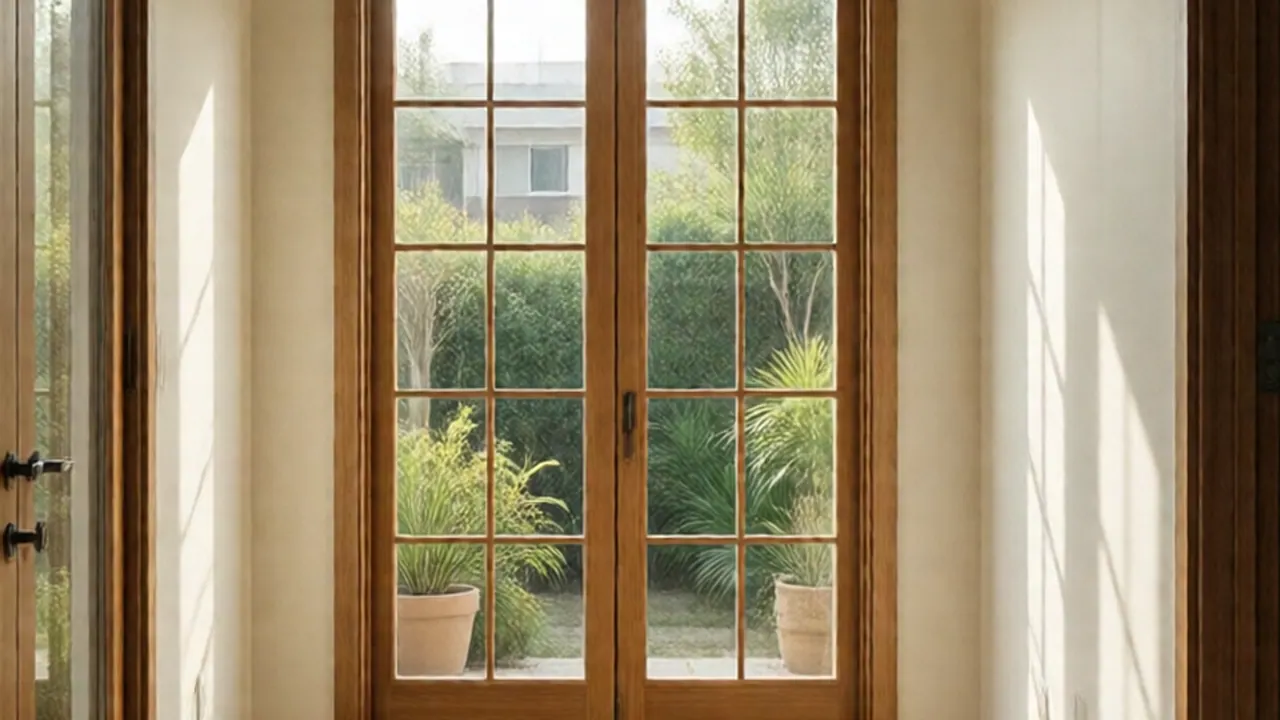
Maintaining exterior wood doors requires protecting the timber from seasonal moisture shifts and keeping the latch hardware aligned with the jamb pocket. When a solid Douglas fir or white oak door swells or shrinks, it changes how the latch bolt contacts the strike plate, which rapidly wears down the lock cylinder.
In Los Angeles, exterior locks rarely fail from age alone. Instead, they fail because the lock and the wood door work against each other under changing local conditions. Understanding how Southern California weather and home construction interact with lock hardware helps you keep deadbolts turning smoothly without forcing the key.
How LA Climate and Wood Movement Impact Locks
A deadbolt bolt needs a clean, frictionless path into the jamb strike plate. In Southern California, two distinct climate shifts disrupt this path: the coastal marine layer during late spring and the dry Santa Ana winds in the autumn.
During periods of high humidity or heavy winter rain, unsealed wood doors absorb airborne moisture and expand across their width. This swelling forces the door latch against the outer lip of the strike plate. By contrast, Santa Ana wind events drop relative humidity below fifteen percent in valleys like San Fernando and San Gabriel, shrinking wood doors by up to an eighth of an inch across a thirty-six-inch slab.
When the door moves, the deadbolt latch no longer enters the center of the strike hole. Homeowners often pull, push, or shoulder the door to get the key to turn. That lateral pressure forces the brass pins inside the cylinder against the plug walls, grinding down the cylinder springs and shearing the internal cam. Maintaining the lock starts with managing how the door hangs in its opening.
Hillside settling in neighborhoods like Silver Lake or the Hollywood Hills also torques the door rough opening. When the jack stud tilts even two degrees, the lock bolt binds against the metal strike plate, creating friction that no spray lubricant can cure on its own.
The Problem With Santa Ana Dust and Lock Cylinders
Airborne particulate across the Los Angeles basin is uniquely abrasive. Fine dust blown off the desert combines with urban particulate and settles directly into keyways. Coastal areas from Santa Monica to San Pedro add salt air to the mix, which speeds up galvanic corrosion between brass pins and steel cylinder housings.
The most common mistake homeowners make is spraying standard WD-40 or heavy grease into a sticky keyway. Wet multi-purpose oils do not dry; they leave an oily film that captures dust. Within two months, that dust slurry packs between the bottom pin chambers and the plug, preventing the small internal springs from pushing the pins back down.
To service the keyway cleanly: 1. Clear debris from the keyhole using a can of compressed air fitted with a thin straw nozzle. Hold the nozzle at an angle to blow grit out rather than driving it deeper into the cylinder. 2. Insert a dedicated dry lubricant, such as dry film PTFE (polytetrafluoroethylene) or micronized dry graphite. 3. Insert your physical brass key and run it in and out five to eight times without turning it to distribute the dry film across all five or six pin stacks. 4. Wipe the key blade clean with a lint-free microfiber cloth to remove displaced residue before testing the turn.
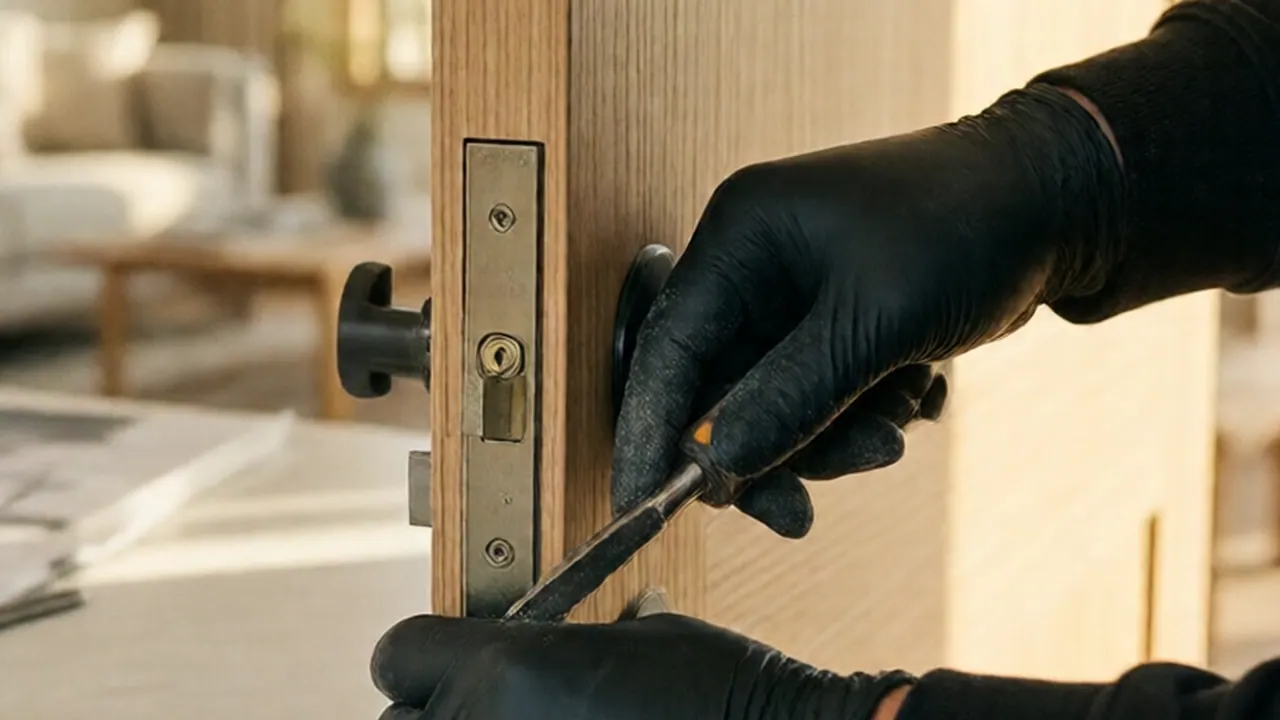
Step-by-Step Strike Plate and Hinge Service
If a key turns smoothly while the door is open but sticks when the door is shut, the issue is alignment, not the lock cylinder. Use this targeted routine to reset the hardware alignment.
- Check the hinge anchors: Open the door and check the top hinge leaf attached to the jamb. In older Los Angeles homes—especially pre-1950 homes with plaster-and-lath walls—builders often used short three-quarter-inch screws. Over decades, the heavy wood slab pulls these loose from the soft jamb pine. Back out the center screw on the jamb side of the top hinge and replace it with a three-inch #9 wood screw. Drive it straight through the jamb and the plaster gap so it bites at least an inch into the structural two-by-four framing stud. This draws the top of the door closer to the hinge jamb and raises a sagging latch.
- Mark the latch path: Apply a strip of blue painter's tape across the face of the strike plate on the jamb. Coat the tip of the deadbolt with dry-erase marker or lip balm. Close the door completely until the lower passage latch clicks, then attempt to extend the deadbolt. The marking substance transfers to the tape, showing precisely where the bolt hits the metal plate.
- Adjust the strike plate opening: If the deadbolt hits high or low by less than an eighth of an inch, remove the strike plate. Secure it in a vice or work clamp and use a flat metal hand file to widen the binding edge. Do not file the lock bolt itself; always modify the removable strike plate.
- Deepen the mortise cavity: Deadbolts must extend to their full throw—typically one full inch—to engage their internal deadlock mechanism. If the wood behind the strike plate was drilled out with a shallow spade bit, the bolt cannot fully extend, leaving the door vulnerable to forced entry. Chisel out the mortise pocket behind the strike plate to a depth of one and one-quarter inches.
- Fasten the strike plate: Secure the strike plate with two three-inch hardened steel screws into the wall studding. In stucco-exterior homes, verify the screws sink cleanly without splitting the underlying rough buck framing.
Choosing the Right Lock Lubricant
Using the wrong chemical inside an exterior lock causes permanent binding. Here is how standard lubricants perform on exterior residential locks in local conditions:
| Lubricant Type | Dust Resistance | Coastal Moisture Resistance | Recommended Use |
|---|---|---|---|
| Dry Film PTFE Spray | High (Dries within seconds to a clear, non-greasy coat) | High | Top recommendation for modern cylinders, keyways, and deadbolt tracks. |
| Powdered Graphite | High (Completely dry) | Moderate (Can cake if exposed to blowing rain) | Effective for clean, dry interior pin tumblers; use sparingly. |
| Silicone Spray | Low (Leaves light liquid residue) | Moderate | Useful for rubber weatherstripping, poor choice for keyways. |
| Standard WD-40 Multi-Use | Very Low (Attracts road dust and desert grit) | Poor (Displaces water initially, then gums up) | Do not use inside lock cylinders. Use strictly as a solvent to flush rust. |
If an older lock has already been fouled with grease or penetrating oil, spray electrical contact cleaner or brake parts cleaner into the cylinder to dissolve the residue. Let it evaporate completely for twenty minutes, then apply dry PTFE spray.
Sealing the Wood Slab to Protect the Hardware
You cannot keep an exterior lock functioning properly if the wood door around it continues to warp. When working on our locks doors service, we regularly find that sticky locks are caused by unsealed door edges rather than worn mechanical parts.
The most critical surfaces on any exterior wood door are the top and bottom horizontal rails. Painters frequently skip these edges because they cannot be seen without a mirror or without removing the door from its hinges. When moisture pools on an exterior threshold or June gloom fog condenses along the top edge, raw wood absorbs the water directly along its end-grain pores.
Inspect the bottom edge of your door using an inspection mirror. If the factory primer or clear sealant is missing or flaking, the wood will swell every winter, pushing the lock latch out of square with the frame. Sand the area with 120-grit sandpaper and apply two coats of exterior-grade spar urethane or exterior acrylic-alkyd enamel to balance moisture absorption.
Check the weatherstripping around the perimeter. Overly thick foam weatherstripping forces the homeowner to pull the door inward to turn the key. Replace collapsed or oversized rubber gaskets with high-density silicone bulb weatherstripping that compresses evenly with less than five pounds of closing force.
How STATOX Handles Lock and Door Alignment
When you request help from STATOX, we do not guess at the issue or swap out functional hardware without diagnosing the root cause. You can send a photo for a written quote showing the lock, the strike plate, and the full door frame to get clear, upfront pricing.
On arrival, our technicians take three specific diagnostic measurements before touching a tool: We check the door reveal—the uniform gap between the door edge and the wood jamb—around the entire perimeter using a feeler gauge to identify hinge drop or frame sag. We inspect the jamb backing behind the plaster or drywall to confirm whether the existing strike screws bite into framing or simply hang in plaster lath. * We test the deadbolt throw with the door open versus closed to isolate cylinder friction from strike misalignment.
Our service focuses on getting your existing door and hardware to work together smoothly, stabilizing structural mountings rather than simply spraying temporary oils.
When to Call a Pro
Basic cleaning, minor strike plate filing, and lubricating a modern tubular deadbolt are safe weekend homeowner projects. However, certain conditions require experienced trade support:
- Vintage Mortise Locks: Many 1920s Spanish Revival and Craftsman homes feature large cast-iron mortise lock cassettes recessed into the door edge. These units contain custom flat springs, levers, and hub assemblies. Opening these cassettes without training often releases internal tension springs that are difficult to reinstall.
- Severe Frame Out-of-Square: If an older home has settled and the door gap has closed to zero at the top corner, simply filing the strike plate will not solve the issue. The door slab must be taken down, planed along its hinge or lock stile, and sealed, or the frame must be re-hung.
- Stripped Hardware Mortises: If mounting screws spin freely in soft, rotted, or cracked wood at the lock block, the wood must be drilled, plugged with hardwood dowels set in polyurethane adhesive, and re-mortised to ensure structural latch holding power.
FAQ
How often should I lubricate my exterior door locks?
In the Los Angeles area, aim to lubricate your locks twice a year. Plan for maintenance once in early spring before coastal humidity peaks, and once in late autumn before the driest Santa Ana wind events blow dust into the cylinders.
Why does my deadbolt turn easily when the door is open, but sticks when it is shut?
This indicates a mechanical alignment problem between the bolt and the strike plate, not an issue inside the cylinder. The door has either sagged on worn hinge screws, swollen from humidity, or the strike plate cavity is not deep enough to let the bolt extend fully.
Can I fix a sticky lock cylinder using powdered graphite if it was already oiled?
No. Adding powdered graphite to a keyway that contains oil or WD-40 creates a thick paste that can permanently lock the pin tumblers in place. You must flush out the old oil completely using a rapid-evaporating solvent cleaner before introducing graphite or dry PTFE.
What screw size should I use for an exterior deadbolt strike plate?
Use three-inch, heat-treated steel wood screws (#8 or #9 gauge). Factory strike screws are typically three-quarters of an inch long, which only anchor into the soft wood jamb. Three-inch screws penetrate through the jamb, cross the shimming gap, and seat deeply into the structural wall framing.
Sources
- CSLB: Consumers - Hire a Contractor
- LADBS: Permits and Inspections
- California Department of Consumer Affairs
Permit work: Permit jobs get a written project estimate; permits handled as required.
STATOX Handyman Service · Send a photo · +1 (820) 200-4919
Keep reading
 locks doorsBel Air Hillside Homes: Door and Lock Upgrade GuidePlanning door lock installation in Bel Air? Learn how hillside homes, gates, and entry doors affect lock choices, fit, and security. Read before you buy.
 locks doorsBeverly Hills Older Homes: Door Hardware Repair TipsDoor hardware repair Beverly Hills homeowners can trust: fix sticking latches, loose knobs, and worn hinges in older homes. Read before you replace anything.
 locks doorsDeadbolt vs Smart Lock: Which Fits Your Home Better?Deadbolt vs smart lock: compare security, convenience, batteries, and fit for Los Angeles homes so you can pick the right lock for your front door.