Manhattan Beach Bathroom Repairs: Salt Air and Beach Homes
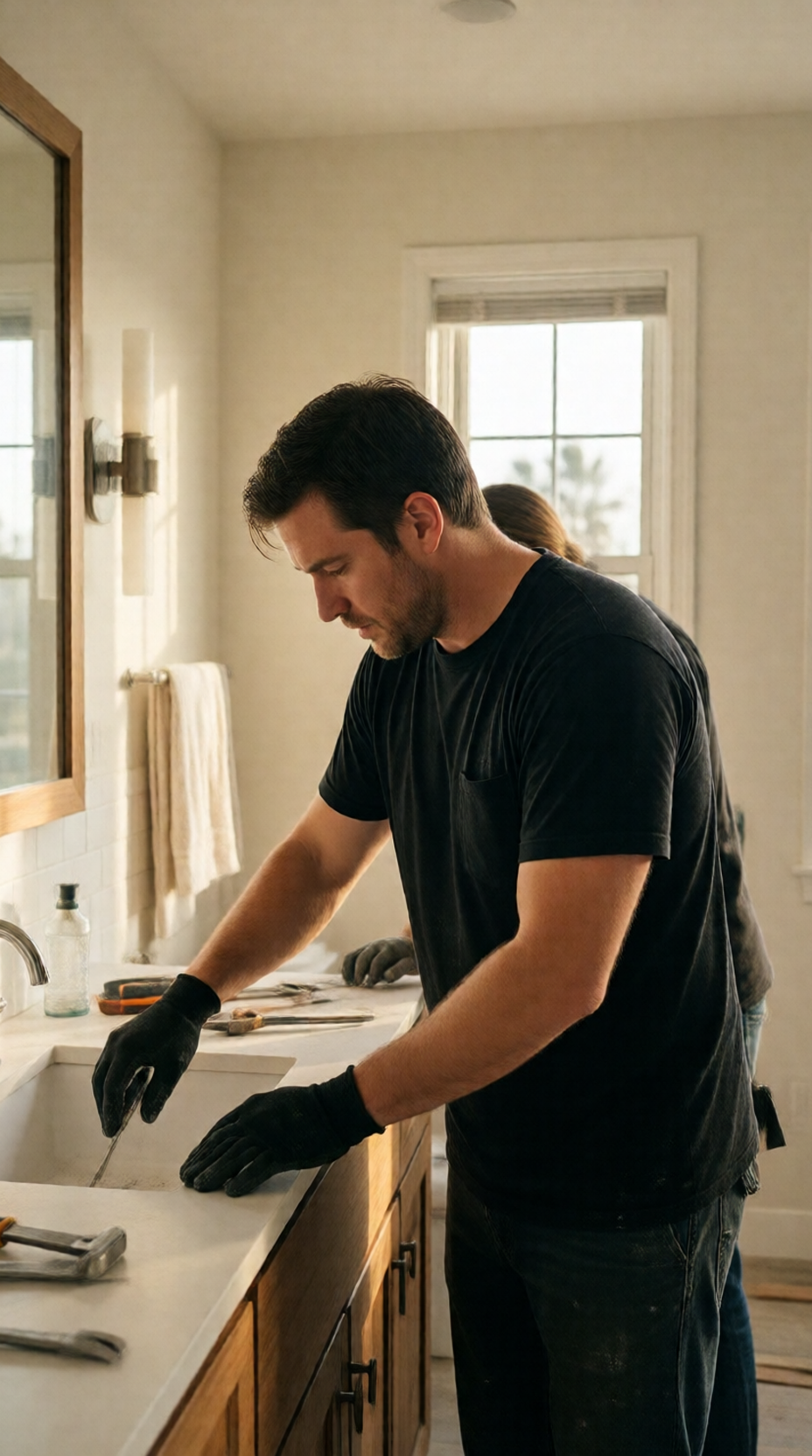
Salt air and coastal humidity speed up corrosion on metal fixtures, break down caulk and grout sooner, and make weak ventilation show up as peeling paint, musty smells, and mold. For Manhattan Beach bathroom repair, a smart plan is a mix of fixtures that handle moisture, a fan that actually moves air outside, and a short routine of inspections so small problems stay small.
How salt air and humidity affect a beach-home bathroom
Living a few blocks from the Strand means the air carries fine salt particles year-round. When they settle on a faucet, towel bar, or window hardware and mix with bathroom moisture, they create a mild salty film that attacks metal finishes.
Humidity adds a second layer. Cool marine mornings, warm showers, and closed windows can leave surfaces damp for hours. Damp surfaces are where mold, soft drywall, and failing caulk begin. The EPA's mold guidance is clear on the core idea: controlling moisture is the key to controlling mold.
Here is what homeowners near the coast typically notice first:
- Pitting, spotting, or flaking on chrome and plated finishes
- Rust streaks from screws, hinges, and cabinet hardware
- Caulk that turns dark, shrinks, or peels away
- Paint bubbling near the shower or ceiling
- Fans that are noisy, weak, or caked with dust
- Doors and vanity drawers that swell and stick
None of this means your bathroom is failing. It means a beach home asks for a little more attention than an inland one.
Fixtures and hardware: what holds up and what doesn't
Not all metal reacts the same way. Plated finishes can look great on day one, but once the thin outer layer is breached by salt and moisture, the base metal underneath corrodes. Solid materials and quality finishes generally tolerate coastal conditions better.
| Item | Coastal weak spot | What to plan for |
|---|---|---|
| Faucets and shower trim | Finish pitting, mineral and salt film | Wipe down regularly; replace worn cartridges and trim before leaks start |
| Towel bars and hooks | Rust at screws and mounting points | Choose corrosion-resistant hardware; reseal wall anchors |
| Cabinet hinges and pulls | Rust, stiffness | Swap to stainless or similarly rated hardware |
| Exhaust fan grille and housing | Dust and salt buildup, weak airflow | Clean often; replace motors that struggle |
| Window hardware | Seized latches, corrosion | Clean and lubricate; replace when stuck |
| Mirrors | Edge darkening from moisture | Seal edges and improve ventilation |
When replacing anything, look at the screws too. A stainless faucet mounted with plain steel screws will still leave rust streaks.
If you are updating fixtures anyway, EPA WaterSense-labeled faucets, showerheads, and toilets are worth a look. They use less water, which also means less moisture released into a small room. The EPA WaterSense pages explain what the label means.
Caulk, grout, and tile: the first line of defense
In a coastal bathroom, caulk and grout do the quiet work of keeping water out of the walls. When they fail, water slips behind the tile where you can't see it.
Pay special attention to:
- The joint where the tub or shower pan meets the tile
- Inside corners of the shower
- Around the faucet, valve trim, and showerhead arm
- The seam where the vanity top meets the wall
- Window sills in or near the shower
Caulk is a maintenance item, not a one-time job. Remove old, failing caulk completely, clean and dry the joint, and apply fresh sealant made for wet areas. Applying new caulk over moldy or peeling caulk traps the problem.
Grout is porous unless sealed. Cracked or crumbling grout lines should be repaired, and the Tile Council of North America (TCNA) is a respected reference for tile installation standards if you want to understand how proper assemblies are built.
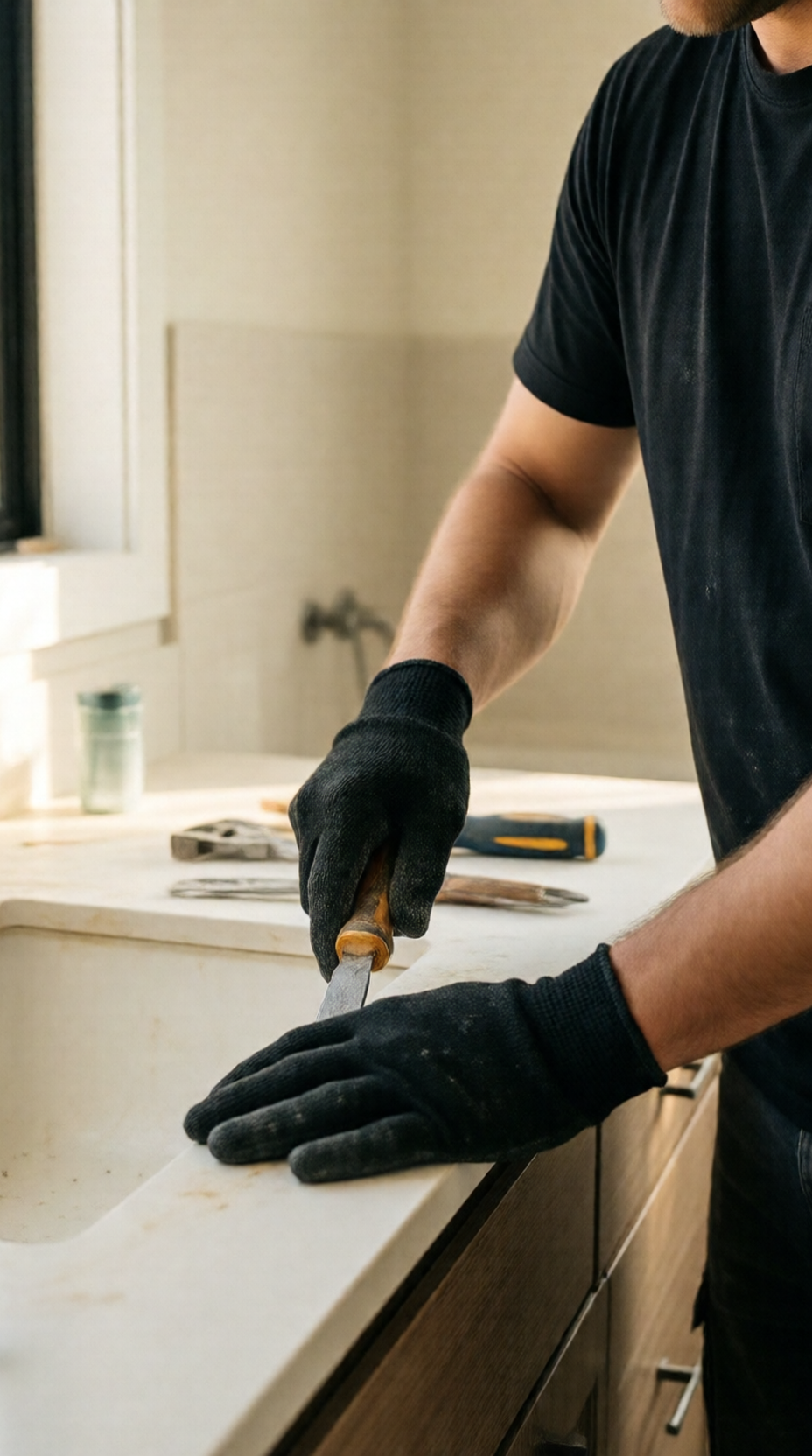
Fresh, continuous caulk at corners and the tub line keeps water out of the wall.
Ventilation: the repair that protects everything else
If you do one thing for a beach-home bathroom, make sure moist air leaves the room. A fan that only stirs air around the ceiling or vents into the attic isn't solving the problem.
Check these basics:
- Does it vent outdoors? The duct should end at an exterior vent, not in the attic space.
- Is the duct sound? Crushed, disconnected, or sagging flexible duct holds moisture and weakens airflow.
- Does it pull air? Hold a single square of toilet paper to the grille. If it doesn't stick, the fan may be clogged or underperforming.
- Is it used long enough? Run it during the shower and for a while afterward, or put it on a timer or humidity-sensing switch.
- Is it noisy? Loud fans tend to get turned off. A quieter replacement tends to get used.
Some Manhattan Beach homes are older beach cottages or remodeled duplexes with no fan at all, or one that was added without a proper duct run. A window alone isn't dependable on foggy or cool days when people keep it shut.
Spotting moisture damage early
Water damage rarely announces itself loudly. Look for small clues during a monthly walk-through.
Monthly check:
- Press gently on the wall around the tub or shower. Soft or crumbly spots are a warning.
- Look under the vanity for drips, stains, or a musty smell.
- Check the base of the toilet for movement or dampness.
- Look at the ceiling for yellowing or bubbling paint.
- Run your hand along the floor edge near the tub for spongy flooring.
- Watch for grout or caulk that stays dark after cleaning.
The EPA suggests fixing leaks and drying wet materials promptly. Its Fix a Leak Week resource is also a good reminder that even a slow drip adds moisture and wastes water. A running toilet or dripping faucet in a humid room is a double problem.
Small surface mold on caulk can often be cleaned. Mold that returns quickly, covers a larger area, or sits on soft drywall usually points to a moisture source that needs to be found and fixed.

A flashlight check under the vanity catches slow leaks before they reach the cabinet floor.
A simple upkeep routine for coastal bathrooms
You don't need a big project list. A steady routine works better.
Weekly - Wipe faucets, handles, and metal trim with a soft damp cloth, then dry. - Squeegee or wipe shower walls and glass.
Monthly - Run the checks listed above. - Clean the fan grille. - Look at caulk lines and note any gaps.
Twice a year - Tighten loose handles, towel bars, and toilet seat bolts. - Lubricate window and cabinet hardware. - Test shutoff valves under sinks and the toilet by turning them gently, so they don't seize. - Inspect the exterior fan vent for blockage.
As needed - Re-caulk worn joints. - Replace corroded hardware. - Repair grout. - Repaint with a moisture-resistant bathroom paint after fixing the cause of any peeling.
Our bathroom service covers many of these small repairs, and we work with homeowners across Manhattan Beach.
When to call a pro
Plenty of coastal bathroom upkeep is reasonable DIY: wiping fixtures, cleaning a fan, replacing a showerhead, or re-caulking a tub line with patience and the right sealant.
Call a professional when:
- Drywall or subfloor feels soft, which suggests longer-term water exposure
- Tile is loose, hollow-sounding, or cracking in a pattern
- A leak's source isn't obvious, or a ceiling below is stained
- The fan needs a new duct run or exterior vent cut through a wall or roof
- Valves are seized or corroded so badly that turning them risks a leak
- Electrical work is involved, such as a new fan circuit or fixture wiring
- Mold keeps returning after cleaning
Some work may require a permit, and larger plumbing, electrical, or structural changes can fall under local rules. The Los Angeles Department of Building and Safety's permit page is a good starting point, and the California Contractors State License Board offers advice on hiring a contractor and what to ask before work begins. Be cautious about any job that grows beyond what a handyman should handle; a trustworthy pro will tell you when it does.
If you aren't sure what you're looking at, you can send a photo for a written quote and we'll help sort out what's a quick repair and what needs a closer look.
FAQ
Does salt air really damage bathroom fixtures?
Yes, over time. Salt particles combine with moisture and can pit finishes and rust hardware, especially plated items and basic steel screws. Regular wiping and corrosion-resistant hardware slow this down.
How often should I re-caulk a beach-home bathroom?
There's no fixed schedule. Check caulk monthly and replace it when it cracks, shrinks, peels, or stays discolored after cleaning. Coastal humidity can shorten its life compared with drier conditions.
Is an exhaust fan enough, or do I need a window too?
A properly sized fan that vents outdoors is the more dependable choice because you can use it in any weather. A window helps, but on cool, damp days it's often closed.
Can I just paint over mold stains?
Not as a fix. Paint can hide the stain, but if moisture remains, the problem tends to return. Clean small areas, dry them, correct the moisture source, then repaint. The EPA's mold resources explain the basics of moisture control.
Should I upgrade to water-saving fixtures?
It can make sense when you're replacing worn items anyway. WaterSense-labeled faucets, showerheads, and toilets are designed to use less water without sacrificing performance, and less water use can mean a bit less humidity in the room.
Sources
- EPA: A Brief Guide to Mold, Moisture, and Your Home
- EPA WaterSense: Fix a Leak Week
- Los Angeles Department of Building and Safety: Permits and Inspections
- CSLB: Hire a Contractor
Safety note: work on electrical panels, gas, structure or anything that needs a permit should be done by a licensed contractor with the required permits.
STATOX Handyman Service · Send a photo · +1 (820) 200-4919
Keep reading
 bathroomBathroom Repair Prep Checklist Before the Handyman VisitUse this bathroom repair prep checklist to clear the space, gather photos, and find your shutoffs so your handyman visit goes smoothly. Read before you book.
 bathroomBathroom Tile vs Vinyl vs Acrylic Surrounds: ComparedBathroom tile vs vinyl vs acrylic: how each surround handles water, cleaning, and repairs in Los Angeles homes. Read before you choose your material.
 bathroomBel Air Bathroom Repairs in Hillside and Older HomesPlanning bathroom repair Bel Air homes need? Learn what hillside and older houses hide behind tile and drywall, and what to check first before it gets costly.