Move-In Checklist: Rekey and Check Locks in Los Angeles

If you are moving into a home in Los Angeles, rekey the exterior locks before you settle in. You cannot know how many keys the previous owner, tenants, agents, or contractors still hold. Rekeying changes the inside of the lock so old keys stop working, and a full lock check at the same time catches worn latches, loose strikes, and doors that do not close right.
This guide walks you through what to check, what to rekey, what to replace, and when to call someone.
Why rekey locks when you move into a new home
Keys get copied. Over the life of a house, they pass through sellers, renters, real estate visits, cleaners, painters, neighbors, and family. Even with honest people, you have no record of who has one.
Rekeying fixes that. A locksmith or handyman adjusts the pins inside the lock cylinder so it works with a new key. The hardware stays the same, but old keys no longer turn it.
Doing it on move-in has a practical bonus. All your exterior doors can be keyed alike, so you carry one key for the front door, back door, and side gate instead of a ring of mystery keys.
Walk the home and list every lock
Before you call anyone, spend fifteen minutes walking the property with a notepad or your phone. Many Los Angeles homes have more entry points than you first notice: a front door, a back slider, a garage side door, a laundry room door, a gate, a mailbox, and sometimes a detached unit or storage room.
Use this checklist:
- Front door deadbolt and handle set
- Back door or kitchen door lock
- Sliding glass door latch and any secondary bar or pin
- Garage entry door between garage and house
- Garage side door
- Side yard or pedestrian gate lock
- Window latches on the ground floor
- Mailbox lock
- Storage room, shed, or detached garage locks
- Any smart lock or keypad (reset codes and accounts)
Mark each one as working, sticky, loose, or missing. That list becomes your plan and makes any quote easier to compare.
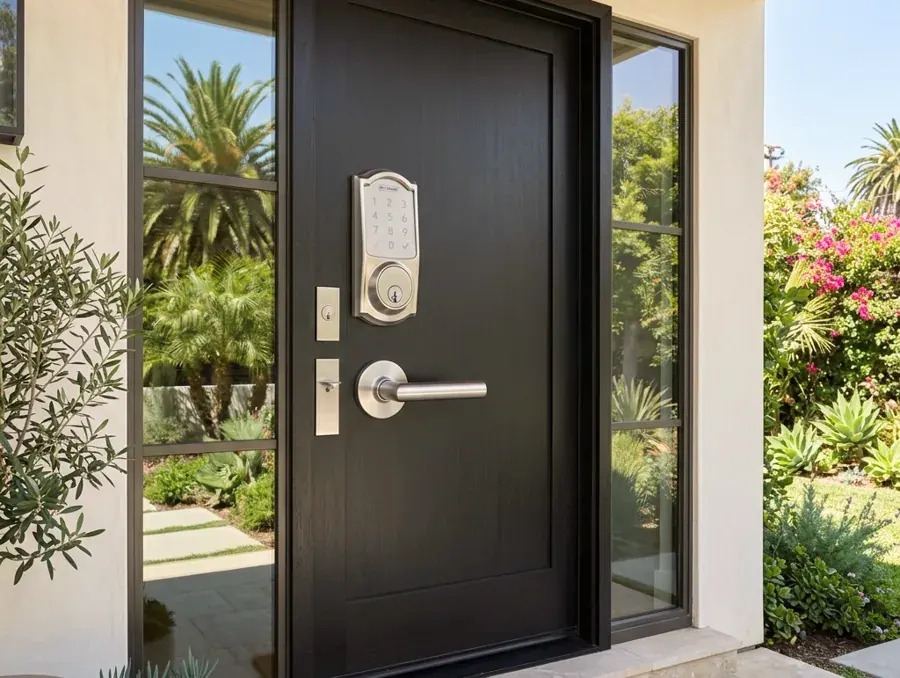
A quick walkthrough on day one shows which locks need rekeying and which need repair.
Rekey or replace: which makes sense?
Not every lock needs to be swapped. Rekeying works well when the hardware is in good shape. Replacement makes more sense when parts are worn, damaged, or outdated.
| Situation | Rekey | Replace |
|---|---|---|
| Lock works smoothly, looks solid | Good fit | Not needed |
| Key sticks or turns hard | Maybe, after inspection | Often better |
| Deadbolt does not fully extend | Not the fix | Adjust door or replace |
| Finish is worn or loose on the door | Possible | Good time to upgrade |
| You want matching keys on all doors | Good fit | Also works |
| You want keypad or smart lock | Not applicable | Required |
| Builder-grade lock of unknown condition | Possible | Worth considering |
A simple rule: rekey for security, replace for condition or features. If a lock is hard to operate now, a new key will not make it better.
Check how the door actually closes and locks
A good lock on a bad door is not much protection. Test each exterior door before you trust it.
- Close the door slowly. The latch should line up with the strike plate without lifting or pushing.
- Throw the deadbolt. It should extend fully with no rubbing. If you have to lean on the door, it is misaligned.
- Look at the strike plate. Screws should be tight, and the plate should sit flush in the frame.
- Check screw length. Short screws in the strike plate and hinges are common. Longer screws that reach the framing add real strength.
- Look for gaps. Light around the edges or a loose door suggests weatherstripping or hinge problems.
- Wiggle the handle and deadbolt. Movement means loose mounting screws.
- Test the key from outside and the thumb turn from inside.
Los Angeles homes often have older doors that shift with seasonal humidity and settling. A small adjustment to hinges or a strike plate can fix many fit problems without replacing anything.

Tight hardware and a well-aligned strike plate matter as much as the lock itself.
Sliding doors, windows, and gates
Thieves rarely pick a lock. They look for the weakest spot, and that is often a sliding door or a window.
Sliding glass doors: Check that the factory latch catches firmly. Make sure the door cannot be lifted out of its track from outside. A dowel or bar in the track adds a simple second layer. Clean and inspect the track so the door glides and fully latches.
Windows: Test every latch on ground-floor and easy-to-reach windows. Replace broken or loose latches. Make sure windows close tightly and lock with no gaps.
Gates and garage side doors: A side gate that does not latch is an open invitation. Check the latch, hinges, and any padlock hasp. Make sure the garage-to-house door has a working deadbolt, since many people leave the garage less secure than the main entry.
Fire safety matters too. Bedrooms and main exits should open easily from the inside without a key. Be cautious with any lock that needs a key to leave the house.
Smart locks, codes, and digital cleanup
If the home has a keypad or smart lock, treat it like any shared account. Reset the master code, delete unknown user codes, and change the Wi-Fi or app login tied to it. Ask the seller or property manager whether any hub or account needs to be transferred.
Also check garage door openers and gate remotes. Reprogram the opener codes if you can, and collect every remote and keypad you find. Old remotes are another set of keys you cannot see.
When to call a pro
Many move-in tasks are fine for a careful homeowner: tightening screws, replacing a strike plate, swapping a simple knob, or testing windows.
Call a professional when:
- You want multiple locks rekeyed to one key
- A deadbolt sticks, spins, or will not retract
- A door is warped, rubbing, or will not latch
- The door frame is cracked or split around the strike
- You are installing a smart lock and want clean alignment
- You are not sure which hardware you have
Rekeying involves small parts and the right tools. A mistake can leave you locked out or with a lock that fails later. If the work involves structural framing or a security door, it is worth getting an expert to look at it.
You can read about our locks doors service for what we handle. If you want a clearer idea before booking, you can send a photo for a written quote of the lock or door in question.
For any larger repair, it is wise to check how to hire a contractor through the state's consumer resources listed below.
FAQ
Should I rekey or just change the locks?
Rekey if the locks are in good condition and you mainly want to cancel old keys. Replace them if they are worn, damaged, or you want a different style or smart features.
Can all my doors use the same key?
Often yes. Locks from the same brand and keyway can usually be keyed alike. Mixed brands can sometimes still be matched, but it depends on the hardware.
How soon after moving in should I rekey?
Do it as early as you can, ideally before the first night or in the first few days. Until then, you do not know who else holds a key.
Does rekeying fix a sticky lock?
Not always. Rekeying changes the pins, but a sticky lock may be worn, dirty, or tied to a misaligned door. An inspection will show which.
Do renters need to rekey too?
Check your lease first. Many landlords handle rekeying between tenants, and you may need written permission before changing hardware. Ask your landlord about it in writing.
Sources
- California Contractors State License Board: Hire a Contractor
- California Contractors State License Board: Consumers
- California Department of Consumer Affairs
Safety note: work on electrical panels, gas, structure or anything that needs a permit should be done by a licensed contractor with the required permits.
STATOX Handyman Service · Send a photo · +1 (820) 200-4919
Keep reading
 locks doorsBel Air Hillside Homes: Door and Lock Upgrade GuidePlanning door lock installation in Bel Air? Learn how hillside homes, gates, and entry doors affect lock choices, fit, and security. Read before you buy.
 locks doorsDeadbolt vs Smart Lock: Which Fits Your Home Better?Deadbolt vs smart lock: compare security, convenience, batteries, and fit for Los Angeles homes so you can pick the right lock for your front door.
 locks doorsDIY or Handyman for Door Lock and Hinge Repair?Wondering if handyman door lock repair is worth it or if you can fix it yourself? Learn which jobs are DIY-friendly and which to hand off. Read before you drill.