Solid Wood vs Particleboard vs MDF: Assembly Differences
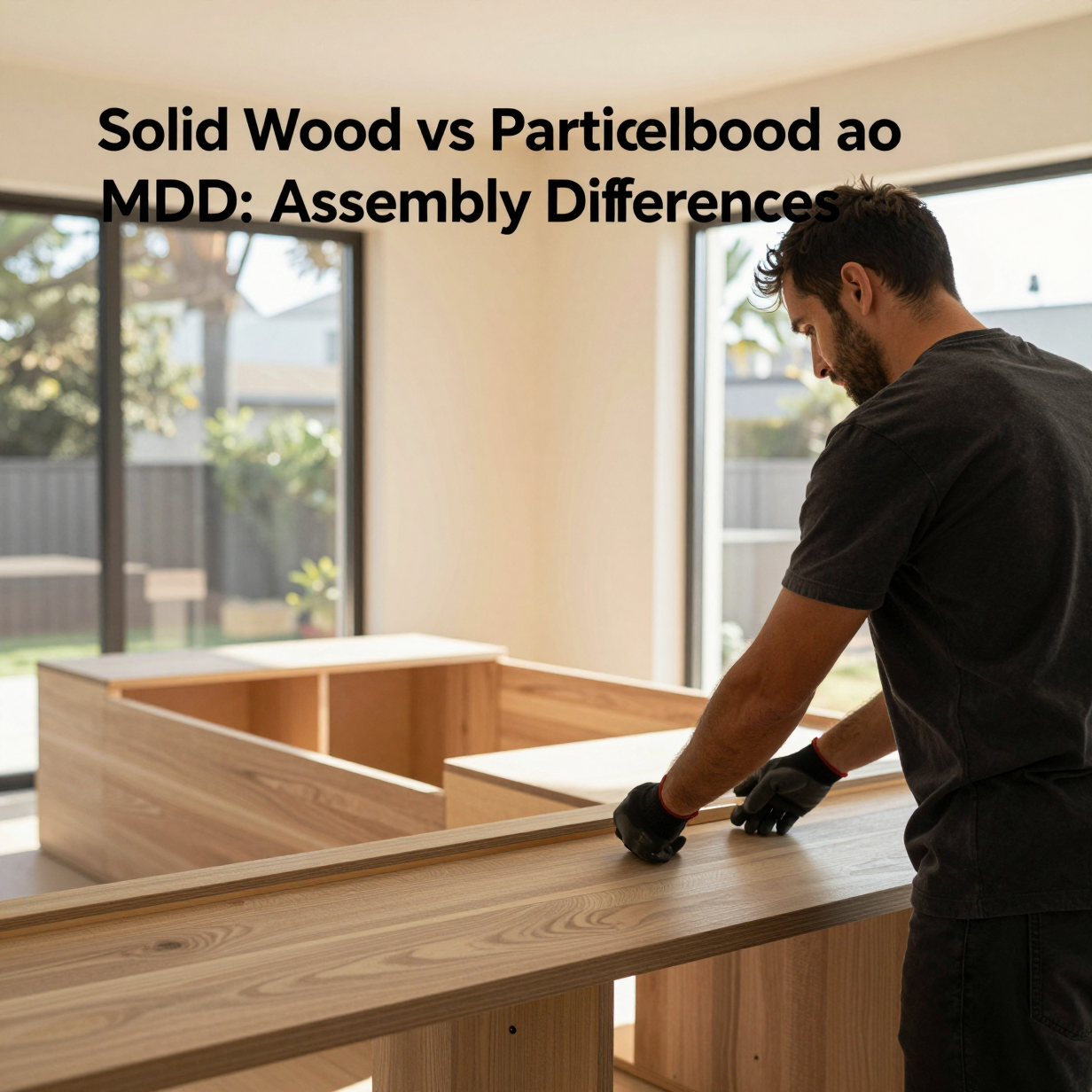
When you compare solid wood vs particleboard vs MDF furniture, the biggest assembly difference is how each material holds a screw. Solid wood grips threads well and tolerates a repair. Particleboard and MDF are engineered panels that rely on cam locks, dowels, and cam bolts, and they can crumble if you overtighten or reassemble too many times. Knowing which one you have tells you how much force, which fasteners, and what patience the job needs.
What Each Material Actually Is
Solid wood is cut lumber: oak, pine, walnut, maple, and so on. It has grain, which means it is strong along its length and more likely to split across it.
Particleboard is made of wood chips and particles pressed together with resin, usually wrapped in a laminate or veneer. It is common in flat-pack bookcases, dressers, and desks.
MDF (medium-density fiberboard) is made of finer wood fibers pressed with resin into a smooth, dense panel. It takes paint well and is often used for cabinet doors, shelves, and trim-style details.
Many pieces mix materials. A dresser might have a solid wood frame, MDF drawer fronts, and a thin particleboard back panel. Check the product label or manual before you start.
How They Compare at the Workbench
| Factor | Solid wood | Particleboard | MDF |
|---|---|---|---|
| Screw holding | Strong, especially into side grain | Fair; weak at edges | Fair; weak at edges, holds better in the face than the edge |
| Overtightening risk | Can split along grain | Threads strip, core crumbles | Threads strip, edges can bulge |
| Pre-drilling | Usually needed for screws near ends | Often built in; follow the pilot holes | Often needed to prevent splitting at edges |
| Repeat assembly | Handles it well | Poorly; holes widen | Poorly; holes widen |
| Weight | Heavy | Moderate to heavy | Heavy for its size |
| Moisture | Moves with humidity; may swell or shrink | Swells and breaks down if wet | Swells at edges if wet |
| Typical hardware | Screws, bolts, mortise and tenon, dowels | Cam locks, cam bolts, dowels, small screws | Cam locks, dowels, screws, sometimes brackets |
Think of it this way: solid wood forgives a little. The engineered boards do not, because once a hole is stripped, there is no good grain left to bite into.
Assembly Differences You Will Notice
Solid wood pieces
Solid wood furniture usually ships with fewer, larger fasteners. Expect bed rails with bolts, table legs with hanger bolts, and tight-fitting joinery. The parts are heavy, so a second person matters for lifting and alignment.
Wood moves with the seasons, so leave bolts snug rather than cranked to the limit until the piece is fully assembled. Then do a final tightening in sequence.
Particleboard pieces
Particleboard assembly is about sequence and restraint. Cam locks should turn until they firm up, not until they spin freely or crack the surface. Dowels need to seat fully before you pull the panels together.
Edges are the weak point. A screw placed too close to a corner can blow out the core. If a hole strips, stop and fix it rather than forcing it.
MDF pieces
MDF is dense and smooth, which makes panels slippery and heavy. Fasteners can push through the face or split the edge if they go in at an angle. Pilot holes help, and so does a slow driver speed.
MDF dust is fine and irritating, so if you must trim or drill, do it with ventilation and a mask. The U.S. EPA notes that some building and furnishing materials can release volatile organic compounds, so letting new pieces air out in a ventilated room is a sensible habit.
Tools and Fasteners That Fit the Material

Flat-pack panels go together smoothly with the right bit, a steady hand, and dowels fully seated.
A short tool list covers most jobs:
- A hand screwdriver for final tightening of cam bolts and small screws
- A drill or driver with a clutch, set low for engineered boards
- A rubber mallet for dowels, never a steel hammer on a laminate edge
- A level and a tape measure for squaring the piece
- Wood glue for dowels in solid wood, and sometimes for reinforcing flat-pack joints you will not take apart again
- Clamps for holding panels while glue sets
Match the approach to the material:
- Solid wood: pre-drill, drive straight, and use washers where bolts bear on the wood.
- Particleboard: use the supplied hardware, hand-tighten final turns, and avoid power-driving cam bolts.
- MDF: pre-drill near edges, keep screws square, and avoid reusing stripped holes.
A Step-by-Step Order That Works for Any Material
- Identify the material. Check the manual, edges, and back panel. Laminate over a crumbly core usually means particleboard or MDF.
- Lay out the parts and hardware. Count every piece against the parts list before you start.
- Protect the floor and the finish. Use the box flattened or a blanket underneath.
- Dry-fit key joints. Make sure the holes line up before adding glue or tightening.
- Start with the frame. Keep fasteners snug but not final until the frame is square.
- Check square. Measure diagonals; they should match.
- Add the back panel last. It helps hold the piece square, but nailing it crooked locks in the error.
- Do a final tightening pass. Go around the piece once more after it stands upright.
Safety, Stability, and Los Angeles Realities
Tall pieces like bookcases and dressers should be secured to the wall. In earthquake country, that is more than a nicety. Earthquake Country Alliance and Ready.gov both encourage securing furniture to reduce hazards in a quake.
Wall anchoring depends on what is behind the wall. Studs are the strongest choice. Drywall alone will not hold a heavy loaded piece. Engineered-board furniture also has weaker screw-holding in its own back panels, so use anchor points on the sturdier frame parts where the manufacturer allows.

Anchoring a tall piece to a wall stud is a routine step, especially in earthquake country.
Apartment living adds another factor. Many Los Angeles units have plaster-over-lath or concrete walls that need different anchors than standard drywall. If you rent, check what your lease allows before drilling.
Also consider moisture. Coastal and basement-level homes can be damp, and particleboard and MDF dislike humidity. Keep these pieces off bare damp floors and away from leaks.
Quick Checklist Before You Tighten Anything
- Parts counted and matched to the manual
- Material type identified for each major panel
- Pilot holes present or drilled where needed
- Cam locks facing the correct direction
- Dowels fully seated, no gaps at joints
- Diagonals measured and equal
- Level surface and weight evenly supported
- Anchor plan ready for tall or top-heavy pieces
When to Call a Pro
Plenty of flat-pack pieces are fine for a careful DIYer with some patience and a helper. Call for help when:
- The piece is large, heavy, or tall (wardrobes, bunk beds, wall units)
- Parts are solid wood and costly to replace if split
- You have already stripped holes or cracked panels
- The piece needs wall anchoring into studs or masonry
- Instructions are missing, unclear, or the parts do not match
A pro brings the right tools, experience with each material, and a second set of hands. Our furniture assembly service covers all three materials. If you want to know what your piece involves first, you can send a photo for a written quote.
For any hired help, the California Contractors State License Board offers consumer guidance on how to hire a contractor, and it is worth a read before you agree to any larger home project.
FAQ
Is solid wood furniture harder to assemble than particleboard?
Usually it is heavier and needs more careful alignment, but the material itself is more forgiving. Fasteners hold better and parts can often be adjusted or repaired.
Can I reassemble particleboard or MDF furniture after moving?
You can, but each cycle wears the holes. Move it in as few pieces as practical, and expect looser joints over time. Wood glue and larger dowels can help in some cases, but not all.
Why did my screw spin and stop gripping?
The hole stripped. In particleboard and MDF, the core is made of compressed particles or fibers, so threads can wear away. Stop driving, and use a repair method or a larger fastener rather than forcing it.
Do I need to pre-drill?
For solid wood, usually yes near ends and edges. For particleboard and MDF, follow the pre-drilled holes and add pilot holes near edges when you are adding your own screws.
Should I let new furniture air out?
It is a good habit. The EPA notes that some materials can release VOCs indoors, and ventilating a room helps while new items settle in.
Sources
- U.S. EPA: Volatile Organic Compounds' Impact on Indoor Air Quality
- Earthquake Country Alliance: Step 1, Secure Your Space
- Ready.gov: Earthquakes
- CSLB: Hire a Contractor
STATOX Handyman Service · Send a photo · +1 (820) 200-4919
Keep reading
 furniture assemblyDIY vs Hiring a Pro for Furniture Assembly: What to WeighWondering whether to hire someone to assemble furniture or do it yourself? Compare time, tools, risk, and safety before you open the box.
 furniture assemblyFlat-Pack Furniture Problems and How to Fix ThemNeed a wobbly flat pack furniture fix? Learn why assembled pieces rock, sag, or gap, and what to check first. Worth a read before you take it apart.
 furniture assemblyFurniture Assembly Prep Checklist Before Your Handyman VisitUse this furniture assembly checklist to get your space, boxes, and walls ready before your handyman arrives. A few minutes of prep makes the visit smoother.