How High to Mount a TV: Height and Viewing Distance Guide
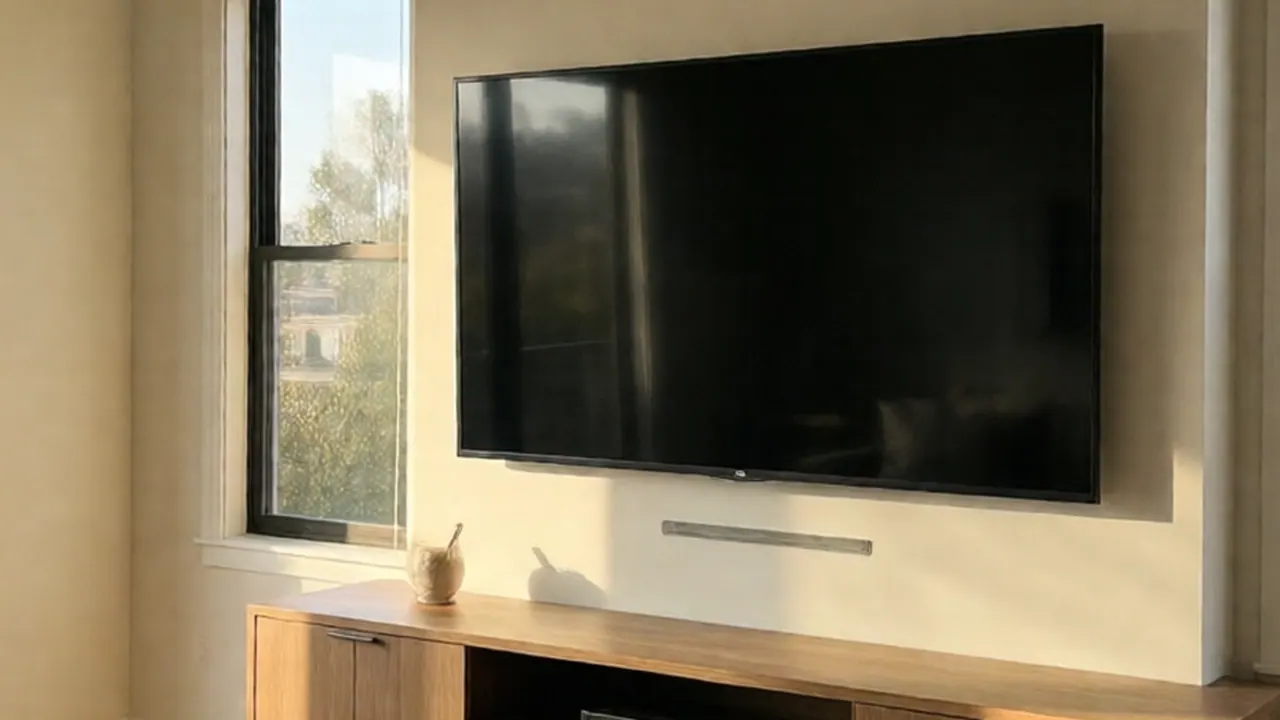
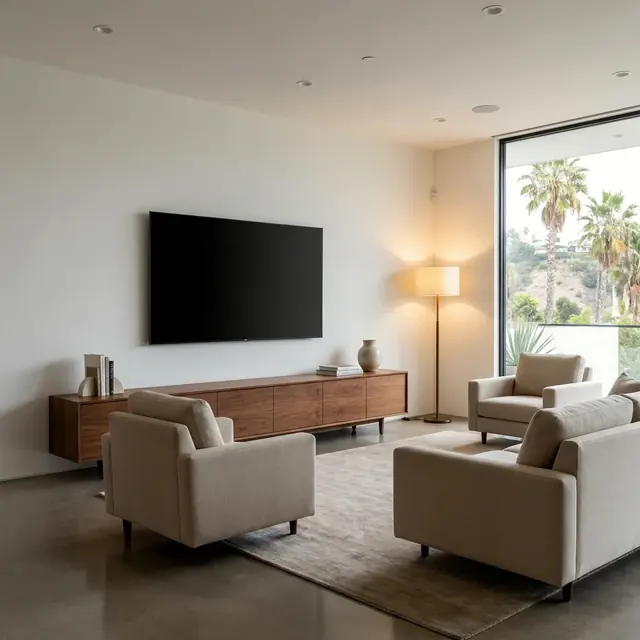
A "high mount TV stand" usually means a wall bracket, because a stand sits on furniture and a high mount hangs on the wall. For most rooms, the center of the screen should land at your seated eye level, about 40 to 44 inches off the floor. Go higher only when you have to (a fireplace, a bar area) and add a tilt to make up for it.
Where the Center of the Screen Goes
Most people measure from the floor to the top of the TV. Measure to the middle of the screen instead, because that is the part your eyes rest on.
Here is how we set the mark before drilling:
- Sit where you actually watch, in your normal posture, not a stiff upright one.
- Have someone put a strip of painter's tape on the wall at your eye level.
- Measure from the floor to that tape. This is your screen center.
- Add half the screen height to find the top edge. A 55-inch TV is about 27 inches tall, a 65-inch about 32, and a 75-inch about 37.
- Check the top edge against your ceiling, any crown molding, and any art or sconces beside it.
One detail most guides skip: the bracket holes are not at the center of the TV. Measure from the top of your TV to the top row of VESA holes on the back (common patterns are 200x200 and 400x400 mm). Then measure from the top of the bracket plate to its holes. Those two numbers decide where the wall plate goes. Skipping this is why TVs end up 3 inches too high or low.
Viewing Distance by Screen Size
A common rule of thumb is to sit 1.5 to 2.5 times the screen's diagonal away. 4K sets look sharp up close, so most people land on the shorter end.
| TV size | Roughly comfortable distance |
|---|---|
| 43 in | 5½ to 9 ft |
| 55 in | 7 to 11 ft |
| 65 in | 8 to 13 ft |
| 75 in | 9½ to 15 ft |
Many LA living rooms, especially in apartments and bungalows, have a sofa 8 to 10 feet from the TV wall. That makes a 55 or 65-inch screen the sweet spot. A 75-inch in a small room makes you scan the picture instead of watching it.
Test it before you buy or hang: cut a cardboard or paper template to the screen's width and height, tape it to the wall, and sit on the sofa for an evening.
High Mount TV Brackets and Fireplaces
The reason people search "high mount TV" is almost always a fireplace. Hanging a TV above the mantel puts the center at 60 to 72 inches, well above eye level. Forum threads about this keep repeating the same complaint: neck strain after a month, and a washed-out picture because LCD and LED panels lose contrast when viewed from steep angles.
If the TV has to go high:
- Use a tilt bracket, or a pull-down mount that lowers the TV to eye level. A downward tilt of about 10 to 15 degrees is typical. Aim the screen at the seat, not the floor.
- Keep the vertical viewing angle gentle. If you have to tip your head back noticeably, the TV is too high.
- Check the heat. Hold your hand on the wall above the firebox while the fireplace runs. If it is uncomfortably warm, the electronics will not like it either. Gas fireplaces vent heat upward. Check your TV maker's temperature rating and mantel depth, because a deep mantel can push hot air straight at the screen.
- Know what's behind the wall. Older LA fireplaces are often solid brick or river rock. Newer ones are framed with drywall or tile over studs. Brick takes masonry anchors, drilled into the brick body rather than the mortar joint. Framed walls take lag bolts into studs. Each needs a different bit and a different bracket plan.
- Plan the power. Fireplaces rarely have an outlet at TV height. A recessed in-wall outlet and cable pass-through kit is the clean way to do it. Don't run a standard power cord inside the wall.
Bedrooms, Bars and Other Spots
Your eyes sit lower in a bed than on a sofa, and the angle changes with pillows and whether you recline. Bedrooms also tend to have the TV on a dresser wall opposite the bed at 7 to 10 feet.
| Room | Center of screen (from floor) | Mount type that helps |
|---|---|---|
| Living room, sofa | About 40 to 44 in | Fixed or low-profile tilt |
| Bedroom, watching from bed | About 50 to 58 in | Tilt or full-motion |
| Above a fireplace | About 60 to 72 in | Tilt or pull-down |
These are starting points. Sit in the spot, tape the outline, and adjust. A full-motion arm is worth considering in a bedroom or corner, since you can angle the screen toward the bed and swing it flat when you're done.
What Your LA Wall Will Actually Hold
Height is the easy part. The wall decides how the bracket attaches.
Drywall over wood studs (most homes built after the 1950s). Studs are usually 16 inches apart on center and 1½ inches wide, so there is not much target. Use at least two studs per plate. Common hardware is 5/16-inch lag bolts, with a 3/16-inch pilot hole, and the thread should bite about 1½ inches into the stud. Drywall anchors alone are not a plan for a heavy screen.
Plaster and lath (many pre-1950 homes in Highland Park, Silver Lake, Mid-City and the Westside). Plaster can be ¾ inch thick over wood strips, so a magnetic stud finder tends to find lath nails instead of studs, and the electronic ones read the uneven plaster as a stud. Drill a small pilot hole to confirm. Use a slow speed to avoid cracking plaster, and don't rely on toggle bolts in lath because the plaster keys can break away.
Stucco (exterior walls, patios, covered porches). Stucco sits over wire mesh and framing, so mount to the framing and seal each hole with exterior polyurethane sealant. Unsealed holes let water into the wall.
Concrete and block (condos, garages, some hillside retaining walls). Use masonry sleeve anchors or concrete screws, a hammer-drill, and a vacuum while drilling. Hillside homes may have walls slightly out of plumb from settling, so check the plate with a level instead of trusting the wall.
Earthquakes and dust. California is earthquake country, so seat the TV fully on the bracket and use the locking screw or safety strap the mount provides. Earthquake Country Alliance has guidance on securing items at home. Santa Ana dust also settles on vents, so leave room behind the TV for airflow and wipe the back vents when you clean.
When to Call a Pro
A 32 to 43-inch TV on a fixed bracket, into studs you've found with a pilot hole, is a reasonable DIY job with two people.
Call someone when:
- The TV is 65 inches or larger. Many weigh 50 to 100 pounds, and lifting one onto a plate at head height is a two-person job.
- The wall is plaster and lath, brick, stucco, or concrete.
- The TV goes above a fireplace, where heat and wall construction both matter.
- You want a hidden power outlet or in-wall cables.
- The mount sits above shoulder height. Ladder safety matters here, and OSHA's ladder guidance is worth a read.
At STATOX, we start with a photo of the wall, the TV model and where you sit. We use that to give you one written price. On arrival we check the wall type, find the studs, confirm the seating height and the cable path, and then drill. If you want to see what that looks like, read about our tv mounting service or send a photo for a written quote.
FAQ
How high should I mount a TV in a living room?
Center of the screen at seated eye level, usually 40 to 44 inches from the floor. Tape the outline on the wall and sit in each seat before you drill.
Is a high mount TV stand different from a high mount TV bracket?
Yes. A stand sits on furniture and a bracket attaches to the wall. If you want the TV higher than a stand allows, you want a wall bracket, preferably with tilt.
Is it OK to mount a TV above a fireplace?
It can be done. Use a tilt or pull-down mount, check the heat above the firebox, confirm what's behind the wall, and plan for a recessed outlet.
Should the TV be tilted down?
If the center sits above eye level, yes. A downward tilt of roughly 10 to 15 degrees is common, and it also cuts glare from windows.
How far should I sit from a 65-inch TV?
About 8 to 13 feet, with 8 to 10 feet working well for 4K sets in most LA living rooms.
Sources
- Earthquake Country Alliance: Step 1, secure your space
- OSHA: Ladder safety
- California Contractors State License Board: Hire a contractor
STATOX Handyman Service · Send a photo · +1 (820) 200-4919
Keep reading
 tv mountingEarthquake Prep for TVs in Los Angeles Homes and CondosLearn earthquake safe tv mounting in Los Angeles: wall mounts, stand straps, and condo tips to keep your screen secure. Read before the next shake.
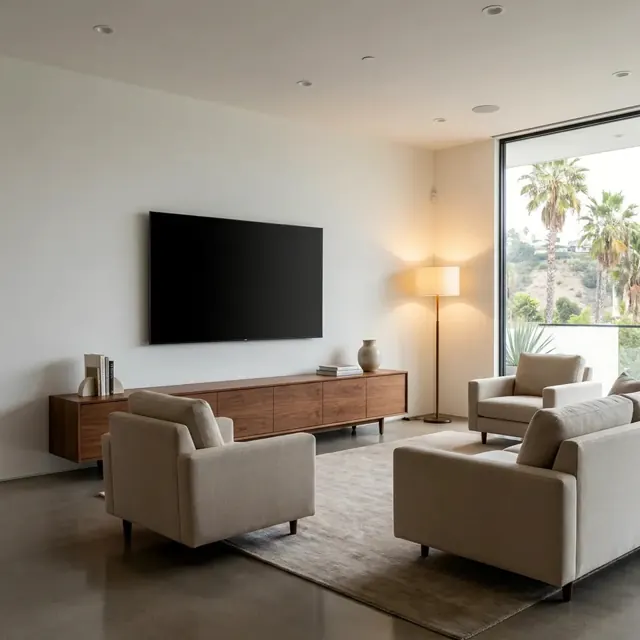 tv mountingHow to Choose a TV Wall Mount: Fixed, Tilt or Full-MotionLearn how to choose a TV wall mount by comparing fixed, tilt and full-motion types for your room, wall and TV, so you pick the right one the first time.
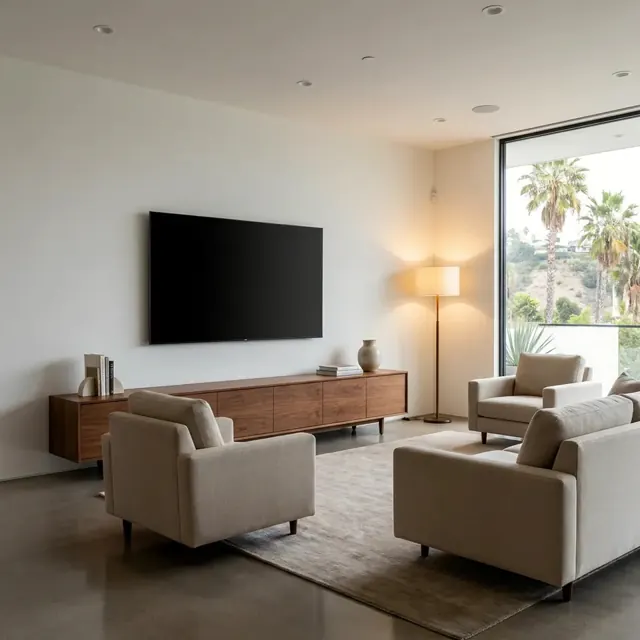 tv mountingTV Mount Problems and Fixes: Wobble, Sag and Crooked ScreensNeed a tv wall mount wobbly fix? Learn why mounts wobble, sag or hang crooked, what to check first, and which repairs are safe to try yourself.