TV Mounting in San Marino Homes: Hiding Wires in Older Walls
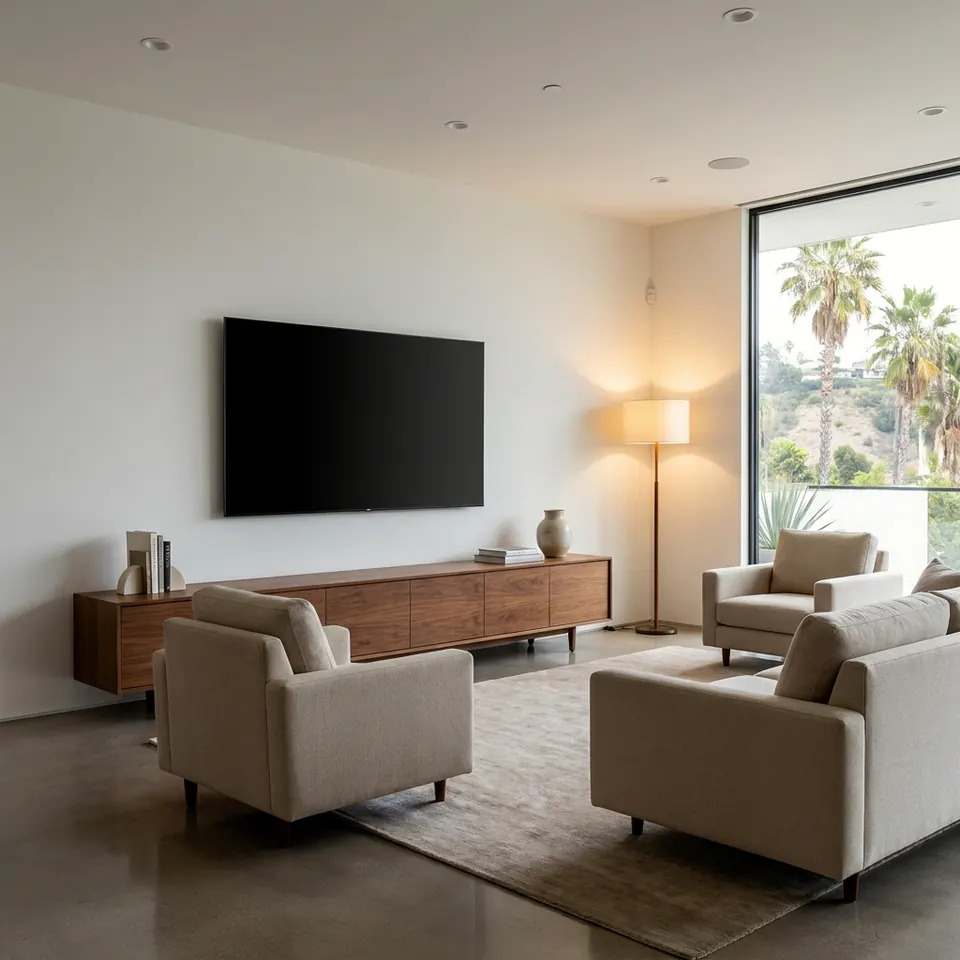
If you want a clean TV mount in an older San Marino home, the short answer is this: find out what your wall is made of first, then choose a wire-hiding method that fits it. Plaster, brick, and older framing each need different tools and a different plan. Done well, the TV sits flat, the cords disappear, and the wall stays sound.
This guide walks through what makes older walls different, your options for hiding wires, and how to decide between DIY and calling a pro. If you're looking for general help, our tv mounting service page covers the basics. Here, we focus on the quirks of homes in San Marino.
Why older San Marino walls need a different approach
Many San Marino homes have character: traditional layouts, thick plaster, solid trim, and framing that was built long before flat-screen TVs. Those details are part of the charm, and they change how a mount job should go.
Here is what we commonly see in older homes:
- Plaster over lath or plaster over masonry. It is harder and more brittle than modern drywall. Drilling the wrong way can crack large sections.
- Irregular stud spacing. Studs may not sit at tidy intervals, and some walls have been patched or re-framed over the years.
- Fire blocking and diagonal bracing. Horizontal blocks inside the wall can stop a cable from dropping straight down.
- Brick or stone fireplace surfaces. These are popular spots for a TV, but they need masonry hardware and extra thought about heat.
- Older wiring. Existing electrical may not match current standards, which affects where you can safely add anything.
None of this means a clean install is out of reach. It just means guessing is a costly way to learn.
Know your wall before you drill
Spend ten minutes investigating before you buy a mount or cut anything.
A quick wall-check list:
- Tap and listen. A dull, solid sound often means plaster over lath or masonry. A hollow sound suggests drywall or a cavity.
- Look at an outlet or switch plate edge. With the plate removed and power off at the breaker, you can often see wall thickness and material.
- Locate studs with a quality stud finder, then confirm with a small test hole in a spot that will be covered by the TV.
- Check the other side of the wall. If it is an exterior wall, a closet, or a stairwell, the cavity may be different from what you expect.
- Note what is nearby. Outlets, switches, thermostats, and vents tell you where wires and ducts may be running.
- Photograph everything. Pictures help you or a pro plan the route.
Keep in mind that a stud finder can struggle on thick plaster. Treat its reading as a clue, not a verdict.
Ways to hide TV wires in older walls
There are a few common approaches. The right one depends on your wall, how much effort you want to put in, and how visible a result you'll tolerate.
| Method | Suited to | Pros | Watch-outs |
|---|---|---|---|
| In-wall cable pass-through kit | Drywall or plaster with an open cavity | Cleanest look, cords fully concealed | Fire blocks and insulation can get in the way; power cords need correct in-wall-rated products |
| Surface raceway (paint-matched channel) | Brick, stone, thick plaster, or finished walls you don't want to open | No cutting into the wall, reversible | Visible, though it can be painted to blend in |
| Recessed outlet and cable box behind the TV | Walls with an accessible cavity | Power and cables end up right behind the screen | Needs proper electrical work; not a casual DIY |
| Fishing through a closet or adjacent space | Walls with a closet or utility space behind them | Avoids damaging the finished wall | Requires access and patience |
| Wireless or low-cable setup | Any wall | Fewer cords to hide | Power cord still needs a plan |
One important safety point: standard extension cords and regular power cables are not meant to run inside walls. In-wall power generally calls for a proper recessed outlet kit and, in many cases, a qualified electrician. Low-voltage cables such as HDMI are a different story, but they should still be rated for in-wall use.
Fishing cable through plaster takes small, careful openings placed where the TV will cover them.
Mounting on plaster, brick, and fireplace walls
Hiding wires is half the job. The mount itself has to hold.
Plaster over wood lath. Aim to anchor into studs, using lag screws sized to the mount. Pre-drill carefully, and use a slow speed to limit cracking. Avoid relying on plaster alone to carry weight.
Plaster over masonry. You'll need a hammer drill and masonry anchors rated for the load. Start with a small pilot hole to see how the material responds.
Brick and stone. Aim for the mortar joints or solid brick, based on the anchor manufacturer's instructions. Mortar in older buildings can be soft and crumbly, so test before committing.
Above a fireplace. Heat and viewing height are the big concerns. A TV mounted high above a firebox can run warm and sit too high for comfortable viewing. A tilting or pull-down mount can help, but check the wall temperature when the fireplace is in use, and read your TV's guidance on heat.
Weight and mount type. Check your TV's weight and VESA pattern, then choose a mount rated above it. Fixed mounts sit flattest, tilting mounts help with glare, and full-motion arms need especially solid anchoring because they put leverage on the wall.
In Southern California, it also makes sense to think about earthquakes. Secure mounting into solid framing, and keep furniture and electronics in mind as part of your home's preparedness. The Earthquake Country Alliance's guidance on securing your space is a helpful starting point.
Planning the cable route step by step
A good route is simple and short. Here is a practical order of work.
- Pick the TV height. Sit where you normally watch and mark where the center of the screen should land. Eye level while seated is a good rule of thumb.
- Mark the mount position and studs. Use painter's tape so you can step back and judge.
- Decide where the cables will exit. Common spots are behind a console, near an existing outlet, or into a nearby closet.
- Cut small openings only where needed. One opening behind the TV and one low on the wall is typical.
- Check for obstacles. Use a flashlight and inspection mirror or a small camera to look for fire blocks, insulation, and wires.
- Fish a pull string or fish tape, then attach and pull cables through gently.
- Install wall plates or brush plates for a finished look.
- Mount, connect, and test before tidying everything up.
Use a stable ladder for any work above shoulder height, and follow OSHA's ladder safety guidance.
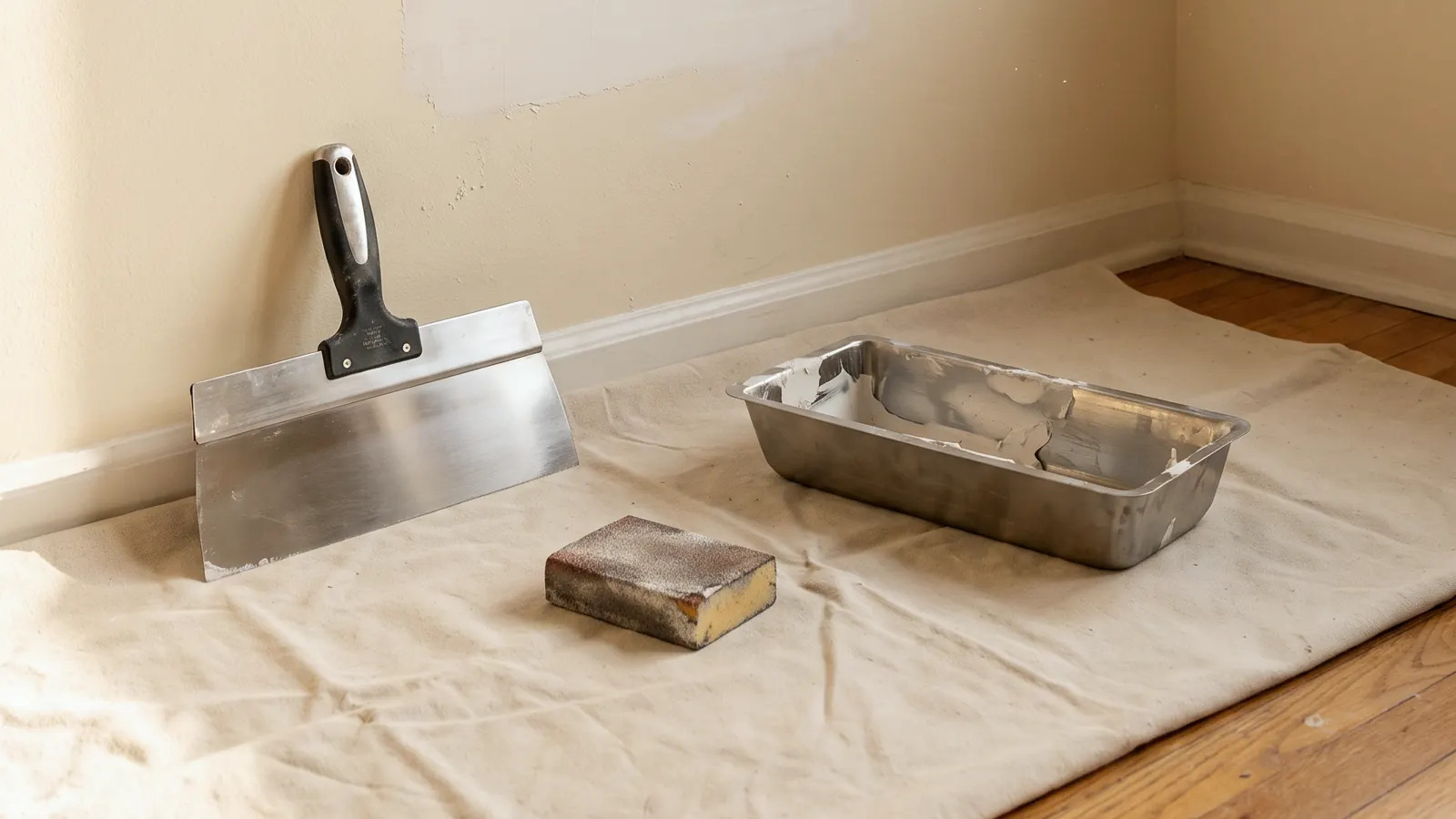
A low-profile wall plate keeps the cable exit tidy and easy to service later.
When to call a pro
Plenty of people mount a TV on a standard drywall wall without trouble. Older walls raise the stakes, and some situations are better handed off.
DIY can be reasonable when: - The wall is plain drywall with easy-to-find studs. - You are using a surface raceway rather than opening the wall. - The TV is lightweight and you have a helper to lift it.
Consider a pro when: - The wall is plaster, brick, or stone and you have not drilled it before. - You want power relocated or a recessed outlet added behind the TV. - The TV is large or heavy, or you want a full-motion arm. - The wall is on a stairwell, over a fireplace, or on an exterior wall. - You are unsure what is inside the wall.
Some electrical work may involve permits or inspections. The City of Los Angeles Department of Building and Safety has information on permits and inspections, and the Contractors State License Board has tips for hiring a contractor in California. Whoever you hire, ask them to explain the plan for the wall in plain terms.
If you'd like a second opinion before committing, you can send a photo for a written quote and describe what you want hidden.
FAQ
Can I run a power cord inside the wall myself?
Standard power cords are not made for in-wall use. A recessed outlet kit installed correctly, often by an electrician, is the proper way to bring power behind the TV. Low-voltage cables like HDMI should be in-wall rated.
Will mounting a TV damage my plaster walls?
Some risk exists, since old plaster can crack. Pre-drilling, using the right bit, and anchoring into studs or masonry reduce it. Small, well-placed openings can also be patched and painted.
Can I mount a TV on brick without drilling into it?
Not safely for a typical TV. Brick generally needs masonry anchors. If you want to avoid drilling, a freestanding console or floor stand is the alternative.
Is it okay to put a TV above a fireplace?
It can work, but heat, height, and neck strain matter. Check how warm the wall gets while the fireplace runs, and consider a mount that lowers the screen to a better viewing angle.
How do I get an HDMI cable past a fire block?
Fire blocks are solid pieces of framing inside the wall. You can often drill a small passage through them or open a second access point above and below. A pro with the right tools can do this without weakening the framing.
Sources
- California Contractors State License Board: Hire a Contractor
- Los Angeles Department of Building and Safety: Permits and Inspections
- Earthquake Country Alliance: Step 1, Secure Your Space
- OSHA: Ladder Safety
Safety note: work on electrical panels, gas, structure or anything that needs a permit should be done by a licensed contractor with the required permits.
STATOX Handyman Service · Send a photo · +1 (820) 200-4919
Keep reading
 tv mountingTV Mount Problems and Fixes: Wobble, Sag and Crooked ScreensNeed a tv wall mount wobbly fix? Learn why mounts wobble, sag or hang crooked, what to check first, and which repairs are safe to try yourself.
 tv mountingTV Mounting: DIY vs. Hiring a Handyman, Honestly ComparedWeighing diy tv mounting vs professional installation in Los Angeles? See what each route really involves, where DIY goes wrong, and how to choose wisely.
 tv mountingMounting a TV in a Pasadena Craftsman or Older Plaster HomePlanning tv mounting in Pasadena? Learn how plaster, lath, and old wiring change the job, and what to check before you drill a single hole.