Mounting a TV on Drywall, Plaster, Brick or Stucco Walls
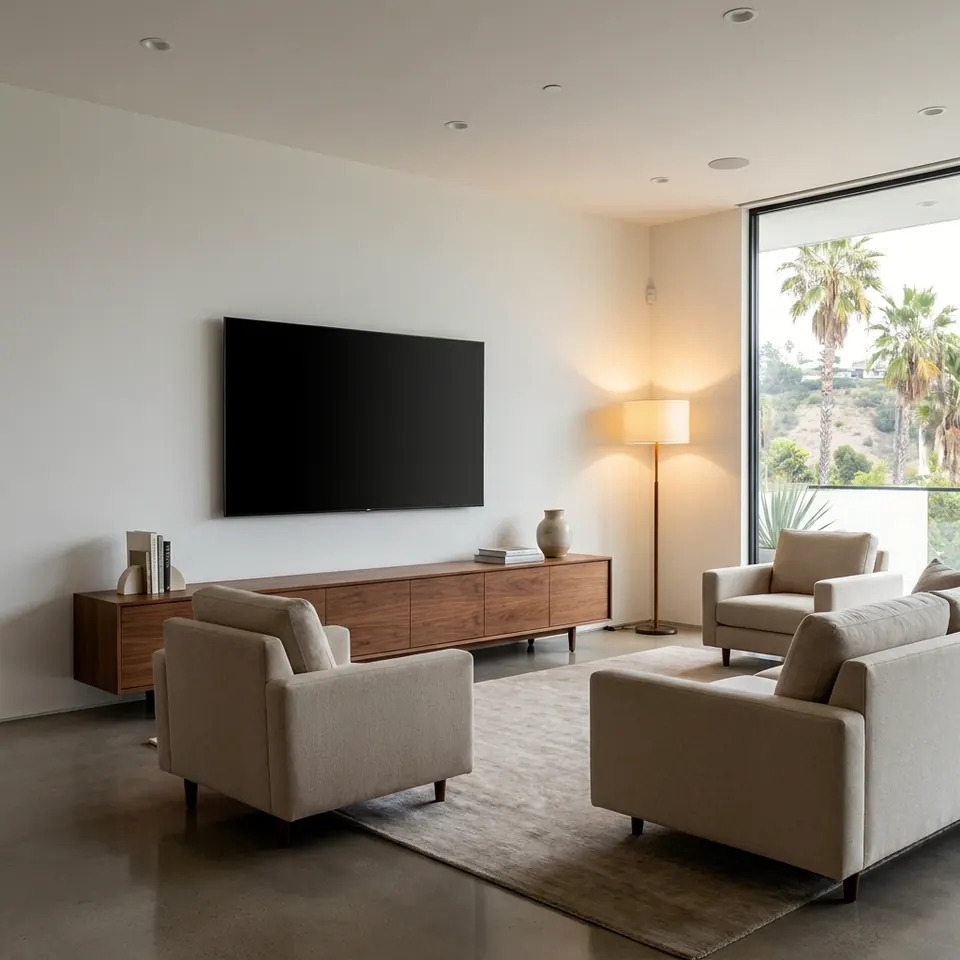
If you want to mount a TV on a plaster wall, you can, but the method depends on what is behind the plaster. Drywall and plaster-over-lath walls usually need the mount anchored into wood studs, while brick and stucco call for masonry fasteners and a careful look at what is underneath. Identify the wall first, find solid backing, and match the fastener to the surface.
Know Your Wall Before You Pick Hardware
Los Angeles homes are a mix of eras. A 1990s condo likely has drywall. A 1920s Spanish bungalow in Silver Lake or Highland Park may have plaster over wood lath. A mid-century ranch might have stucco outside and plaster or drywall inside, and a loft downtown may have exposed brick or concrete.
Quick ways to tell what you have:
- Knock test: Drywall sounds hollow and light. Plaster sounds denser and more solid. Brick and concrete sound dead.
- Switch plate check: Remove a cover plate (power off at the breaker first) and look at the edge of the wall material. Drywall shows a paper-faced gypsum panel about half an inch thick. Plaster is often thicker and crumbly at the edge.
- Small test hole: A tiny pilot hole in a hidden spot shows the dust color and the resistance. Drywall makes white powder and drills easily. Plaster makes gritty dust and may hit lath. Brick makes red or orange dust.
- Age of the home: Older construction suggests plaster. Newer suggests drywall.
Comparing Wall Types at a Glance
| Wall type | What's behind it | Typical fastening approach | Main risk |
|---|---|---|---|
| Drywall | Wood or metal studs, spaced apart | Lag screws into wood studs | Missing the stud; relying on drywall anchors alone |
| Plaster on lath | Wood studs behind lath and plaster | Lag screws through plaster into studs | Cracking or crumbling plaster; hard-to-find studs |
| Brick | Solid masonry, mortar joints | Masonry sleeve anchors or screws into brick or solid mortar | Drilling into a weak or crumbling joint |
| Stucco (exterior) | Framing, sheathing, and a weather barrier | Lag screws into framing, with sealing | Water getting into the wall through the holes |
| Concrete or block | Solid or hollow masonry | Masonry anchors rated for the material | Hollow block cores that hold little |
Drywall: The Easiest, If You Hit the Studs
Drywall alone cannot carry a TV. The weight needs to go into framing. Use a stud finder, confirm with a small pilot hole, and mount into at least two studs when the bracket allows.
Check whether the studs are wood or metal. Many newer condos use metal studs, which need fasteners designed for them, not standard wood lag screws. If your wall has metal studs, plan on a different approach and consider a pro.
Hollow-wall anchors can be fine for very light items, but they are a poor choice for a TV you care about, especially in earthquake country.
Plaster: Mount Carefully, Drill Gently
Plaster is where most homeowners get nervous, and for good reason. Old plaster can crack, chip, or let go in sheets if you hit it with a hammer drill.
Tips that help:
- Put painter's tape over the drill spot to reduce chipping.
- Start with a small bit and drill by hand speed, not hammer mode.
- Studs are harder to locate because plaster and lath confuse many stud finders. Try a deep-scanning finder, or look for nail lines along baseboards and trim.
- Drill pilot holes through the plaster first, then switch to the right bit for the wood beneath.
- Avoid mounting near existing cracks, patched areas, or a bowed wall.
If you have a plaster wall and need to mount a TV on it, the mount should still end up fastened into wood framing, not just the plaster layer. Plaster is a finish, not a structure.
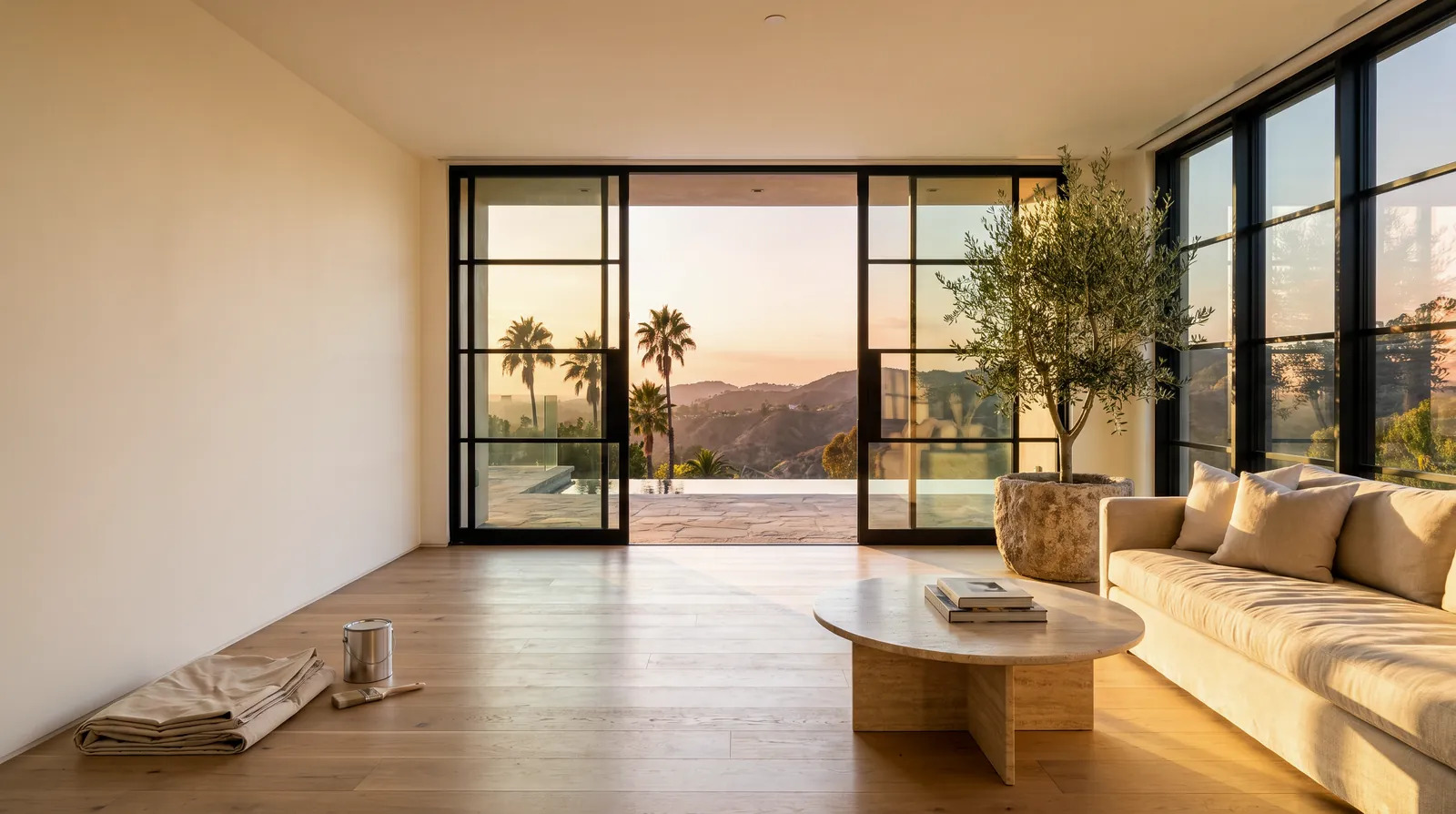
Marking stud locations on an older plaster wall before any drilling begins.
Brick and Stucco: Masonry Fasteners and Weatherproofing
Brick holds well when fastened correctly. Drill into the brick face itself when possible, or into solid mortar if the joints are in good shape. Old mortar can be soft and powdery, so test it before trusting it. Use a masonry bit, a drill suited to the job, and anchors made for brick. Avoid drilling too close to an edge or a damaged brick.
Stucco is common on LA patios and outdoor entertainment areas. The stucco layer is only a coating. The mount must reach the framing behind it, and every hole needs sealing so water cannot get in. An outdoor TV also needs a mount and TV rated for outdoor use, and a plan for power and cables that does not leave open gaps.
Both surfaces make it easy to drill in the wrong place, and the holes are permanent. Measure twice, mark clearly, and check for hidden electrical, gas, or plumbing lines where the wall may contain them.
Step-by-Step: A Safe Mounting Sequence
- Check the TV and mount specs. Confirm the mount's weight rating and the VESA pattern match your TV.
- Choose the height. Sit where you normally watch and mark eye level to the center of the screen.
- Identify the wall type using the checks above.
- Locate framing or masonry. Mark studs, or choose a solid brick area.
- Check for hidden lines. Look at outlet and switch locations, and avoid drilling directly above or below them.
- Drill pilot holes with the right bit for the material.
- Attach the wall plate with the fasteners that fit your wall. Keep it level.
- Mount the brackets to the TV, then lift the TV with a helper onto the wall plate.
- Test the hold. Gently check for movement before letting go, then tidy cables.
Because Los Angeles is earthquake country, take the extra minute to make sure fasteners are fully seated and the mount locks securely. The Earthquake Country Alliance and Ready.gov both offer general guidance on securing household items before shaking starts.
Lifting a heavy TV is a two-person job, especially onto a masonry wall.
Hiding Cables Without Creating a Hazard
Many people want the cords hidden. Be careful here. Running a standard power cord inside a wall is not safe and does not meet typical electrical rules. Cable-management raceways that sit on the wall surface are a simple alternative.
If you want a fully clean look, a recessed outlet kit installed by a qualified electrician is the proper route. In Los Angeles, electrical work may involve permits, and the LADBS permits and inspections page is a good place to see what applies.
When to Call a Pro
DIY makes sense for a modest TV on a drywall wall where you can clearly find wood studs, and you have a helper and a level.
Consider calling a pro when:
- The wall is plaster with uncertain framing behind it.
- It is brick, concrete, or exterior stucco.
- The studs are metal.
- The TV is large or heavy, or you want a full-motion arm.
- You want in-wall cable routing or a recessed outlet.
- You are working on a ladder at height. OSHA's ladder safety page covers basic good practice.
Our tv mounting service covers all of these wall types. If you are unsure what you have, you can send a photo for a written quote and describe the wall, the TV size, and where you want it.
FAQ
Can I mount a TV on a plaster wall without finding a stud?
It is not recommended. Plaster alone is brittle and will not reliably carry a TV. The mount should be fastened into wood framing behind the plaster, or into another structural backing.
What is the easiest wall to mount a TV on?
Drywall over wood studs is usually the simplest, because studs are easy to find and the material drills cleanly.
Do I need special anchors for brick?
Yes. Use masonry anchors made for brick and the matching masonry bit. Check the condition of the brick and mortar first, and avoid weak or crumbling joints.
Can I mount a TV on exterior stucco?
Yes, but the mount needs to reach the framing behind the stucco, and each hole must be sealed against water. Use an outdoor-rated TV and mount.
Should I hire a handyman or an electrician for hidden wiring?
Hiding cords inside walls involves electrical work. A surface-mounted raceway is a simple alternative, while recessed outlets are usually handled by a qualified electrician. You can check a contractor's status through the California Contractors State License Board.
Sources
- California Contractors State License Board: Hire a Contractor
- LADBS Permits and Inspections
- Earthquake Country Alliance: Step 1
- OSHA: Ladder Safety
Safety note: work on electrical panels, gas, structure or anything that needs a permit should be done by a licensed contractor with the required permits.
STATOX Handyman Service · Send a photo · +1 (820) 200-4919
Keep reading
 tv mountingEarthquake Prep for TVs in Los Angeles Homes and CondosLearn earthquake safe tv mounting in Los Angeles: wall mounts, stand straps, and condo tips to keep your screen secure. Read before the next shake.
 tv mountingHow to Choose a TV Wall Mount: Fixed, Tilt or Full-MotionLearn how to choose a TV wall mount by comparing fixed, tilt and full-motion types for your room, wall and TV, so you pick the right one the first time.
 tv mountingTV Mount Problems and Fixes: Wobble, Sag and Crooked ScreensNeed a tv wall mount wobbly fix? Learn why mounts wobble, sag or hang crooked, what to check first, and which repairs are safe to try yourself.