Why Your Furniture Wobbles After Assembly and How to Fix It

A wobbly bookcase, dresser, bed, or table after assembly is usually caused by one of a few fixable problems: an uneven floor, fasteners that are not fully tightened, a missing or loose back panel, or parts that were joined slightly out of square. Most of these can be corrected with a level, a screwdriver, and a little patience. Start by finding out which problem you have, then correct it in the right order.
Los Angeles homes add a few wrinkles. Older floors may slope, many apartments and houses have uneven tile or wood, and tall pieces often need to be secured to the wall for safety. This guide walks through the common causes, a step-by-step fix, and the point where it makes sense to call a professional.
Why New Furniture Rocks on Flat-Pack Frames
Flat-pack furniture depends on tension. Cam locks, dowels, bolts, and cabinet screws pull each joint tight, and the back panel keeps the whole box square. If any one of those pieces is off, the frame can rack, which means it leans into a parallelogram shape. Racking is the most common reason a bookcase or dresser feels loose.
Wobble also comes from the floor. A piece can be perfectly assembled and still rock if one leg sits higher than the others. Many people assume the furniture is defective when the real issue is the surface beneath it.
Here are the four causes that come up most often:
- Uneven floors that cause one corner or leg to sit higher than the rest
- Loose cam locks or bolts that were started but not fully tightened
- Missing or loose back panels that leave the frame unable to hold its square shape
- Parts assembled out of square, often because a shelf or rail was pushed in at an angle
Once you know which of these applies, the fix is usually straightforward.
Uneven Floors and Leveling Problems
Uneven floors are the most common cause of wobble, and they are easy to miss. Place a level across the top of the piece and check it front to back and side to side. Then set the level on the floor at the same spot to compare. If the floor is out of level, the furniture will be too.
To check the floor, follow these steps:
- Place the piece in its final position, since moving it later can change the result.
- Set a long level on the top surface and note any tilt.
- Slide a thin shim or folded cardboard under each foot to see which corners lift.
- Mark the feet that need support so you can adjust them consistently.
The right fix depends on what is causing the unevenness. Adjustable leveling feet, sold with many flat-pack pieces, can be turned to raise or lower each corner. If your piece does not have them, thin felt pads or plastic shims can fill small gaps. For a large slope in the room itself, the piece may need to sit on a different spot, or the floor may need repair. Floor repair is a job for a qualified contractor, and the Contractors State License Board website explains how to check a contractor's status before you hire one.
Loose Cam Locks, Bolts, and Dowels
Cam locks are the round metal fittings that pull two panels together. They are the most common source of play in flat-pack furniture, and they often loosen as the piece is moved or used. A cam that is turned only partway can look tight but leave a gap at the joint.
Check these fasteners in order. Start at the bottom of the piece, since weight and movement affect the lower joints most. Then move up.
Quick checklist for fasteners:
- Confirm each cam lock is turned fully to its locked position
- Tighten every bolt and cabinet screw with a driver, without overtightening
- Look for gaps at corners and dowel joints, and press gently to see whether they close
- Replace any stripped screw or cracked fitting with a matching part from the manufacturer
- Recheck the fasteners after a few days of use, since new joints often settle
Stripped holes are a common frustration. If a screw spins without tightening, try a slightly larger wood screw in the same hole, or use a wood glue and toothpick plug before reinserting the screw once the glue has set. Avoid forcing a screw into a hole that is badly damaged, because it will not hold and can split the panel.
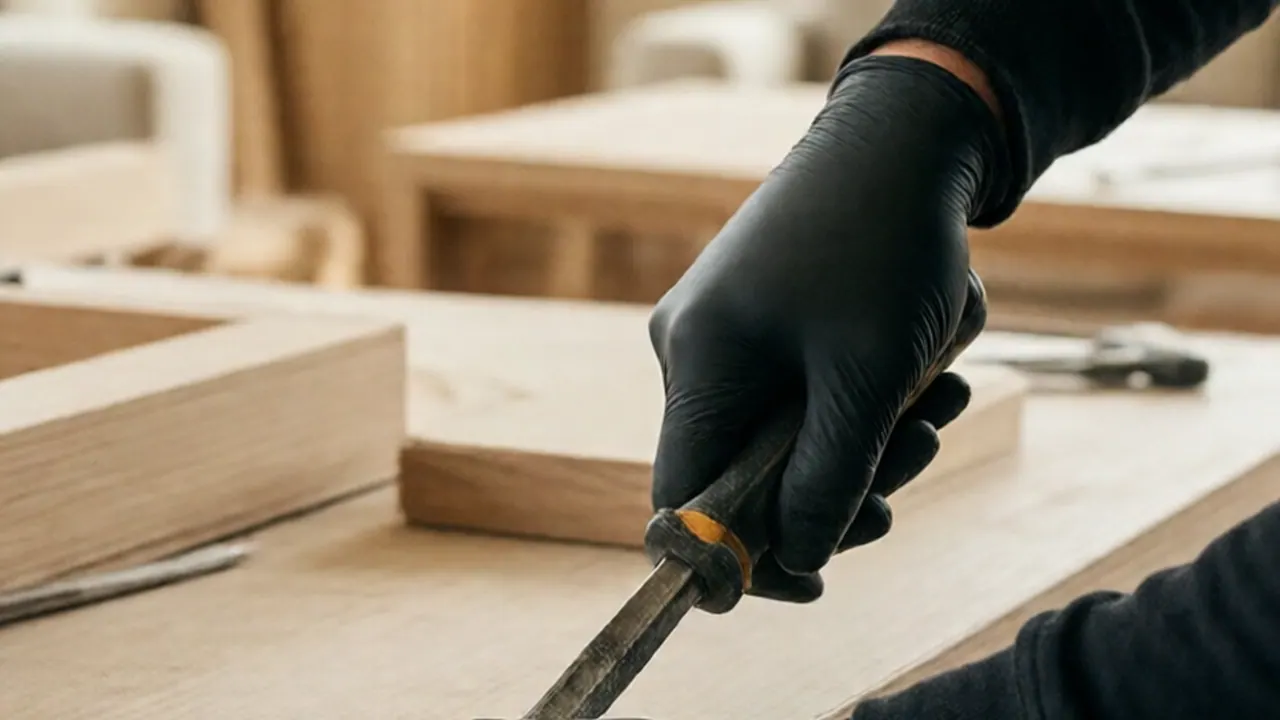
Turning each cam lock fully is often the simplest way to remove joint play.
Missing or Loose Back Panels and Racking
The back panel is more than a cover. On bookcases, dressers, and cabinets, it is a structural piece that locks the frame square. A piece without its back, or with a back that is only tacked on at a few points, will rack easily when pushed or leaned against.
Check whether the back panel is included in your kit and whether it was attached. Many people set the panel aside, or fasten it only at the corners, and then notice wobble later. If the panel is present, make sure it is fastened along all edges at the recommended spacing, usually with short nails or screws.
To square a racked frame before fastening the back:
- Lay the piece on its back on a clear floor.
- Measure the diagonals from one top corner to the opposite bottom corner, then the other diagonal.
- If the two measurements are not equal, gently push the frame at the longer corner until the diagonals match.
- Hold it square and fasten the back panel, starting at the center and working outward.
- Recheck the diagonals after fastening.
Squaring is easier with a helper. Once the back is fastened, the frame should feel noticeably more solid.
For tall pieces, such as a tall bookcase or dresser, securing the unit to a wall is a separate and important step. The Earthquake Country Alliance recommends anchoring tall furniture to wall studs in earthquake-prone areas, which includes much of Southern California. Anchoring also stops the piece from rocking or tipping during everyday use.
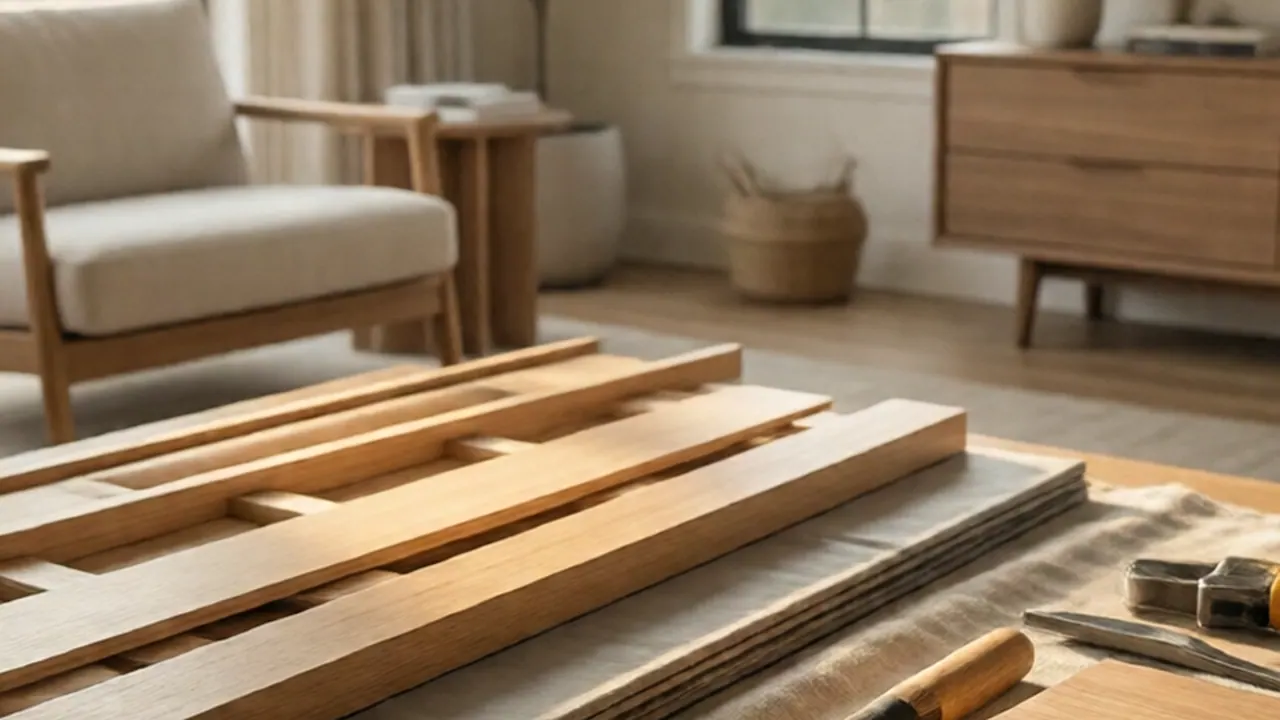
Measuring both diagonals shows whether a frame is square before the back panel is fastened.
How to Fix Wobble Step by Step
Most wobbly furniture can be corrected in one afternoon if you work in a clear order. Addressing the floor first, then the joints, then the back, prevents you from undoing earlier work.
Follow this sequence:
- Clear the area and lay down a blanket or cardboard to protect the surface and the piece.
- Level the floor under the piece using shims or adjustable feet.
- Tighten all cam locks, bolts, and screws, starting at the bottom.
- Square the frame by checking the diagonals and adjusting as needed.
- Fasten or reattach the back panel along every edge.
- Anchor tall pieces to a wall stud with an appropriate anchor kit.
- Test the piece by pressing firmly on each corner and the top edge.
- Recheck after a few days, since joints settle and fasteners can loosen.
If the piece still rocks after these steps, look for a damaged part. A cracked panel, a bent rail, or a bad dowel can keep the frame from holding its shape, and those parts often need to be replaced.
When to Call a Pro
Many wobble problems are simple enough to fix yourself. Leveling a piece, tightening fasteners, and reattaching a back panel do not require special tools, and a careful homeowner can handle them. If the piece is not too damaged and the problem is clearly one of these basics, doing it yourself is a reasonable choice.
Hiring help makes more sense in a few situations:
- The frame is badly racked, and squaring it would take more than one attempt
- Several parts are cracked, split, or missing, and replacements are needed
- The piece is large, heavy, or difficult to move without damaging walls or floors
- Wall anchoring is needed for a tall unit and you are not comfortable working in the wall
- The wobble is caused by a sloped or damaged floor that needs repair
When you hire, it helps to confirm that the person or company you choose is properly registered. The California Department of Consumer Affairs and the Contractors State License Board both publish guidance on checking contractor status and understanding your rights as a consumer. If your project involves permits or structural changes, the Los Angeles Department of Building and Safety explains when a permit is required.
If you want help from our team, you can review our furniture assembly service to see what we handle on wobbly or partly assembled pieces. If you would like a written quote before you decide, send a photo for a written quote and describe the problem, including which piece it is and where it wobbles.
FAQ
Can I fix wobbly furniture without taking it apart?
In most cases, yes. Leveling the feet, tightening cam locks and bolts, and checking the diagonals can all be done with the piece assembled. Taking it apart is only needed if a part is damaged or a panel is installed incorrectly.
Why does my bookcase still wobble after I tighten everything?
The most common reasons are an uneven floor, a missing or loose back panel, or a frame that is racked out of square. Check the floor with a level first, then measure the diagonals and fasten the back. If it still moves, look for a cracked or bent part.
Do I need to attach furniture to the wall?
Tall pieces such as bookcases and dressers should be anchored to the wall, especially in earthquake-prone areas. The Earthquake Country Alliance recommends securing furniture to wall studs to reduce the risk of tipping. Use an anchor kit suited to your wall type.
Will the wobble go away on its own?
Sometimes joints settle and tighten a little as the piece is used, but wobble caused by an uneven floor, a missing back, or a racked frame will not correct itself. Rechecking the fasteners after a few days is still a good habit.
What should I do if a screw hole is stripped?
Try a slightly larger screw in the same hole, or fill the hole with wood glue and a wood toothpick, let it dry, and reinsert the screw. Avoid forcing a screw into a badly damaged hole, since it can split the panel.
Sources
- Contractors State License Board: Hire a Contractor
- Contractors State License Board: Consumers
- Los Angeles Department of Building and Safety: Permits and Inspections
- Earthquake Country Alliance: Step 1
Permit work: Permit jobs get a written project estimate; permits handled as required.
STATOX Handyman Service · Send a photo · +1 (820) 200-4919
Keep reading
 furniture assemblyDIY vs Hiring a Pro for Furniture Assembly: What to WeighWondering whether to hire someone to assemble furniture or do it yourself? Compare time, tools, risk, and safety before you open the box.
 furniture assemblyEarthquake Prep: Securing Tall Furniture in Los AngelesLearn how to secure furniture earthquake Los Angeles homes need: what to anchor first, which hardware fits your walls, and when to get help. Worth a read.
 furniture assemblyFlat-Pack Furniture Problems and How to Fix ThemNeed a wobbly flat pack furniture fix? Learn why assembled pieces rock, sag, or gap, and what to check first. Worth a read before you take it apart.